
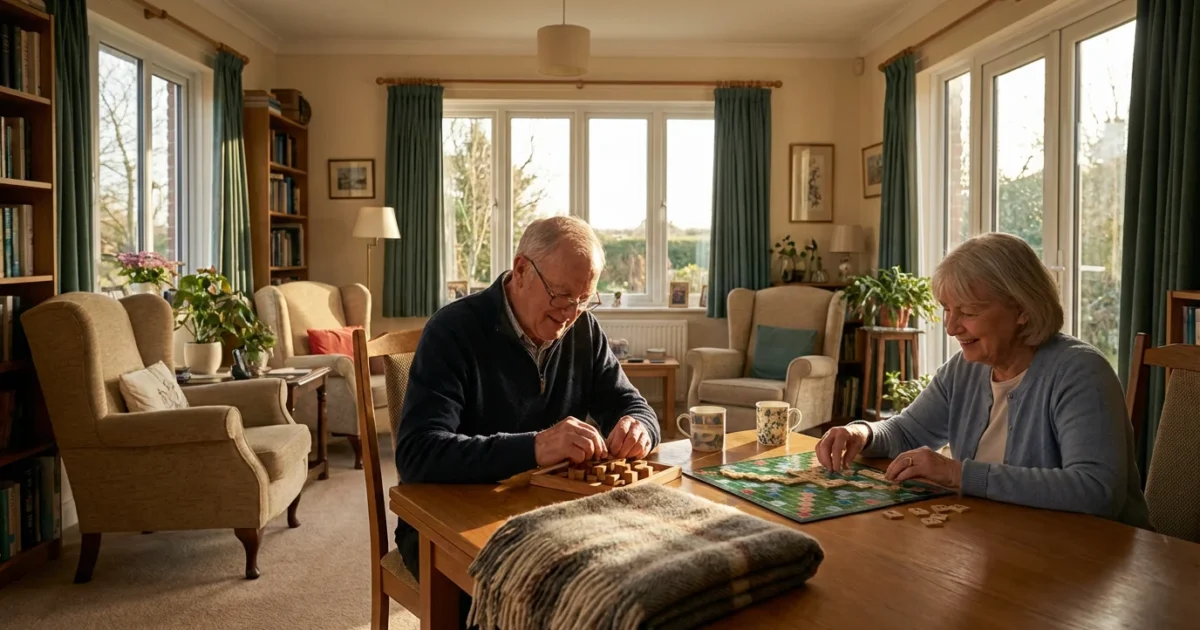
Oh, retirement! It truly does open up a whole new world, doesn’t it? For me, it meant finally having the time to dive into things I’d always wanted to do, like learning watercolor painting (I’m still not very good, but I love it!).
But beyond pursuing new passions, I’ve learned that keeping my mind busy and sharp is just as important as keeping my body moving. It really does make a difference in how much joy and vitality I find in each day.
And what a powerful tool we have at our fingertips for that: brain games and puzzles! They’re not just for kids anymore, let me tell you. These engaging activities are a fun and effective way to give your brain a good workout, making sure our retirement years are brimming with mental energy.
We’ve certainly found that integrating engaging activities and programs into our schedule here in Hawthorn Ridge makes every day feel more dynamic and fulfilling.
You know, it’s like a muscle. When you exercise your brain regularly, it gets stronger. This article is all about why that mental stimulation is so good for us, what kinds of brain games Bill and I (and our friends here in Florida!) enjoy, and how to fit them into your everyday life.
Get ready to discover how you can truly sharpen your mind and thrive in this wonderful new chapter.

Why Your Brain Thrives on Challenge
I used to think that once you reached a certain age, your brain was pretty much set in its ways. But goodness, was I wrong! It turns out our brains are truly incredible, capable of adapting and growing our entire lives.
They call it neuroplasticity, which just means that every time we learn something new or try a challenging activity, we’re actually building new pathways in our brain and strengthening the old ones. Retirement, for me, has been this amazing chance to really put that power to good use, giving my brain the consistent workouts it needs to stay sharp.
I remember feeling a bit overwhelmed when we first moved from our big colonial on Elmwood Drive to our smaller place here in Sarasota. Everything was new! But forcing myself to learn the new routes, figure out the community’s schedule, and even just learn the names of my new neighbors felt like a workout for my brain.
And now, I can see how that adjustment period actually helped me. Similarly, exploring local hiking trails provides visual stimulation and requires spatial navigation skills that keep the mind alert.
Maintaining an active retirement lifestyle ensures that your days are filled with purpose and variety, giving your brain constant stimuli to process.
Many people I’ve met here find that combining mental challenges with physical coordination, such as through Tai Chi for strength and well-being, creates a holistic approach to brain health.
Regular mental stimulation really does support so many parts of our cognitive health. Research tells us that folks who keep their minds active often have better memories, are better at solving problems, and can think a bit quicker as they get older.
This engagement helps keep our cognitive reserves strong, giving us more resilience against any age-related decline. It’s like having a little extra padding for your brain!
I like to think of my brain like a muscle. When I use it regularly and challenge it in new ways – like trying to figure out a tricky watercolor technique or learning the rules to a new card game with my “Florida family” – it grows stronger and more efficient.
If I just let it sit, it can lose some of its vigor. Brain games offer such a structured and enjoyable way to give it that essential exercise, helping us preserve and even enhance our cognitive abilities.
The mind is not a vessel to be filled, but a fire to be kindled.
Understanding Cognitive Health and Brain Games
For me, cognitive health really just means being able to think, learn, and remember things clearly.
It’s about all those wonderful functions like remembering my grandchildren Lily and Noah’s birthdays, paying attention when Bill is explaining his latest pickleball strategy (which can be quite a challenge!), understanding what I read, and being able to plan out my Sunday morning baking schedule.
Keeping these functions strong helps me live independently, stay engaged with the world, and truly enjoy this wonderful time in my life.
Brain games aren’t just a way to pass the time; they’re actually specially designed activities that challenge one or more of these brain functions. They’re targeted exercises that really make your brain work in specific ways.
For example, a crossword puzzle makes me dig deep for words and recognize patterns, while a strategy game with Bill (he’s usually right, you know) requires me to think ahead and analyze. I remember one time I was trying a new recipe and couldn’t remember if I’d added the baking powder.
I realized then that my memory needed a little extra push, and brain games felt like a fun way to do it!
How Do Brain Games Improve Memory?
Brain games help our memory in a few different ways. They often ask us to remember information, hold several pieces of data in our short-term memory (like when I’m trying to remember what ingredients I need for a new cake), and make connections that strengthen our long-term recall.
When you keep doing these mental tasks, you’re actually strengthening the pathways in your brain that are responsible for forming and recalling memories.
For instance, those matching games really do train your working memory, and learning the rules of a new, complex board game (which Bill loves to introduce) helps you store and retrieve new information.
This consistent practice helps to improve both how quickly and how accurately your memory works, making everyday tasks like remembering names or appointments much easier. I’ve certainly noticed I don’t have to write quite as many notes down as I used to!
What’s more, the newness and challenge in many brain games spark our curiosity and keep us engaged, which are so important for really learning and remembering things. The more actively your brain participates in a task, the stronger those memories become.
What Brain Games Are Best for Seniors? Categories and Examples
Choosing the right brain games is really about finding activities you genuinely enjoy and that give different parts of your mind a good workout. I’ve found that variety is key; switching between different types of games ensures I’m giving my brain a comprehensive exercise.
Here are some of the best brain games Bill and I, and our friends here at Hawthorn Ridge, have discovered, broken down by what they primarily help with.
Many active adult communities like ours provide dedicated spaces and social groups for residents to enjoy these games together. It’s how I found my Mahjong group!
Memory Games
These games are wonderful for strengthening your recall and working memory. They help you hold onto and retrieve information more efficiently.
- Sudoku: Bill absolutely loves these! He’ll sit with his coffee in the morning doing a Sudoku. It makes you hold numbers in your head and recall patterns to solve it. Great for working memory and logical thinking.
- Crossword Puzzles: These are my personal favorite! I always have a crossword puzzle book next to my armchair. They really boost your vocabulary, help you remember words, and test your general knowledge. You can find them at all sorts of difficulty levels.
- Matching Games: Card games like Concentration, or even those digital memory matching apps, are fantastic for your visual memory and focus. I play these with Lily and Noah when they visit!
- “Name That Tune” or Trivia: These are so much fun in a group! We have a trivia night here at Hawthorn Ridge, and it really challenges your long-term memory for facts, names, and cultural references. It’s a great social brain booster.
Logic and Problem-Solving Games
These are the ones that make you really think analytically, plan strategically, and figure things out. They build up your executive functions, which are so important for making daily decisions.
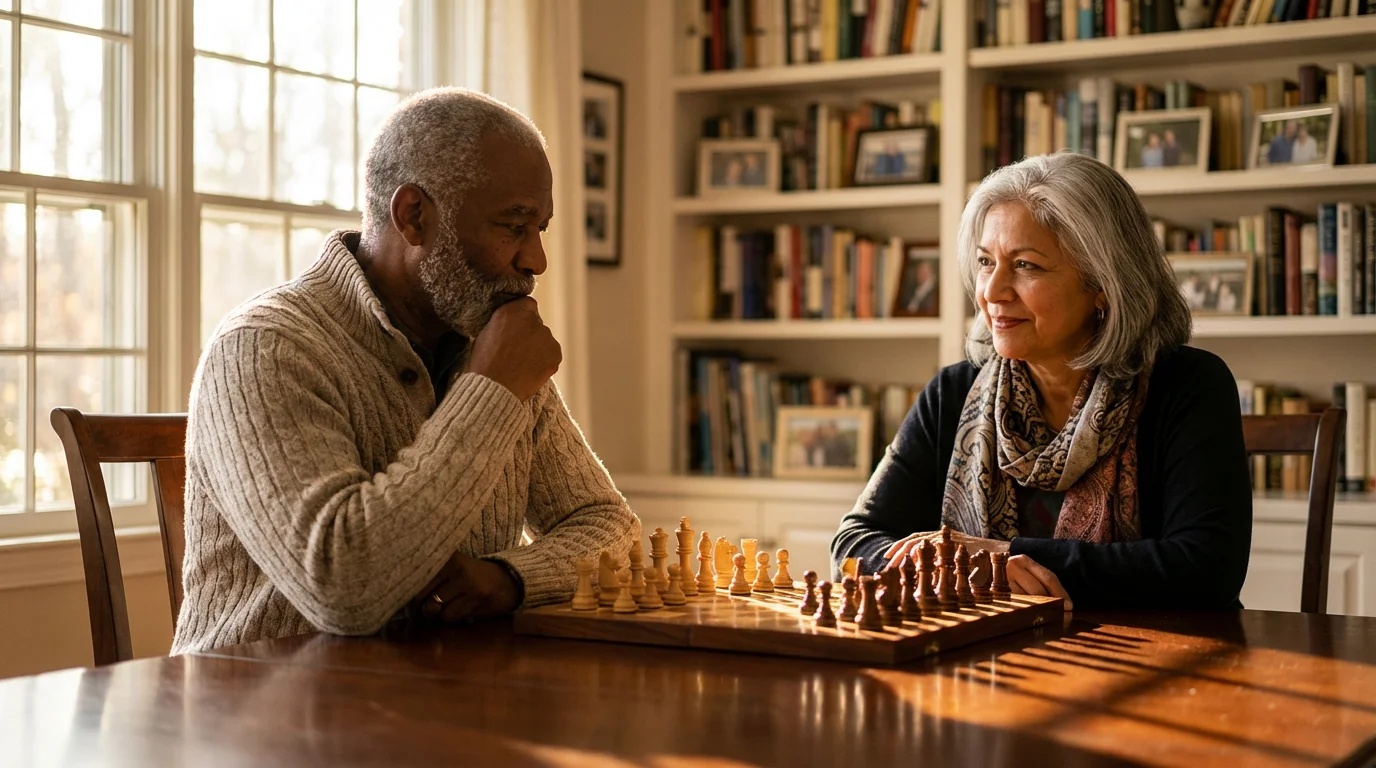
- Chess and Checkers: Classic strategy games. Bill and his friend Ted from the food bank volunteer group play chess all the time. They demand foresight, planning, and tactical thinking, improving concentration and complex problem-solving.
- Mahjong: I just started playing this with my “Florida family,” and it’s quite a challenge! This tile-matching game involves pattern recognition, strategic planning, and quick decision-making. It’s a wonderful way to connect with others too.
- Logic Grid Puzzles: These present a scenario with lots of variables, and you have to use deductive reasoning to solve them. They really sharpen your analytical skills.
- Rubik’s Cube (or similar puzzles): Manipulating objects to achieve a specific configuration enhances spatial reasoning and systematic problem-solving. I haven’t tried one of these since Michael was a teenager!
Word Games
Word games are excellent for improving your language skills, vocabulary, and how fluently you can express yourself. They keep your brain agile for communication.
- Scrabble: A timeless classic! It challenges your vocabulary, spelling, and how you strategically place your letters. Playing with others, like we do at the community center, makes it even more engaging.
- Boggle: This fast-paced game makes you quickly recognize words and patterns within a grid of letters. It’s great for boosting your processing speed.
- Word Searches and Anagrams: These puzzles enhance vocabulary, pattern recognition, and your ability to play around with letters to form new words.
- “Words With Friends” (or similar apps): Digital versions of word games are so convenient, and I love that I can play with Karen, Michael, and Susan even though they live so far away!
Spatial Reasoning Games
These activities challenge your ability to understand and manipulate objects in space, really improving your visual-spatial skills.
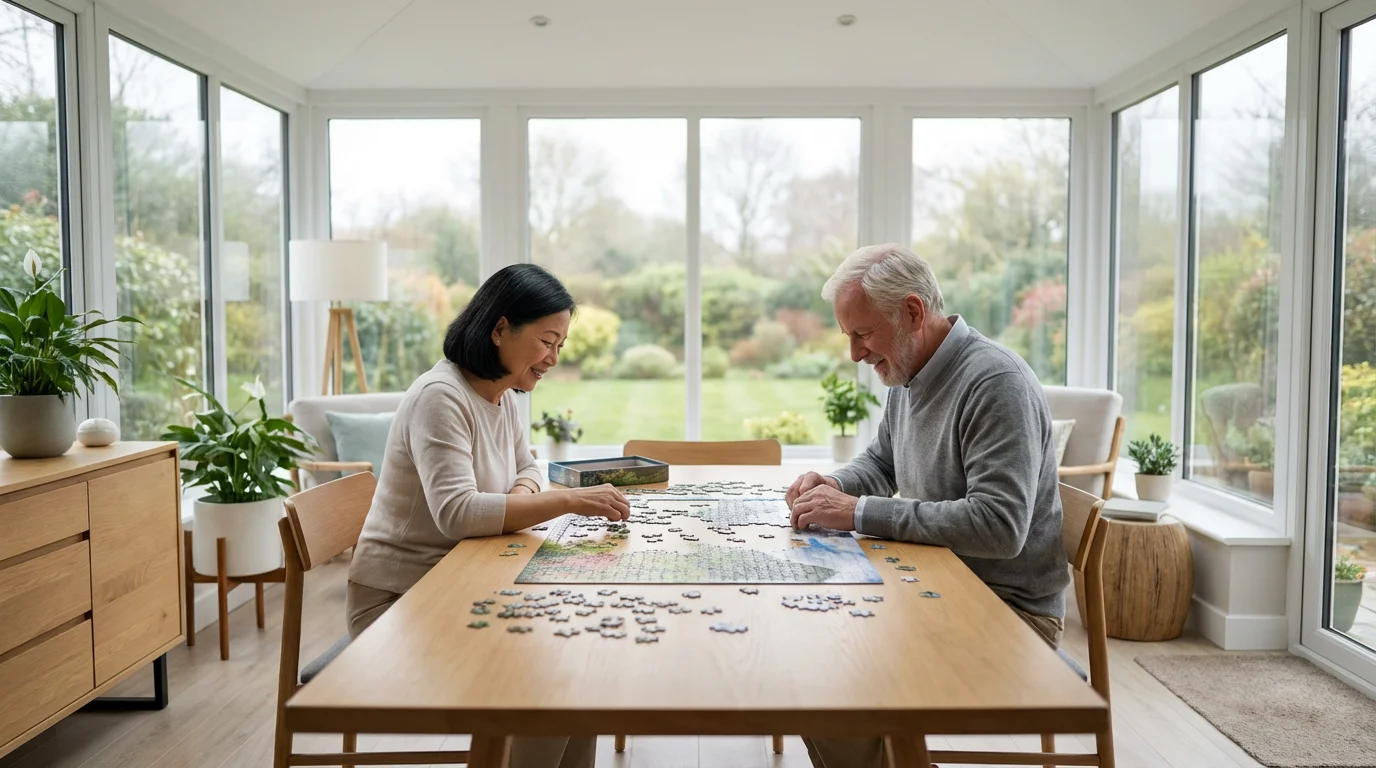
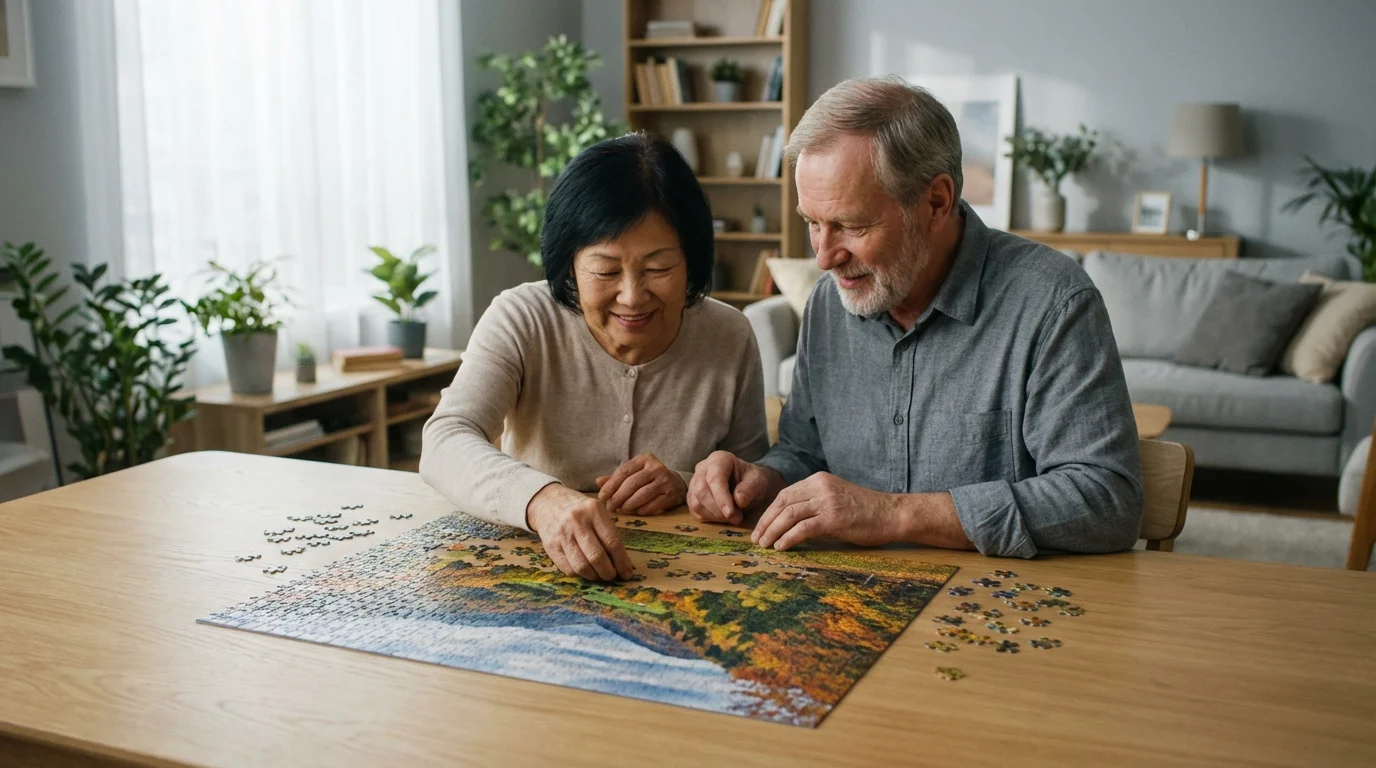
- Jigsaw Puzzles: Bill and I love doing these together on a rainy afternoon! Assembling jigsaw puzzles improves visual perception, spatial reasoning, and attention to detail. You can find ones with larger pieces, which are great if your dexterity isn’t what it used to be.
- Tangrams: These ancient Chinese puzzles involve arranging geometric shapes to form specific designs, enhancing spatial awareness and creative problem-solving.
- Building Blocks (e.g., LEGO): Constructing models with blocks stimulates spatial visualization, planning, and fine motor skills. I still enjoy building with Lily and Noah when they visit!
Digital Brain Training Apps
There are so many wonderful digital platforms now that offer personalized brain training. These apps often adapt to how you’re doing, so they keep challenging you in new ways.
- Lumosity: Offers a wide variety of mini-games targeting memory, attention, flexibility, speed, and problem-solving.
- BrainHQ: Based on scientific research, this program provides exercises designed to improve processing speed, attention, and memory.
- Elevate: Focuses on critical cognitive skills like writing, reading, speaking, and math through engaging short games.

Integrating Brain Games into Your Daily Routine
When it comes to getting the most out of brain games, consistency is absolutely key. It’s just like a physical exercise routine; regular mental workouts give you the best results.
You don’t need to dedicate hours every day; even short, focused sessions can make a real difference. I try to aim for 15-30 minutes, several times a week, to build a habit I can actually stick with.
I’ve found it helps to make brain games a regular part of my day. Maybe I start my morning with a crossword puzzle while my coffee brews, or I enjoy a Sudoku during a quiet moment after lunch.
Sometimes, I’ll unwind with a digital brain training app in the evening. Scheduling these activities ensures they don’t get overlooked, especially with all the exciting things happening here at Hawthorn Ridge.
I used to think I didn’t have time for such things, but since retiring, I’ve learned that making time for myself, including my brain health, is just as important as all the other tasks on my list.
Practical Tips for Daily Integration:
- Start Small: Begin with games that feel comfortable, and don’t be afraid to gradually increase the challenge as you get better. Please don’t get discouraged if a game seems difficult at first; I certainly felt that way with Mahjong!
- Set a Schedule: Dedicate specific times each day or week to your brain games. I treat these sessions as important appointments for my cognitive health, just like a doctor’s visit or a lunch date with Bill.
- Track Your Progress: Many digital apps offer progress tracking, which can be really motivating. For physical puzzles, you might notice if you complete them faster or make fewer errors over time.
- Mix and Match: Don’t stick to just one type of game. I like to rotate between memory, logic, and word games to make sure I’m giving different parts of my brain a comprehensive workout.
- Socialize with Games: So many brain games, like Scrabble, chess, or trivia, are much more fun when played with others. This adds social engagement, which is another powerful booster for cognitive health. My “Florida family” and I have a regular game night, and it’s always full of laughter!
Remember, the whole point is to enjoy yourself and stimulate your mind, not to be perfect. Embrace the challenge and celebrate every little bit of progress you make!

Beyond Puzzles: Other Activities for Mental Stimulation
While brain games and puzzles are absolutely wonderful tools, I’ve found that a truly active mind thrives on a diverse range of stimulating activities. Broadening my horizons beyond just structured games has given me even more opportunities for cognitive growth and sustained engagement.
It’s like when I finally stopped resisting the move to Florida and opened myself up to all the new experiences here – my world just expanded!
If you are considering a move, choosing a community based on your interests can provide easier access to bridge clubs and chess circles.
Participating in community gardening offers both physical activity and the mental challenge of nurturing growth throughout the seasons. I still miss my garden in Columbus, but tending to the community herb garden here has been a lovely new challenge.
Lifelong Learning and Education
Learning new skills or subjects keeps your brain continuously adapting. I recently started taking watercolor painting classes, and while I’m not good at it, the process of learning new techniques and understanding color theory is incredibly stimulating.
You could enroll in a class, learn a new language, or explore a new hobby. Programs like Osher Lifelong Learning Institutes offer a wide array of courses specifically designed for older adults, covering everything from history to technology.
Engaging in structured learning strengthens memory, critical thinking, and problem-solving skills, and keeps you current with the world around you.
Hobbies and Creative Pursuits
Engaging in creative hobbies actively stimulates different areas of your brain. Activities like painting (my new love!), playing a musical instrument, writing, knitting, or gardening require planning, problem-solving, and fine motor skills.
These pursuits offer such a wonderful sense of accomplishment and provide unique forms of mental exercise. For example, learning to play the piano improves coordination, memory, and auditory processing. Who knows, maybe I’ll try that next!
Social Engagement and Connection
Oh, this one is so important! Strong social connections are profoundly linked to better cognitive health. When Bill and I have conversations, participate in group activities, or get involved in our community, it stimulates various brain functions, including language, memory, and emotional processing.
Spending time with friends and family, joining clubs or groups (like my “Florida family” for Mahjong!), or volunteering for causes you care about (Bill volunteers at the food bank, and I help out with the community library here) are so vital.
The Alzheimer’s Association Brain Health emphasizes social engagement as a key component of a brain-healthy lifestyle.
Travel and Adventure for Active Seniors
Exploring new places and cultures challenges your brain in countless ways. Planning a trip, navigating unfamiliar environments, and adapting to new experiences all require significant mental flexibility.
Bill and I recently took a trip to visit our daughter Susan in Austin, and even just navigating the airport and a new city kept my mind very active! Travel stimulates your senses, creates new memories, and encourages learning.
Companies like Road Scholar specialize in educational travel for older adults, combining exploration with intellectual enrichment.
Embrace novelty and challenge. Stepping outside your comfort zone, whether by learning a new dance or trying a new cuisine, keeps your brain engaged and resilient. The variety of these activities ensures a holistic approach to maintaining cognitive vitality.
Building a Sustainable Brain Fitness Plan
Creating a personalized brain fitness plan really helps you maintain cognitive health consistently. This plan should be enjoyable, diverse, and adaptable to your changing interests and abilities.
My goal is to build habits that support my mental well-being for years to come, especially after all the emotional adjustments of moving to Florida. It took me a full year to admit it, but Bill was right about us needing to move, and part of that was learning to embrace new routines.
Key Components of Your Plan:
- Assess Your Interests: Start with activities you genuinely enjoy. If you like numbers, try Sudoku or logic puzzles. If you enjoy words, dive into crosswords or Scrabble. Your enthusiasm fuels consistency. I found that I really love word games and anything creative.
- Set Achievable Goals: Instead of aiming for perfection, focus on regularity. Perhaps you commit to 20 minutes of brain games three times a week, or reading a new book each month. Bill, with his spreadsheets, would tell you to make them “SMART” goals, but I just say, make them something you can actually do!
- Incorporate Variety: Don’t stick to just one type of game. Rotate between memory, logic, language, and spatial puzzles to ensure you are challenging different cognitive functions.
- Embrace New Challenges: Once a game becomes easy, seek out a more difficult version or try a completely new type of puzzle. Learning is most effective when your brain is stretched. This is why I keep trying new watercolor techniques, even if they don’t always turn out perfectly!
- Combine Mental with Physical: Remember that physical activity also boosts brain health. The AARP Health & Wellness resources often highlight the strong connection between physical fitness and cognitive function. Regular walks, dancing, or even gardening enhance blood flow to the brain, supporting its overall health. Bill plays pickleball four mornings a week, and I love my walks around Hawthorn Ridge.
- Prioritize Sleep and Nutrition: These foundational elements are crucial for cognitive function. Adequate sleep allows your brain to consolidate memories and clear waste products. A balanced diet rich in antioxidants and healthy fats fuels your brain cells. I always make sure I get a good night’s sleep, especially after a busy day with the grandkids!
Your brain fitness plan is a living document. Review it periodically, adding new activities or adjusting the intensity as needed. The most effective plan is one that you can consistently follow and that brings you joy and mental satisfaction.
Frequently Asked Questions
What is the most effective brain game for memory improvement?
From my experience, the most effective brain games for memory improvement are the ones that consistently make you really work your memory and recall abilities. Sudoku, crossword puzzles (my favorite!), and matching games are excellent choices.
Digital brain training apps like Lumosity and BrainHQ also offer targeted memory exercises. The key, I’ve found, is to do them regularly and try different kinds of memory challenges. Keep your brain guessing!
Can brain games prevent Alzheimer’s or dementia?
While brain games can’t definitively prevent Alzheimer’s or dementia (I know Bill worries about these things, and it’s a serious concern for many of us), research does suggest that engaging in mentally stimulating activities can help build what they call “cognitive reserves.”
These reserves may allow your brain to cope better with any changes that might occur, potentially delaying the onset of symptoms. I always say, a holistic approach is best: physical activity, a healthy diet, plenty of social engagement (which I adore!), and good quality sleep offer the best support for overall brain health.
How often should seniors play brain games?
I aim to play brain games for at least 15-30 minutes, several times a week. I think consistency is much more important than trying to do one really long session every now and then.
Integrating these activities into your regular routine, perhaps daily or every other day, will yield the greatest benefits. Listen to your brain; take breaks when needed, and make sure the activities remain enjoyable. If it feels like a chore, you won’t stick with it!
Are digital brain games as good as traditional puzzles?
Both digital brain games and traditional puzzles offer significant benefits for our cognitive health. Digital games often provide personalized challenges, track your progress (which Bill loves!), and are so convenient.
Traditional puzzles like crosswords, Sudoku, or jigsaw puzzles offer a nice tactile engagement and can be a lovely break from screens. I think the best approach involves a mix of both, using the strengths of each format to give your mind diverse stimulation.
I love my digital apps, but there’s nothing quite like a physical crossword or jigsaw puzzle on the table.
What if I find brain games too difficult?
Oh, I completely understand that feeling! When I first tried Mahjong, I felt completely lost. If you find brain games too difficult, start with simpler versions or easier difficulty settings. Many games offer beginner levels.
The goal is to find a challenge that is engaging but not overwhelming. Gradually increase the difficulty as your skills improve. Remember, the process of learning and adapting is what truly strengthens your brain, so embrace that learning curve and be kind to yourself!
Disclaimer: This article is for informational purposes only and does not constitute medical advice. Before starting any new exercise program or making significant changes to your activity level, please consult with your healthcare provider, especially if you have chronic health conditions or concerns about physical limitations.









Leave a Reply