
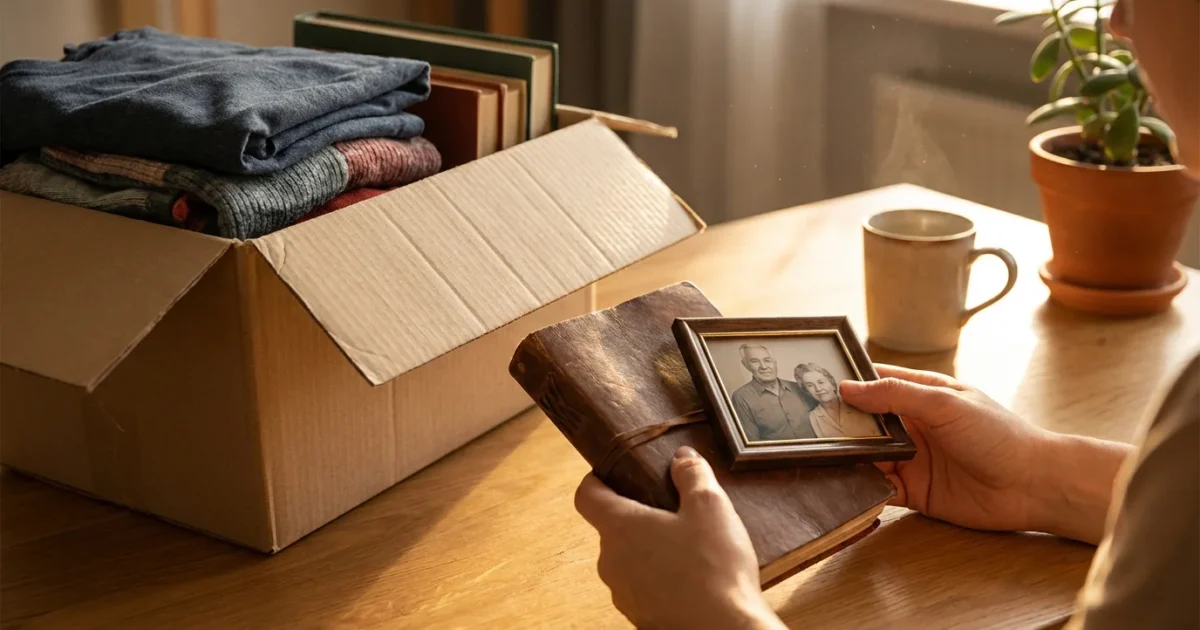
Downsizing our 2,400 sq ft colonial on Elmwood Drive in Columbus, Ohio, was a big enough challenge on its own. Dorothy and I had accumulated what I once estimated to be ‘approximately one metric ton of stuff we don’t need’ over 44 years.
Now, imagine tackling that same monumental task while also navigating the complex, often overwhelming emotions that come with losing a loved one. Their home and possessions aren’t just things; they’re potent reminders of shared memories and their presence.
Sorting through them can feel like an impossible burden, stirring up sadness, nostalgia, and, yes, sometimes even guilt. I’ve learned that having a clear, practical framework can make all the difference, even when your heart is heavy.
This guide offers some of the strategies I’d apply, designed to help you simplify your life, declutter your home, and manage your grief during this significant transition.

Navigating Downsizing While Grieving: A Gentle Approach
I’ve always been a methodical person. Give me a problem, I’ll build a spreadsheet. But even I understand that downsizing after a loss demands immense emotional strength. You aren’t just sorting items; you’re processing a lifetime of memories and facing a new chapter without someone you loved.
I remember when Dorothy and I were debating our move from Columbus to Hawthorn Ridge. She wasn’t dealing with a loss in the same way, but the emotional resistance to letting go of our home of 44 years was palpable.
She felt stuck, overwhelmed. I had my spreadsheets, she had her feelings, and both were valid. I’ve come to realize that you need to approach this transition with a great deal of self-compassion and patience. Grief affects your energy, your ability to make decisions, and your resilience.
It’s crucial to give yourself permission to move at your own pace, understanding that even the smallest step forward is a significant effort. My job, often, was to provide the structure that allowed for that pace.
Understanding the Interplay of Grief and Possessions
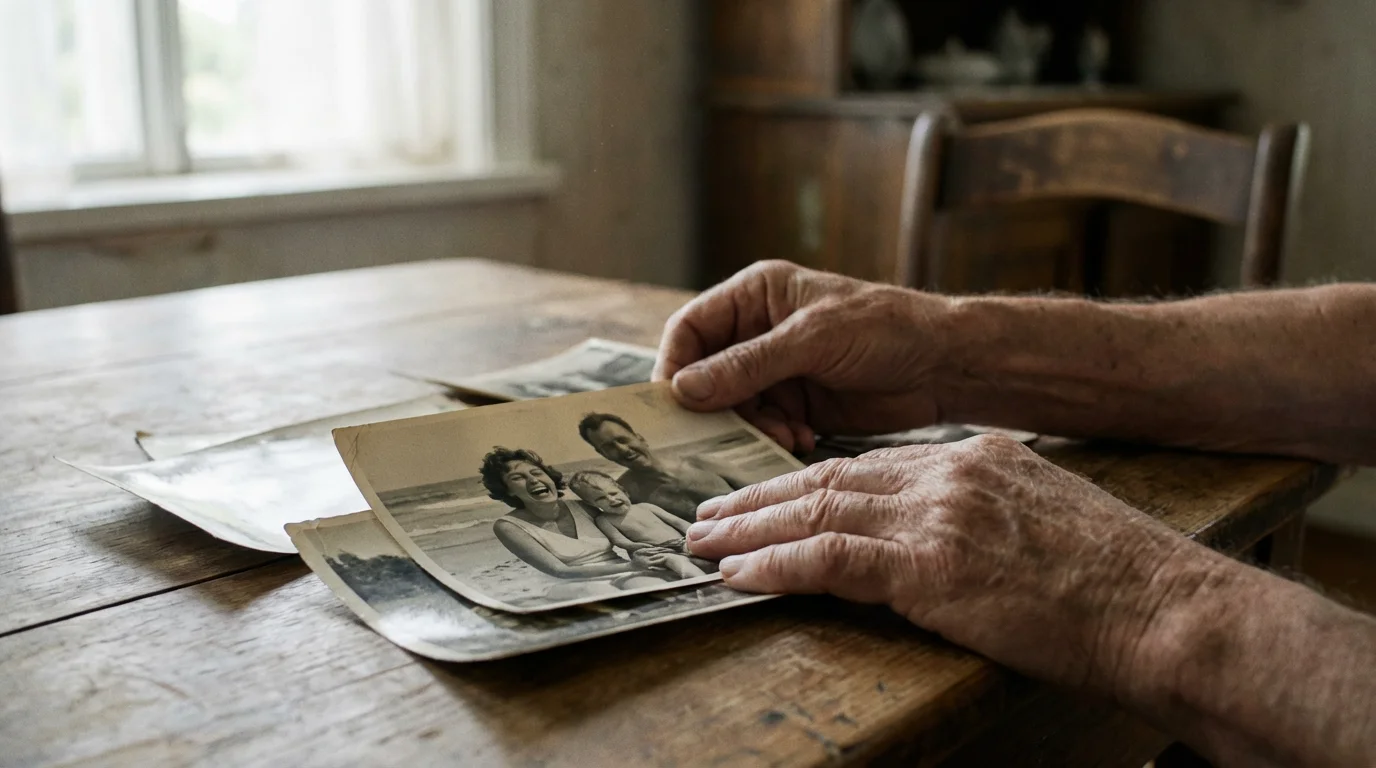
It’s true, possessions often hold profound meaning. They’re tangible links to our past, our identity, and the people we love. After a loss, these items can feel even more significant – sometimes like the last tangible connection you have.
I remember Dorothy’s attachment to certain things in our Columbus house, even simple kitchen gadgets that brought back memories of Thanksgivings. Beyond the emotional processing, it’s also often necessary to review estate planning essentials to handle the legal distribution of a loved one’s belongings – that’s where my methodical side usually kicks in.
You might find yourself strongly resisting letting go, associating items with their presence. That connection is completely natural. The trick, and I’ve seen this firsthand, is to acknowledge these feelings without letting them completely paralyze your progress.
Downsizing doesn’t erase memories; it simply changes how you relate to them.
The things you own end up owning you.
That sentiment rings especially true during grief. When possessions become a burden, they can actually hinder your ability to move forward. My goal, and what I’d encourage you to think about, is to simplify, creating a living space that supports your well-being, not one that feels heavy with the weight of the past and all that ‘stuff’ we accumulate.

Creating a Supportive Environment for the Downsizing Journey
When you’re facing a task this emotionally charged, proper preparation isn’t just helpful, it’s essential. It sets the stage for a less stressful downsizing experience. I always approach big projects with a plan, and this is no different – you want to minimize additional pressure and maximize emotional comfort.
Before Dorothy and I even started packing boxes for our move to Sarasota, I had a plan for how we’d tackle each room. I knew her emotional needs would be different from my practical ones, so I tried to account for both.
As you plan your next living arrangement, focusing on designing a safer retirement home is also a critical consideration, ensuring your new environment supports your long-term mobility and safety. Here are the practical steps I’d recommend to create a supportive space:
- Gather support: Ask trusted friends or family members to help with physical tasks or simply offer emotional presence. They can provide an objective perspective when decisions become difficult.
- Set realistic expectations: You will not finish everything in a day or even a week. Break tasks into small, manageable chunks.
- Ensure comfort: Have water, snacks, and tissues readily available. Choose comfortable clothes and good lighting.
- Create a “comfort kit”: Keep cherished photos, letters, or a favorite item close by to provide emotional solace when feelings of grief intensify.
I can tell you from experience, even during our own move, focusing on self-care throughout the process is paramount. I’d make sure to take frequent breaks, get my pickleball in, and ensure I got adequate rest. Prioritizing your emotional and physical health makes the task feel far more sustainable, especially when you’re grieving.

A Step-by-Step Framework for Sorting Through Belongings
Starting is almost always the hardest part, especially when you’re facing what feels like a mountain of belongings. I found that a structured approach, like the one I used to tackle our ‘metric ton of stuff’ in Columbus, helps you gain momentum and reduces that overwhelming feeling.
My advice is to focus on one small area or category at a time, rather than trying to tackle the entire house at once. For those relocating with animals, finding the right space for your pets was actually on my comparison matrix when we looked at 55+ communities, so it should definitely be a key consideration when deciding what to keep.
I’ve also found that downsizing your wardrobe is a helpful starting point – clothing is often less emotionally charged than, say, a box of old photographs, so it’s a good way to build some early wins. Here’s the step-by-step framework I’d recommend for effective sorting:
- Start small and easy: Begin with items that hold less emotional weight, such as expired pantry goods, old magazines, or duplicate kitchen utensils. This builds confidence and momentum.
- Designate sorting zones: Create clear areas for “Keep,” “Donate,” “Sell,” and “Discard.” Use boxes, bags, or labeled sections of a room.
- Work systematically: Choose a single room, then a single closet, then a single drawer. Finish one area completely before moving to the next.
- Set a time limit: Work in short bursts, such as 30 minutes to an hour, followed by a break. This prevents emotional burnout.
- Revisit decisions: If an item feels too difficult to decide on, place it in a “Maybe” box. Revisit this box later, perhaps with a fresh perspective or the help of a trusted friend.
When I encountered an item, especially one Dorothy was particularly attached to, I’d ask myself these guiding questions, trying to be as objective as possible:
- Do I truly need this item in my new, smaller space?
- Does this item bring me joy or serve a practical purpose today?
- Have I used this item in the past year, or do I foresee using it soon?
- Do I have another item that serves the same function?
- Does this item hold a memory that I cannot preserve in another way, such as a photo or story?
These questions, I’ve found, help you objectively evaluate an item’s current relevance and emotional pull, which really helps in the decision-making process.

Honoring Memories: Handling Sentimental Items and Heirlooms
Sentimental items, I’ll admit, present the biggest challenge during downsizing after a loss. These are the clothes, letters, gifts, and mementos that evoke powerful memories. I saw this firsthand with Dorothy when we sold our house on Elmwood Drive.
She cried when we sold it, not because of the structure itself, but because of the 44 years of memories it held. It took her a full year to admit she was wrong to resist the move. I learned that you’re not obligated to keep everything to honor a memory.
Instead, the goal is to preserve the essence of those memories. Here are some strategies I’ve found to be practical for handling sentimental items:
- Curate a collection: Select a few key items that represent the most important aspects of your loved one or your shared life. Perhaps it is a favorite scarf, a significant piece of jewelry, or a small, meaningful souvenir.
- Photograph items: Take high-quality photos of items you decide to let go of. Create a digital album or a printed memory book. This preserves the visual memory without retaining the physical object.
- Repurpose or transform: Turn a loved one’s shirt into a pillow, or their neckties into a quilt. This transforms an item into something new and functional while still honoring its origin.
- Share with family: Offer family heirlooms or special items to other family members who would cherish them. This spreads the love and preserves the item within the family network.
- Create a memory box: Designate one special box for your most treasured mementos. This sets a clear boundary for how much you keep, ensuring you select only the most significant pieces.
It’s important to remember, and I’ve had to remind myself of this, that your memories reside within you, not solely within the objects. Letting go of an item doesn’t mean letting go of the love or the memory it represents. It’s about making space for new memories, like the ones Dorothy and I are making now in Sarasota.
Deciding the Fate of Items: Keep, Donate, Sell, or Discard
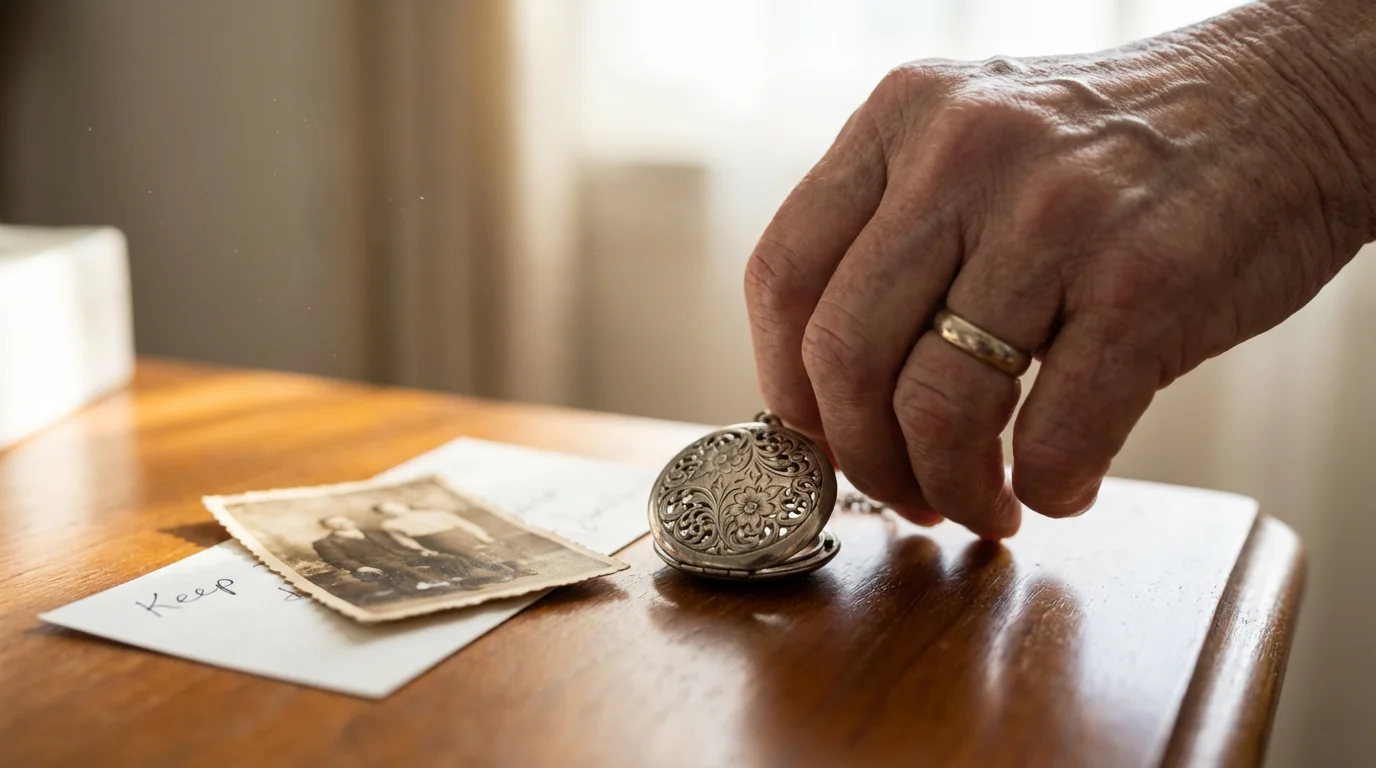
Once you’ve systematically sorted through your items, the next logical step is to decide their final destination. This phase of downsizing brings closure and, importantly for me, clears your living space efficiently. I always organize items into four distinct categories: Keep, Donate, Sell, or Discard. It’s a clear framework.
Streamlining your possessions can also be an effective way to reduce expenses in retirement while clearing physical space, something I’m always looking at with our finances.
And as you prepare to vacate the property, it’s also important to consider the financial implications of selling your home and how it affects your retirement planning – that’s a whole other spreadsheet!
Keep
These are the items you’ve consciously chosen to bring into your new home. They serve a purpose, bring you joy, or hold irreplaceable sentimental value that you’ve decided to physically retain. Make sure these items fit comfortably and purposefully into your downsized space.
Donate
Many items still have life and can benefit others. Donating provides a meaningful way to honor your loved one’s legacy by helping those in need. I volunteer at a local food bank on Thursdays, and I’ve seen firsthand how much good these organizations do.
Organizations like Goodwill accept clothing, household goods, and furniture. For larger furniture or building materials, consider Habitat for Humanity ReStore. Keep a detailed list of donated items for potential tax deductions, as the IRS offers guidance on charitable contributions.
Sell
For valuable items, collectibles, or furniture in good condition, selling can provide extra funds. This is where a bit of research pays off. Options include:
- Estate sales: Professional estate sale companies manage the entire process, from pricing to selling, which can be invaluable when you are grieving. Websites like EstateSales.net help you find local services.
- Online marketplaces: Platforms like eBay, Facebook Marketplace, or local classifieds allow you to sell items directly.
- Consignment shops: For clothing, furniture, or antiques, consignment stores sell items on your behalf for a percentage of the sale.
Discard
Some items are simply beyond use or repair. These include broken furniture, stained clothing, or anything unsanitary. Dispose of these items responsibly. Check local regulations for proper disposal of electronics, hazardous waste, or large bulk items. It’s not glamorous, but it’s a necessary step in the process.

Leveraging Professional Support for a Smoother Transition
Let me tell you, you absolutely do not have to navigate this journey alone. Professional assistance can significantly reduce the emotional and physical burden of downsizing, especially when you’re grieving.
These experts provide structure, efficiency, and unbiased support – something I always appreciate. When Dorothy and I were researching 55+ communities, I spent two full years on it, building my comparison matrix with 14 variables.
I wasn’t just looking at floor plans; I was looking at support services, too. If you’re feeling overwhelmed, preparing for your transition with professional movers or senior relocation specialists can alleviate much of the physical burden.
Beyond sorting belongings, a move manager can also assist in finding your perfect downsized home that meets your needs for the future. I’d always recommend researching these options thoroughly:
- Senior Move Managers: These specialists coordinate all aspects of downsizing and relocation for older adults. NASMM-certified senior move managers offer invaluable support, managing sorting, packing, moving, and even setting up your new home.
- Professional Organizers: Members of associations like the National Association of Productivity & Organizing Professionals (NAPO) provide hands-on help with decluttering, sorting, and organizing. They offer practical strategies and emotional support without judgment.
- Appraisers: If you suspect items hold significant monetary value, consult a certified appraiser. They provide accurate valuations for antiques, art, jewelry, or collectibles.
- Estate Sale Professionals: As mentioned, these companies handle the entire process of selling off household contents, alleviating a major logistical burden.
- Therapists or Grief Counselors: If the emotional toll feels overwhelming, a therapist specializing in grief or life transitions offers a safe space to process your feelings. Dorothy would tell you that sometimes, a good listener is the most valuable professional of all.
Investing in professional help can save you time, energy, and emotional distress, making the downsizing process much more manageable. It’s an investment in your peace of mind.

Digital Decluttering: Preserving Memories in a New Way
Downsizing, as I see it, extends beyond just the physical items. Our digital lives – filled with photos, documents, and emails – also require a methodical approach. Digital decluttering allows you to preserve precious memories without consuming any physical space, which is a major win in my book.
I approach digital items with the same systematic rigor I apply to our finances, which Dorothy calls ‘a level of detail that belongs in a NASA mission.’
- Photos: Consolidate digital photos from various devices and cloud services. Delete duplicates and blurry images. Organize remaining photos into logical folders or albums. Consider creating digital photo books or slideshows to share and enjoy.
- Documents: Scan important paper documents, such as legal papers, financial records, and sentimental letters, to create digital backups. Securely shred the originals after scanning.
- Emails and files: Delete old emails, newsletters, and unnecessary digital files. Organize important documents into cloud storage or external hard drives for easy access and backup.
- Social media: Review social media accounts and digital subscriptions. Decide which ones to keep, deactivate, or memorialize.
This process not only reduces digital clutter but also ensures your memories remain accessible and secure for years to come. It’s a practical step for future peace of mind.

Supporting Others: Helping a Grieving Loved One Downsize
If you’re an adult child helping a parent or another loved one downsize after a loss, your role is absolutely crucial. I remember what our daughter Karen told Dorothy when she was resisting our move: “Mom, the grandkids want YOU, not the house.” That was the turning point.
Karen understood that empathy and patience become your most valuable tools here. Remember, this process is about their life and memories, not just about clearing a space.
Helping others navigate these changes is easier when you focus on building meaningful connections within a supportive community environment, something Dorothy has found with her ‘Florida family’ here in Hawthorn Ridge. Here’s how I’ve learned you can offer effective support, even when you’re itching to get things done:
- Offer a listening ear: Allow them to share stories and express their feelings without judgment or rushing. Sometimes, simply listening provides immense comfort.
- Do not force decisions: Suggest options and provide guidance, but avoid making demands. Their pace may be slower than you anticipate, and that is acceptable. I had to learn this with Dorothy.
- Break tasks into small chunks: Help them focus on one drawer, one box, or one small corner at a time. Celebrate each small accomplishment.
- Handle physical labor: Take on the heavy lifting, packing, and transportation of items. This frees them to focus on the emotional aspects of decision-making.
- Research resources: Find professional organizers, senior move managers, or donation centers. Present these options to your loved one.
- Respect their pace: Grief has its own timeline. Pushing too hard can create resistance and resentment. Trust me on this.
Your support makes a profound difference in helping a grieving loved one navigate this challenging transition with dignity and peace. It’s not always easy, but it’s worth it.
Frequently Asked Questions
What is the best way to cope with grief during downsizing?
I’d say the best way is to acknowledge your grief and give yourself permission to feel whatever emotions come up. Then, break the tasks into small, manageable steps – just like any big project. Seek support from friends, family, or a grief counselor if you need to.
I always make sure to take frequent breaks, maybe play some pickleball, and prioritize self-care. Remember that letting go of an item doesn’t mean letting go of the memory or the love.
How do I decide what to keep when everything feels sentimental after a loss?
That’s a tough one, and it’s where the emotional and practical sides really clash. My advice is to focus on curating a small, key collection of items that truly represent the essence of your loved one or your shared memories.
Consider photographing items you can’t keep physically – that preserves the visual memory. Ask yourself if the memory truly resides in the object or within you. Sharing family heirlooms with other family members who will cherish them is also a practical way to keep the memory alive.
Is it okay to delay downsizing if I am still heavily grieving?
Absolutely, it’s more than okay. There’s no right or wrong timeline for grief, or for downsizing for that matter. If the process feels entirely too overwhelming, by all means, postpone it until you feel more emotionally resilient.
If you do need to make some progress, start with very small, non-sentimental tasks to build some confidence and momentum, like clearing out a pantry. That’s how I’d approach it.
Can a professional organizer help me with downsizing after a loss?
Yes, without a doubt. Professional organizers, especially those who specialize in senior moves or bereavement, can be incredibly helpful. They provide unbiased support, practical strategies, and physical assistance with sorting, packing, and coordinating logistics.
They can also offer emotional encouragement without judgment, which is invaluable when you’re feeling overwhelmed. I’d definitely recommend researching them; it’s an investment that pays off in reduced stress.
Disclaimer: This article is for informational purposes only. Downsizing decisions are deeply personal and should be made at your own pace. If you’re struggling with the emotional aspects of letting go, consider speaking with a counselor or therapist who specializes in life transitions. For valuable items, consult with appraisers or estate professionals.









Leave a Reply