
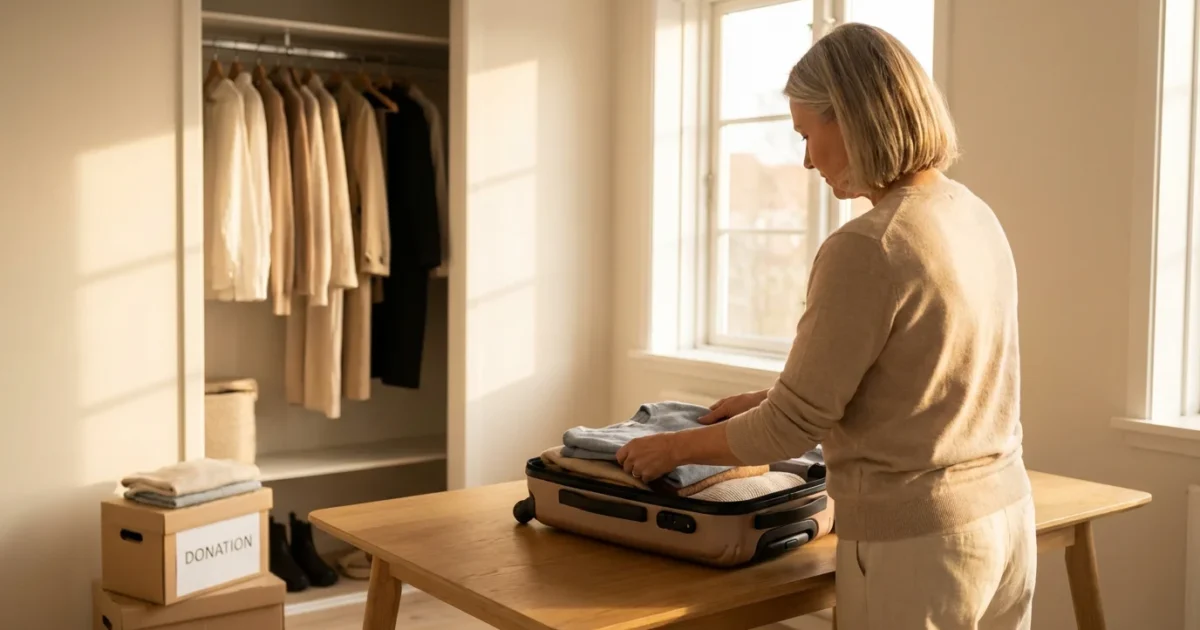
When Dorothy and I decided to sell our 2,400 sq ft colonial on Elmwood Drive in Columbus and move down to Hawthorn Ridge, the sheer volume of “stuff” we’d accumulated over 44 years was, as I once estimated, “approximately one metric ton of stuff we don’t need.”
And let me tell you, that often began with our wardrobes. For us, like for many, closets and dressers held more than just clothes; they contained memories, identity, and the story of a lifetime.
The idea of decluttering felt like a monumental task, but embracing a minimalist wardrobe for retirement offered us freedom, simplicity, and a fresh start. This guide shares how we navigated the practical and emotional aspects of simplifying our closets, ensuring our retirement fashion truly reflects our current lifestyle.
=You’ll discover how to create a minimalist wardrobe, making choices that bring joy and ease to your daily life.
Simplifying your possessions is a core part of right-sizing your home for retirement to better suit your changing needs.
The Power of a Minimalist Wardrobe in Retirement
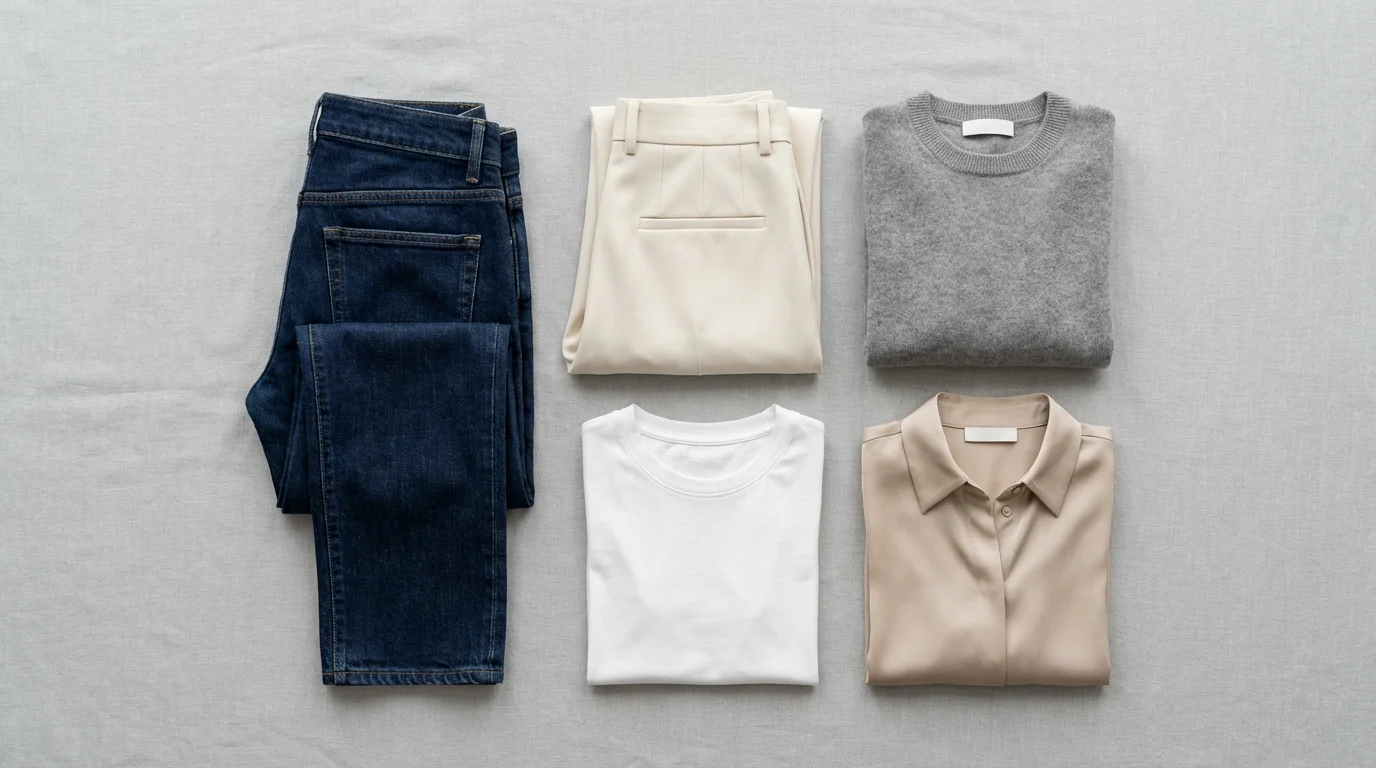
Imagine opening your closet each morning to find only items you love, wear regularly, and that fit your current lifestyle. This vision defines a minimalist wardrobe. It reduces decision fatigue, saves time, and creates a sense of calm. Embracing this approach simplifies your daily routine and aligns your possessions with your values.
A minimalist wardrobe means owning fewer items, but each piece serves a purpose. It frees up physical space in your home, a critical benefit when downsizing. When Dorothy and I moved from our 2,400 sq ft home to a smaller villa in Hawthorn Ridge, every square foot counted.
This strategic reduction also helps you reclaim mental energy previously spent on managing too many choices. You will experience the tangible benefits of a more organized life.
You might think a minimalist wardrobe means sacrificing style or variety. In reality, it means cultivating a collection of versatile, high-quality pieces that work together. You develop a clearer sense of your personal style, focusing on comfort, functionality, and elegance.
This approach ensures your retirement fashion serves you well every day. I used to have a closet full of suits and ties, but now it’s mostly polos, shorts, and comfortable pants – much more practical for the Florida heat and my pickleball mornings.
Understanding Your Retirement Lifestyle and Needs
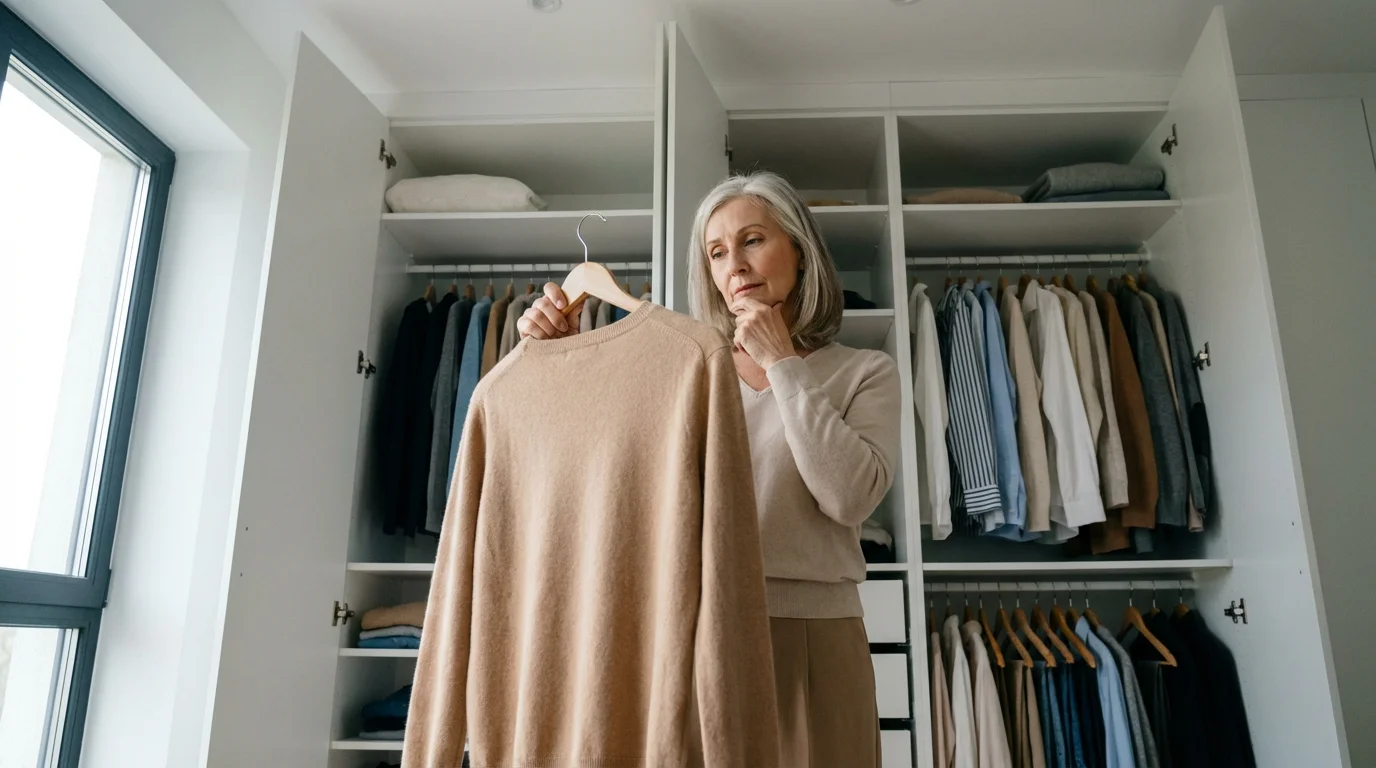
Before you begin decluttering, reflect on your retirement lifestyle. Your needs have likely shifted from your working years. Consider your daily activities, social engagements, and travel plans. Your wardrobe should support the life you are building now.
For me, that meant a complete overhaul from my civil engineering days. No more safety vests or dress shirts; now it’s all about comfort and being ready for a game of pickleball or my volunteer shift at the food bank.
Carefully selecting what to keep is especially important if you are preparing for a transition to a retirement community, as Dorothy and I were.
Ask yourself these questions about your typical week:
- What activities do I participate in most frequently (e.g., gardening, volunteering, golf, social gatherings, relaxing at home)?
- Do I travel often, and if so, what types of climates or occasions do I typically encounter?
- What level of formality do most of my social events require?
- Do I need specialized clothing for hobbies or activities?
- What colors and styles make me feel confident and comfortable?
Your answers will provide a framework for what constitutes essential items for a retirement wardrobe. For instance, if you spend most days gardening, you need durable, comfortable casual wear.
If you enjoy regular outings with friends, a few versatile, smart-casual outfits become essential. This assessment grounds your decluttering process in practicality. It’s the same kind of logical assessment I used when I built my 14-variable comparison matrix for 55+ communities.
The Emotional Journey of Letting Go of Clothing
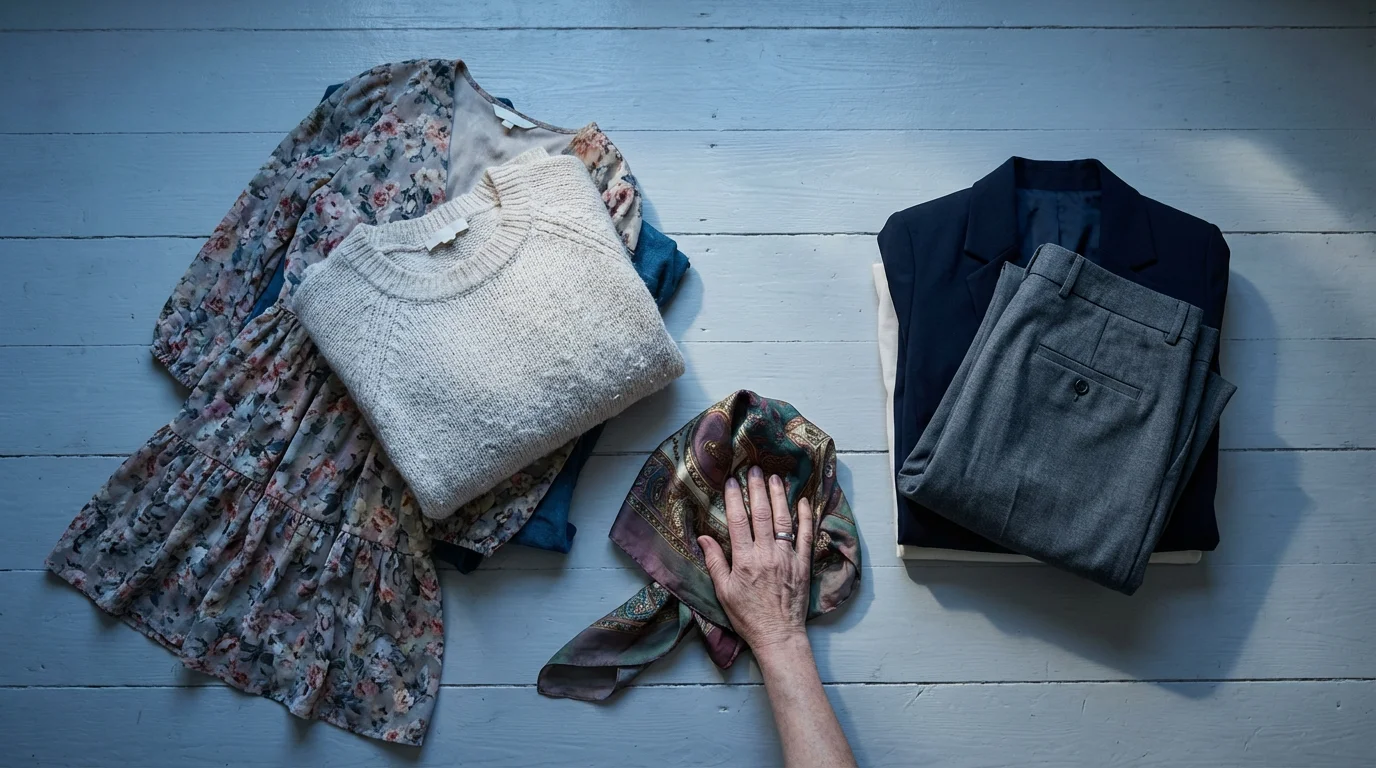
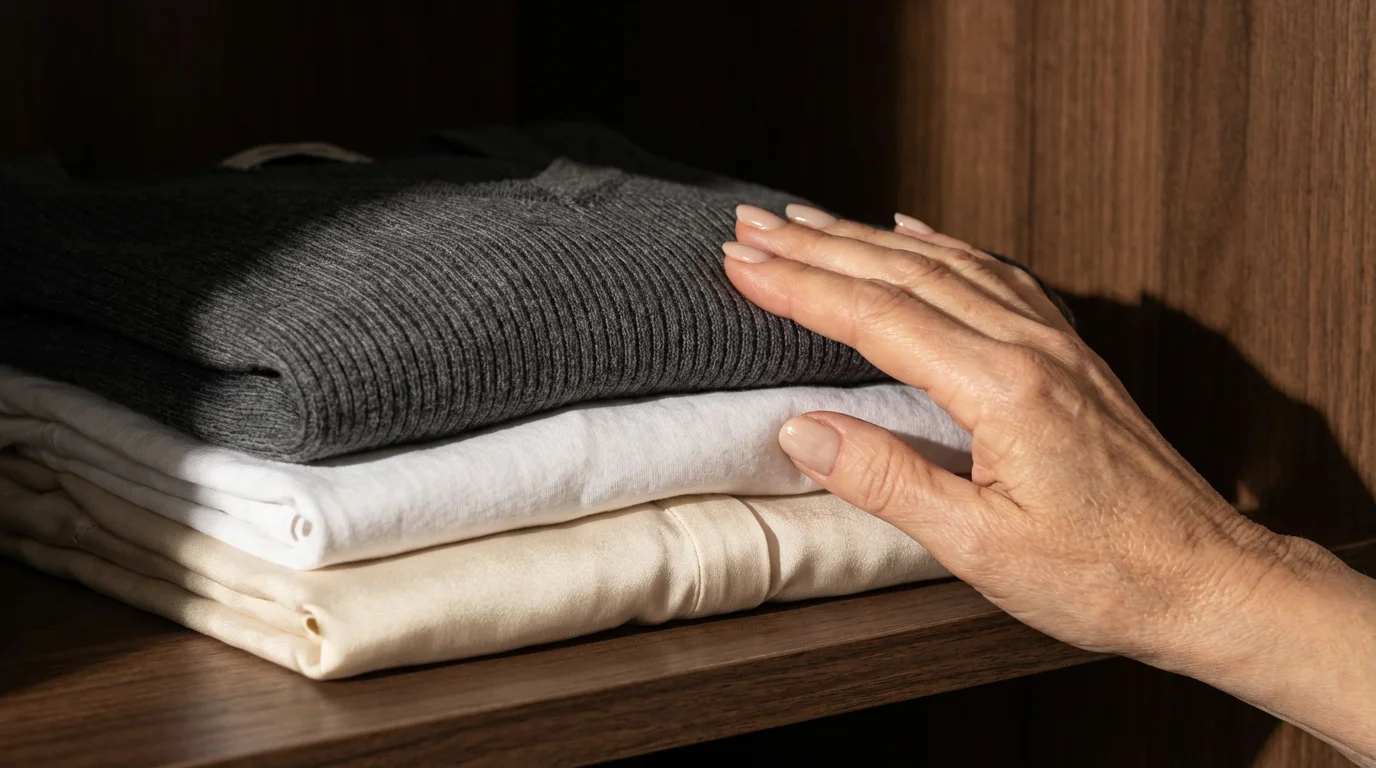
Downsizing a wardrobe is often more than just sorting fabric; it involves confronting memories and aspects of your past self. That wedding dress, the suit from a big promotion, or a sweater knitted by a loved one each carries a story. Acknowledge these emotions as a natural part of the process.
You are not just letting go of an item, you are processing a transition. I remember Dorothy had a particularly tough time letting go of some of her old librarian outfits and even a few of the kids’ baby clothes. She had feelings, and I had spreadsheets, as she often reminds me. Both turned out to be necessary.
Sharing the stories behind certain garments can also help you navigate family dynamics during this transition.
Allow yourself time to feel these emotions without judgment. It is okay to pause, reflect, and even shed a tear. Rushing this step can lead to regret or a sense of loss. Approach each item with kindness towards yourself and the memories it holds.
“Clutter is postponed decisions,” as professional organizer Barbara Hemphill reminds us. This applies especially to items we hold onto for sentimental reasons. You are not discarding the memory itself; you are making space for your present and future.
Consider ways to preserve memories without keeping every physical item. We explore this further in a later section.
The process of letting go can be even more complex if you are downsizing after a loss, as every item may feel like a tie to a loved one.
Step-by-Step Decluttering: Your Wardrobe Action Plan
I’m a civil engineer by trade, so a systematic approach comes naturally to me. This section is all about applying that same methodical thinking to your wardrobe. Breaking it into manageable steps prevents overwhelm and ensures thoroughness. Remember to work at your own pace.
- Gather Your Supplies: Before you start, collect everything you need. This includes boxes or bags labeled for “Keep,” “Donate,” “Sell,” and “Discard.” Have a full-length mirror and good lighting available. I found it helpful to have a notepad too, to track progress and make notes for Dorothy’s items.
- Choose a Starting Point: Do not attempt to tackle your entire wardrobe at once. Start with a single category like shirts, pants, or even just one drawer. This method makes the task less daunting. For example, begin with all your everyday casual tops. I started with my old work shirts – a clear-cut category that was easier to process first.
- Remove Everything: Take all items from your chosen category out of the closet or drawer. Place them on your bed or another clear surface. This allows you to see everything you own in that category, preventing items from hiding away. You often discover forgotten pieces this way. It’s like taking inventory, which I’m quite good at.
- Handle Each Item Individually: Pick up each garment. Ask yourself a series of critical questions to determine its fate:
- Does it fit my current body comfortably?
- Have I worn it in the past year?
- Does it align with my retirement lifestyle (casual, formal, active)?
- Is it in good condition (no rips, stains, excessive pilling)?
- Does it make me feel good when I wear it?
Marie Kondo’s famous question, “Does it spark joy?” can be a powerful guide here. Dorothy found that question very helpful. For me, it was more about “Does it serve a practical purpose for my life now?” If an item no longer serves a purpose, fits, or brings you joy, it is time for it to move on.
- Sort Into Categories: Based on your answers, place each item into one of your labeled boxes or bags:
- Keep: Items you love, wear, and fit your current lifestyle.
- Donate: Items in good condition that you no longer need or want.
- Sell: Valuable items in excellent condition that could fetch a good price (designer wear, unworn pieces).
- Discard: Items that are torn, stained, heavily worn, or otherwise unusable.
Be honest with yourself about the “Sell” pile. Selling can take time and effort; if you are not committed, move it to “Donate.” I had a few expensive work coats that I thought might sell, but the effort wasn’t worth the return once I factored in my time. They went to donate.
- Evaluate Your “Keep” Pile: Once you have sorted everything, look at your “Keep” pile. Do you have too many similar items? Can you create versatile outfits from these pieces? This is where the minimalist wardrobe truly takes shape. Ensure each item adds value to your retirement fashion collection.
- Repeat: Move on to the next category of clothing or another section of your wardrobe. Maintain your momentum but take breaks as needed. This systematic process ensures you address every item in your closet.
To ensure your decluttering project remains positive and efficient, it is wise to review common downsizing mistakes to avoid before you start sorting.
Building Your Essential Retirement Wardrobe
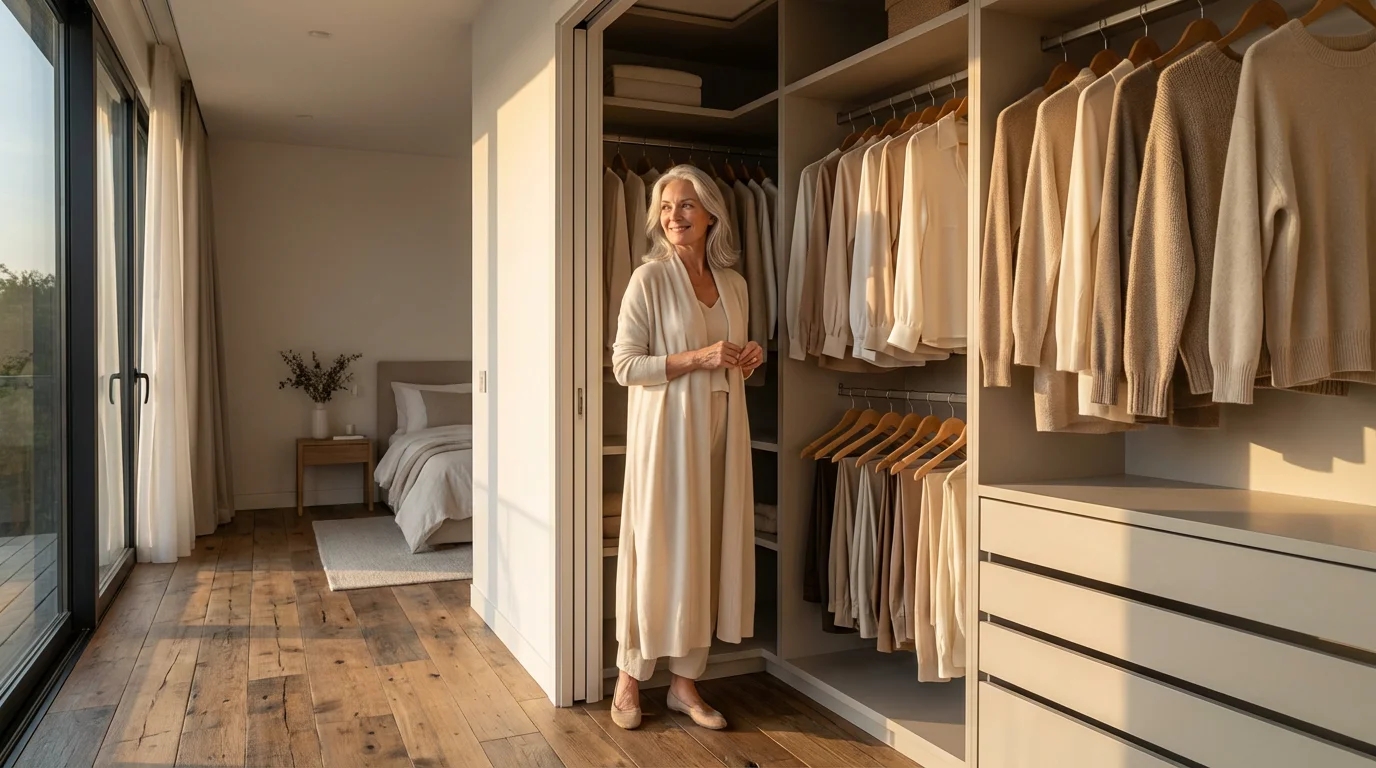
After decluttering, you possess a clearer picture of your needs. Now, focus on curating your essential retirement wardrobe. This means selecting versatile pieces that can be mixed and matched, forming multiple outfits.
For me, that meant focusing on comfort and durability for activities like pickleball and volunteering, while still having something decent for dinner out with Dorothy.
Your clothing choices should also prioritize ease of use, a concept often discussed when making a home safe and accessible for aging in place.
Consider these categories for your core wardrobe:
- Comfortable Bottoms: Choose a few pairs of well-fitting pants (jeans, chinos, or comfortable slacks) and skirts. Opt for neutral colors like black, navy, grey, or khaki, which pair easily with various tops. I kept a couple of pairs of good jeans and a few pairs of khakis.
- Versatile Tops: Include a mix of short-sleeved shirts, long-sleeved shirts, and blouses. Look for breathable fabrics and colors that complement your skin tone and other wardrobe items. Think solid colors and subtle patterns. My go-to now are quick-dry polo shirts for pickleball and some comfortable button-downs for other occasions.
- Layering Pieces: Cardigans, lightweight sweaters, and a comfortable blazer or jacket add warmth and style. They instantly transform an outfit from casual to smart. A light jacket is essential here in Florida for cooler evenings.
- Outerwear: Depending on your climate, you need a versatile coat (e.g., a trench coat, a lightweight jacket, a warm winter coat). Choose one that works for various occasions. I got rid of my heavy winter coats when we moved to Florida; a light rain jacket is all I need now.
- Dresses/Jumpsuits (Optional): If you enjoy them, include a few comfortable dresses or a jumpsuit that can be dressed up or down. A simple shift dress, for example, offers great flexibility. Dorothy has a few that she rotates.
- Footwear: Prioritize comfort and support. Select a few pairs of shoes suitable for your activities: walking shoes, casual flats or loafers, and one slightly dressier pair. My pickleball shoes get a lot of mileage, but I also have comfortable walking shoes for our trips to the beach.
- Accessories: Scarves, a few pieces of jewelry, and versatile handbags can refresh outfits without adding bulk.
The goal is to have pieces that serve multiple purposes. A neutral cardigan can go over a t-shirt for a casual look or over a blouse for a more polished appearance. This strategic selection is key to creating a minimalist wardrobe as a senior. It’s about efficiency, really.
Organizing and Maintaining Your New Wardrobe
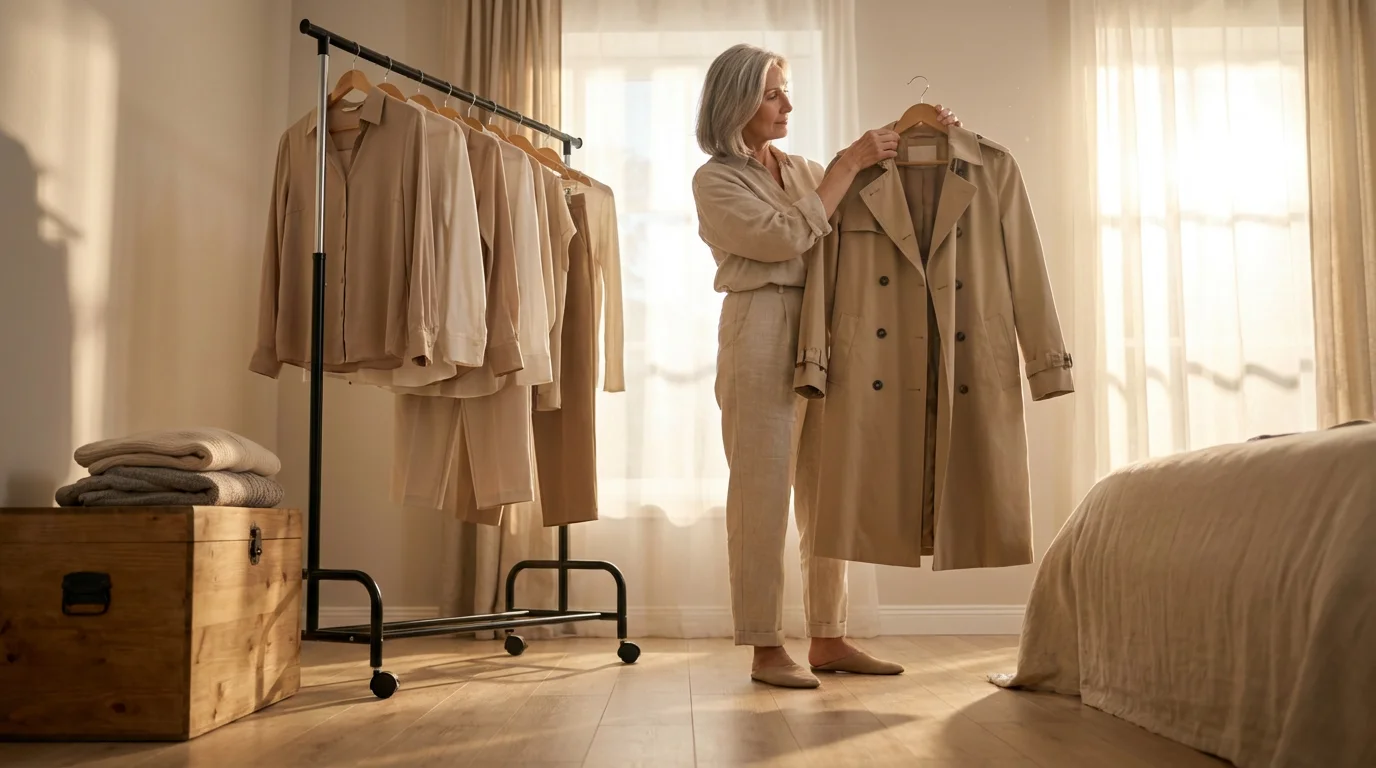
A minimalist wardrobe thrives on organization. Once you have curated your collection, implement systems to keep it tidy and accessible. This prevents clutter from creeping back in.
I manage our finances with what Dorothy calls “a level of detail that belongs in a NASA mission,” so applying similar principles to our closets was a natural fit.
The principles of organization applied here are similar to those used when creating a functional downsized kitchen.
Effective organization strategies include:
- Use Appropriate Storage: Invest in slim hangers that maximize closet space. Drawer dividers keep smaller items like socks and underwear neat. Clear bins are useful for storing seasonal items or accessories. I used some simple drawer organizers for my t-shirts and socks – it makes a surprising difference.
- Fold or Hang Thoughtfully: Fold sweaters to prevent stretching and hang items that wrinkle easily. Group similar items together (e.g., all shirts, all pants). I group my shirts by color, which Dorothy finds amusing, but it works for me.
- Seasonal Rotation (Optional): If you have limited space and distinct seasons, rotate out-of-season clothing. Store off-season items in clear, airtight containers in a less accessible spot. Make sure everything is clean before storing it to prevent damage. We don’t have much “off-season” here in Florida, but this was crucial for us back in Ohio.
- “One In, One Out” Rule: Adopt a simple rule that for every new clothing item you purchase, one existing item must leave your wardrobe. This maintains the streamlined size of your collection. It’s a non-negotiable rule for Dorothy and me now.
- Regular Reviews: Periodically, perhaps once or twice a year, quickly review your wardrobe. Check for wear and tear, items that no longer fit, or pieces you simply do not reach for. This proactive approach keeps your retirement fashion current and clutter-free.
When arranging your new closet space, keep in mind that downsizing for accessibility can help you design a safer and more convenient environment for the future.
Maintaining your wardrobe helps you appreciate what you own and ensures everything remains functional. You save time and reduce stress when your closet is always organized.
Handling Sentimental Apparel and Heirlooms
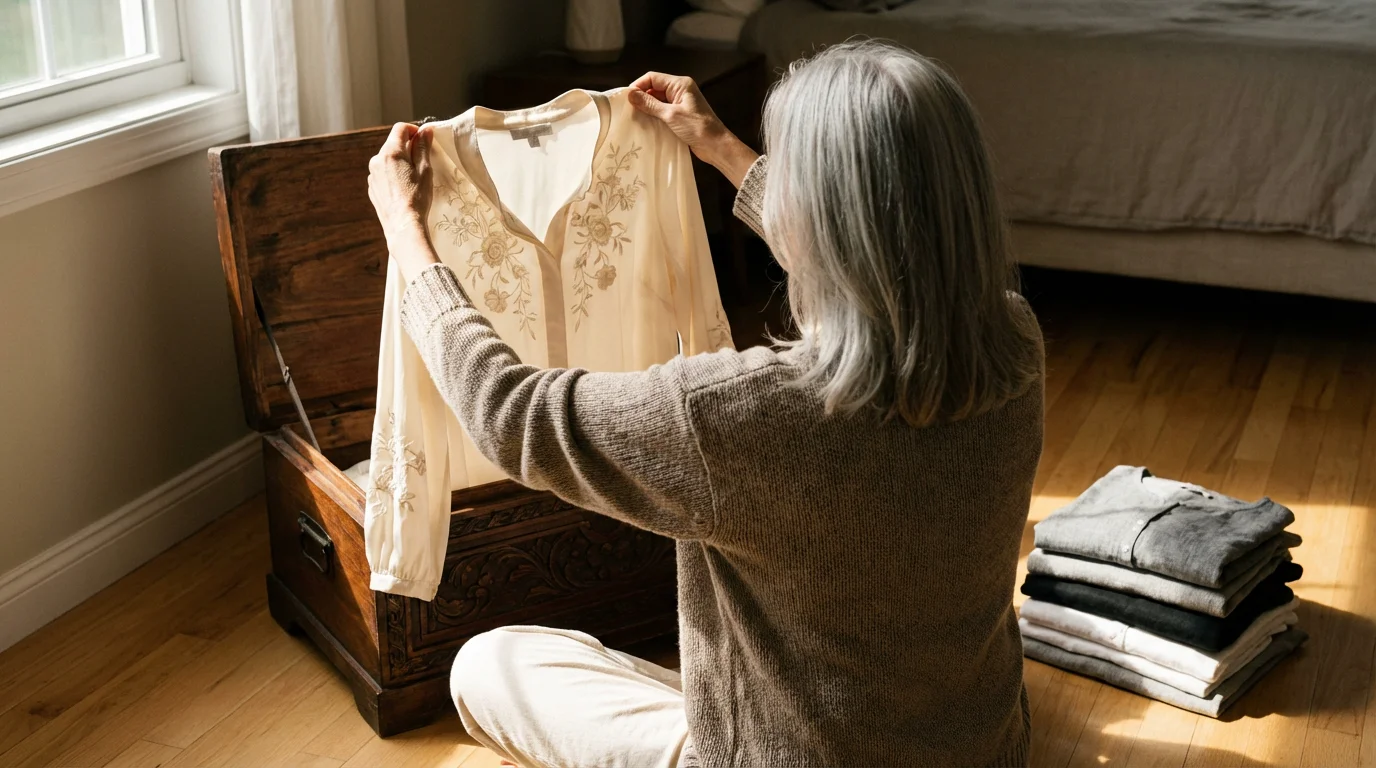
Some clothing items carry deep sentimental value, making them particularly difficult to let go of. These might be a grandmother’s shawl, a child’s christening gown, or your favorite concert t-shirt from decades ago.
You do not need to keep every single item to honor the memories. Dorothy, especially, had a tough time with these. I learned to be patient, but also to suggest practical solutions.
Consider these approaches for sentimental apparel:
- Transform and Repurpose: Can you repurpose a piece into something else? A loved one’s scarf could become a cushion cover. Old t-shirts can be sewn into a memory quilt. This preserves the fabric and memory in a functional way. Our daughter, Karen, made a quilt for us out of some of the grandkids’ baby clothes.
- Photograph and Document: Take high-quality photographs of items you are ready to release. Write down the stories associated with them. Create a digital album or a physical memory book. The memory lives on without the physical burden. This was my suggestion for Dorothy’s elementary school librarian costume collection.
- Select a “Memory Box”: Designate a small, specific box for a very limited number of truly irreplaceable items. These are items that genuinely spark profound joy or hold unique historical family significance. The key is “small” and “limited.” We have one small box for both of us now, which is a significant reduction from what we used to keep.
- Share with Family: If an item is a family heirloom, consider if another family member would cherish and use it. Offering it to them ensures its legacy continues. Our kids took some of the more significant pieces.
- Display Meaningfully: A particularly beautiful or significant item could be framed or displayed as art, if space allows. For example, a vintage lace wedding veil could be mounted.
The goal is to honor the sentiment without letting it overwhelm your living space. You can cherish memories without being owned by the objects themselves.
The things you own end up owning you.
This statement reminds us of the freedom that comes with intentional living. You choose what holds value for you now.
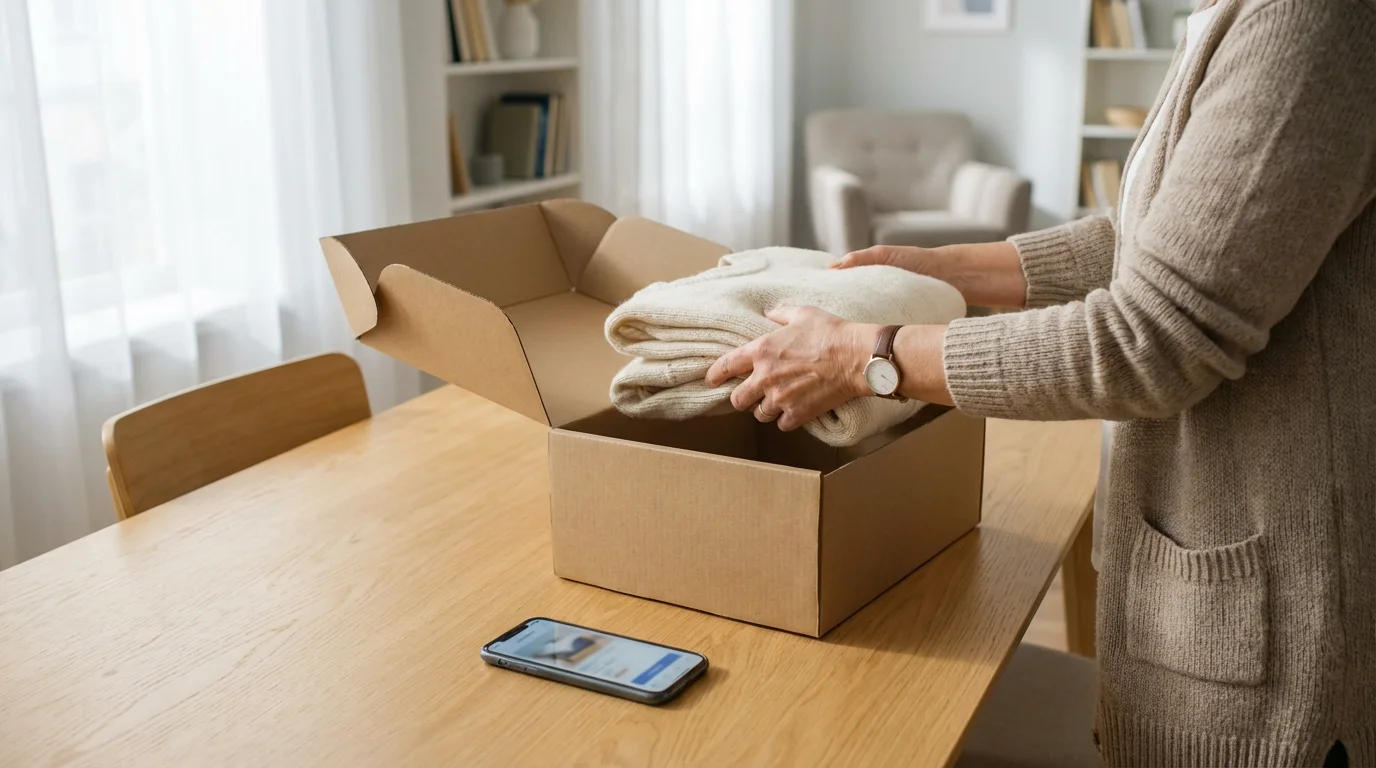
Donating, Selling, and Disposing of Clothing Responsibly
Once you have sorted your wardrobe, you face the task of responsibly handling the items you no longer need. This final step clears your space and contributes positively to the community or environment.
When Dorothy and I downsized our Columbus house, we filled a 10×20 storage unit with things, but we also had a significant number of items for donation and sale.
For items in good condition:
- Donate to Charities: Organizations like Goodwill or local thrift stores accept clothing donations. This supports their community programs and provides affordable items for others. Always check their donation guidelines first. We made multiple trips to our local Goodwill in Columbus.
- Consignment Stores: For higher-end or designer items, local consignment stores might purchase them outright or sell them on your behalf, giving you a percentage of the sale. Dorothy had a few pieces she tried to sell this way.
- Online Marketplaces: Platforms like eBay, Poshmark, or local Facebook Marketplace groups can be effective for selling specific brands or unique pieces. Be prepared for the effort involved in photographing, listing, and shipping.
- Estate Sales: If you are managing a larger home downsizing, an estate sale service can handle the sale of clothing and other household items. Services like those found via Estate Sales News can be helpful. We considered an estate sale, but ultimately handled most of it ourselves.
Reducing the volume of your possessions is an excellent first step toward downsizing your finances and lowering your overall cost of living.
For items not suitable for donation or sale:
- Textile Recycling: Many communities offer textile recycling programs for worn-out clothes, linens, and shoes. These items are often repurposed into insulation, rags, or new fibers. Check with your local waste management services for options.
- Discard: As a last resort, items that are truly beyond repair, heavily soiled, or not accepted by recycling programs go into general waste. Minimize this pile by exploring other options first.
Handling items responsibly completes your downsizing process. You free up physical space, reduce environmental impact, and potentially help others.
Frequently Asked Questions
How long does it typically take to downsize a wardrobe?
The time required varies greatly depending on the size of your wardrobe and your decision-making speed. For a moderate wardrobe, plan several hours to a full day, broken into manageable segments. Approaching it room by room or category by category, as I prefer, can make it less overwhelming and more efficient.
What are the essential items for a retirement wardrobe for women?
For women, essential items often include comfortable, well-fitting pants (jeans, slacks), versatile tops (t-shirts, blouses, knit tops), layering pieces (cardigans, light jackets), a few comfortable dresses or skirts, and supportive, stylish footwear.
Dorothy found focusing on neutral colors and breathable fabrics that mix and match easily, suitable for both casual and slightly dressier occasions, was key for her new Florida lifestyle.
What are the essential items for a retirement wardrobe for men?
For men, key items typically consist of comfortable trousers (chinos, jeans, casual slacks), a selection of polo shirts, button-down shirts, and t-shirts, layering options (sweaters, vests, casual jackets), and comfortable shoes like loafers or walking sneakers.
I emphasize versatility and comfort for my own wardrobe, ensuring items suit my daily activities, like pickleball, and still provide a polished appearance when needed.
How often should I review my minimalist wardrobe?
I recommend reviewing your minimalist wardrobe at least twice a year, ideally at the change of seasons. This allows you to assess what you have worn, identify items that no longer fit or serve your lifestyle, and ensure everything remains in good condition.
Regular maintenance prevents clutter from accumulating again, which is a principle I apply to all areas of our home management.
Can I still keep sentimental clothing items in a minimalist wardrobe?
Absolutely. A minimalist wardrobe does not mean discarding everything with sentimental value. It means being intentional about what you keep. Select a very limited number of truly meaningful items, perhaps one or two, to keep in a designated memory box or by repurposing them.
For others, consider photographing them or sharing their stories. This approach honors memories without sacrificing functional space, which was a compromise Dorothy and I found worked well for us.
Disclaimer: This article is for informational purposes only. Downsizing decisions are deeply personal and should be made at your own pace. If you’re struggling with the emotional aspects of letting go, consider speaking with a counselor or therapist who specializes in life transitions. For valuable items, consult with appraisers or estate professionals.





Leave a Reply