
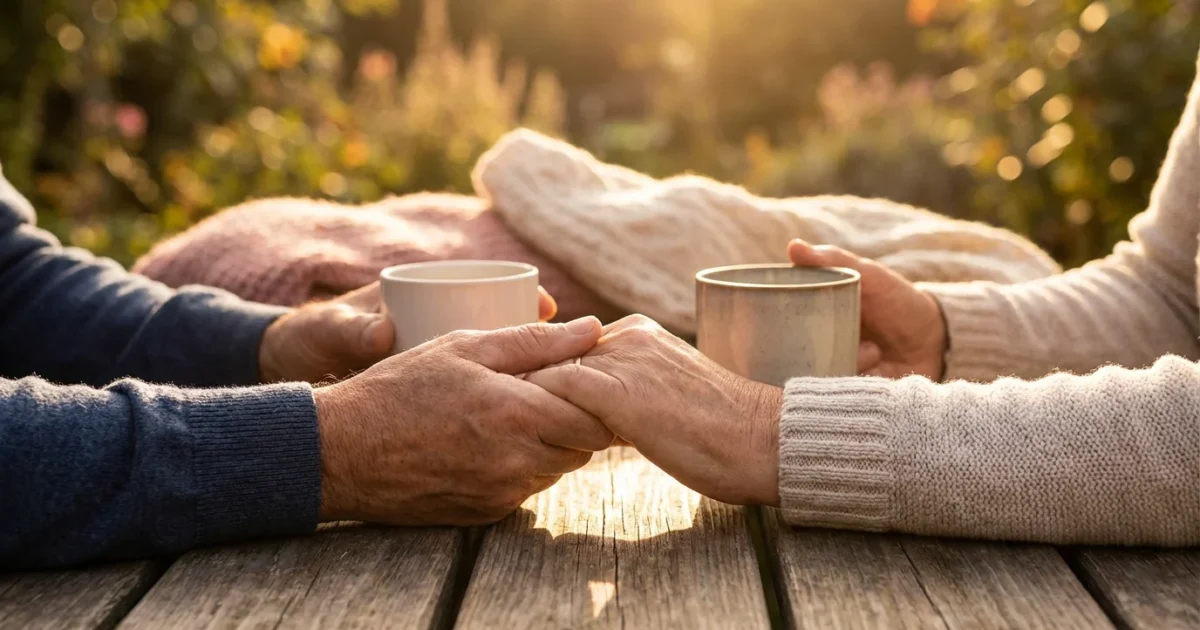
Retirement truly offers a profound opportunity to redefine your daily life, pursuing passions, travel, or simply enjoying newfound freedom. For me, this chapter also brought a deep desire for deeper social connections and a vibrant community.
Moving into a 55+ active adult community like our Hawthorn Ridge has provided an ideal environment to cultivate new relationships, engage in diverse activities, and truly thrive. I wanted a place where my interests were met, where opportunities for interaction abounded, and where I genuinely felt a sense of belonging, especially after leaving our long-time home in Columbus.
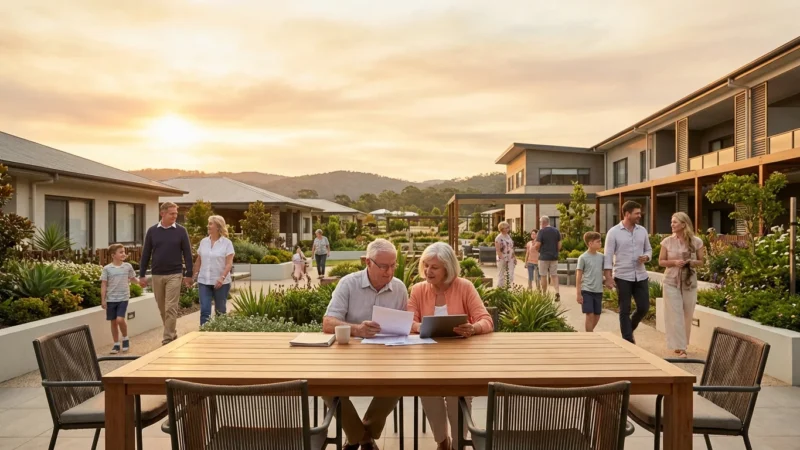
Finding the right setting started with exploring various housing options that prioritized both comfort and communal space. Bill, bless his methodical heart, had spreadsheets for everything, but I knew I needed to feel the place.
This guide explores how I found my community, embraced social engagement, and built lasting friendships. It offers practical strategies for navigating social landscapes, whether you’re an extrovert eager for constant interaction like I am, or an introvert who values meaningful, quiet connections.
I understand that finding your “tribe” means discovering people who share your values and enhance your retirement experience, all while respecting your need for personal space and independence. That balance is so important.
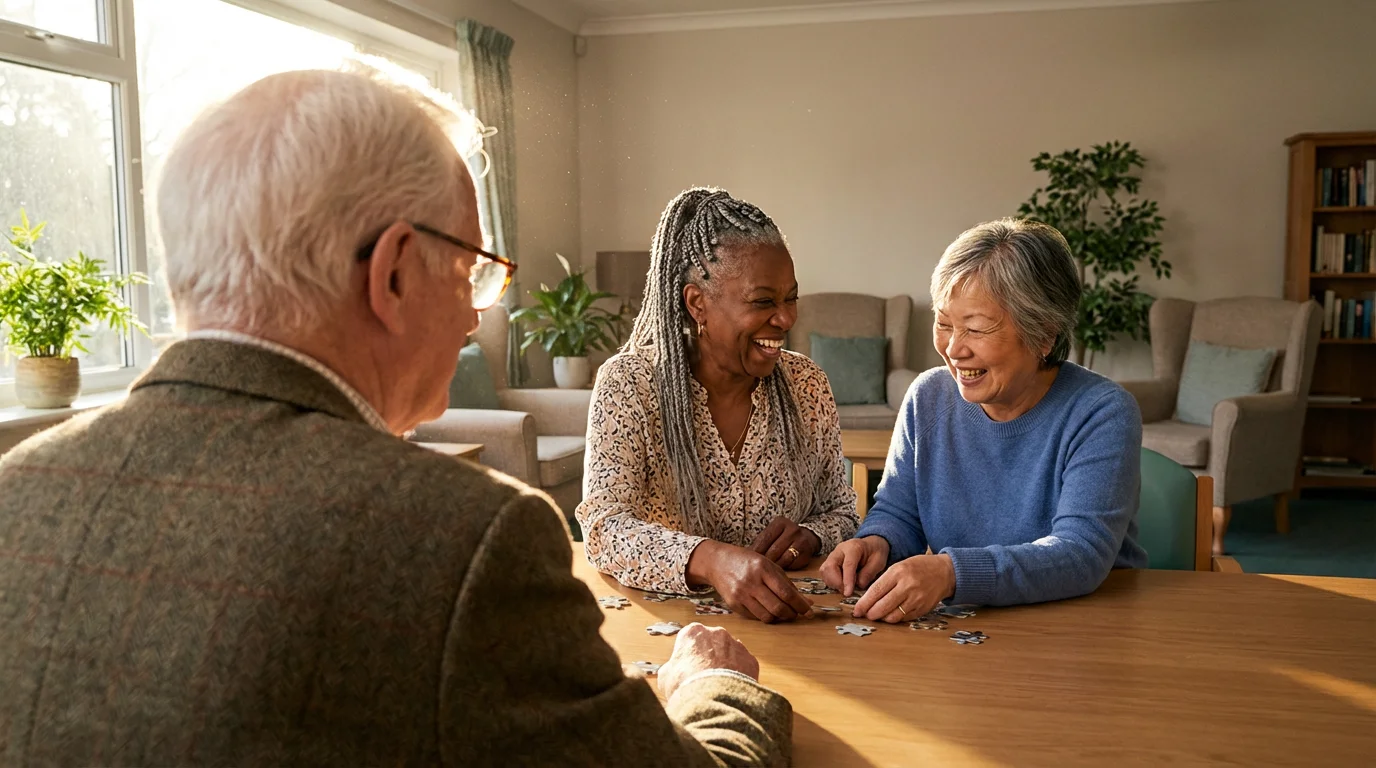
The Power of Connection: Why Your Tribe Matters
Oh, we humans are such social creatures, aren’t we? Strong social ties contribute so much to our overall well-being, especially as we navigate the unique stages of retirement. I know for me, after leaving our home on Elmwood Drive where we’d lived for 44 years, I really felt that pull to connect.
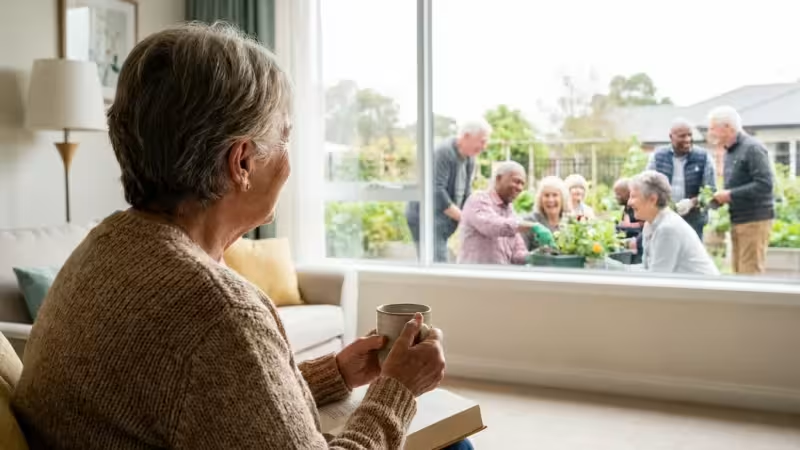
I missed my neighbors and the familiar faces in Columbus. Research consistently shows that meaningful connections combat social isolation and loneliness, issues the National Institute on Aging identifies as serious public health concerns. Engaging socially can boost cognitive health, improve mood, and even extend your lifespan.
Deciding between community living vs aging in place was often the first step in prioritizing these essential social benefits for Bill and me. I was so resistant to leaving our Columbus house, but looking back, I can see how much I needed this new community.
When you join a community-oriented retirement living environment, you gain immediate access to a network of peers often sharing similar life experiences and stages. This shared context fosters understanding and empathy, creating a fertile ground for new friendships to blossom.
The benefits extend beyond mere companionship; you find people who offer support, share laughter, and enrich your daily life with new perspectives and shared adventures. I’ve found my “Florida family” here at Hawthorn Ridge, and they mean the world to me.
A vibrant community offers a built-in support system. You have neighbors who check in, friends to share a meal with, and a collective spirit that looks out for one another.
This sense of belonging is a fundamental human need, and I truly believe retirement communities excel at cultivating it, providing the infrastructure and opportunities for robust social engagement. It’s like a big, extended family, but you get to pick the family members you spend the most time with!
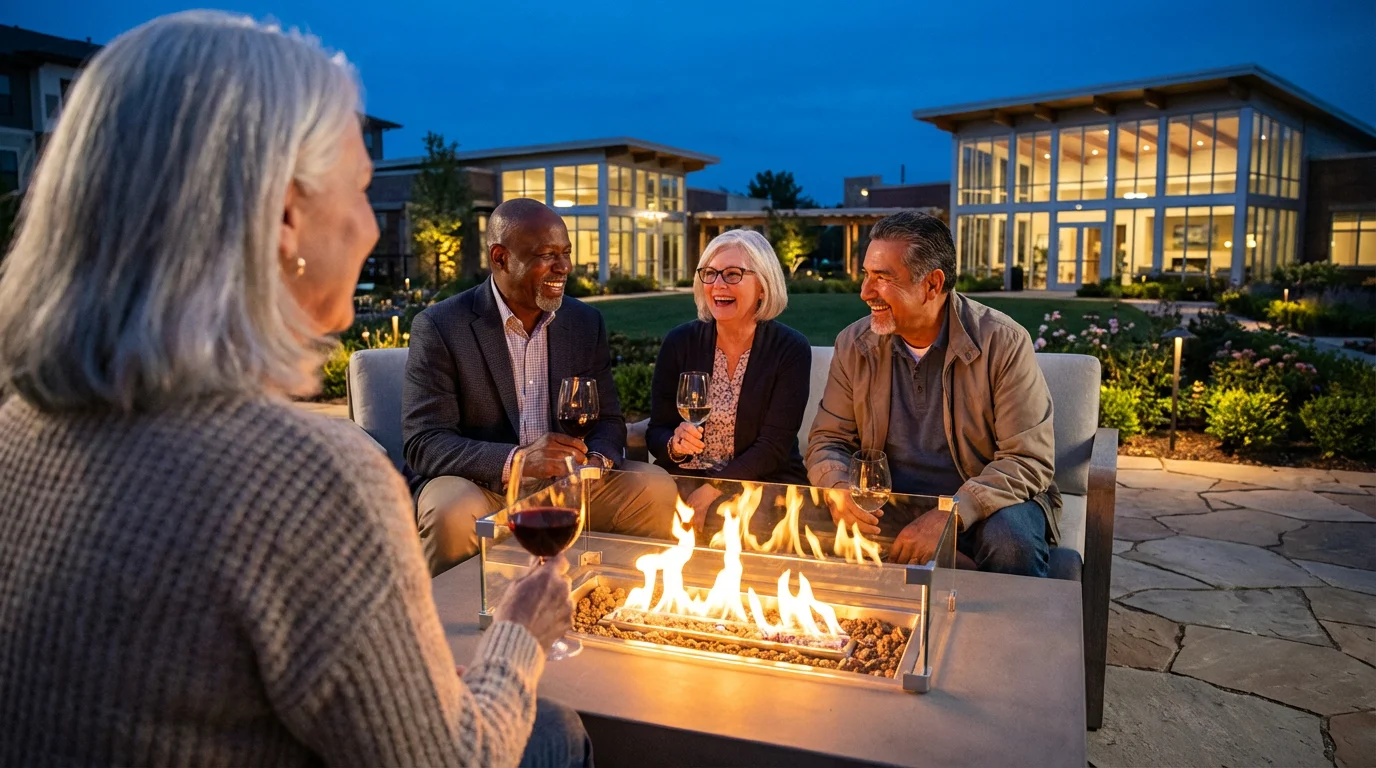
Choosing Your Community: Evaluating Social Fit
Selecting the right 55+ community involves so much more than just checking off amenity boxes. While beautiful clubhouses, golf courses, and fitness centers are appealing (and Hawthorn Ridge certainly has them!), the true heart of a community lies in its culture and the opportunities for social engagement it provides.
I remember Bill had his comparison matrix with 14 variables, all very practical, but I kept telling him, “Bill, what about the feeling? Do the people here seem happy?” I needed to consider how a community’s ethos aligned with my desire to build new friendships.
Remember that the surrounding area is just as important as the facility itself, so take time choosing a retirement destination that offers the external social opportunities you value. Sarasota has been wonderful for us!
Beyond basic amenities, focus on finding your niche within a community that matches your specific lifestyle goals.
During our search, I made sure to actively investigate the social fabric. I’d ask pointed questions and, more importantly, observe interactions. I wanted to understand the prevailing atmosphere.
Were residents actively participating in community activities, or did they mostly keep to themselves? Bill found sites like 55places.com valuable for reviews, but I found my best insights by simply talking to people at the pool or in the common areas.
When Bill and I toured communities, I always paid attention to these indicators of social vitality:
- Were common areas, like cafes, lounges, or craft rooms, populated with residents interacting?
- Did the community have a robust calendar of diverse events, from large social gatherings to smaller, interest-based clubs?
- Did residents greet each other warmly, even strangers, in hallways or at mailboxes? (I’m a big believer in a friendly hello!)
- Were there active resident associations or committees that empowered residents to shape community life?
- Did the community offer orientation or welcome events specifically designed to help new residents integrate socially?
Inquire about the range of social activities and programming available. A strong community offers something for everyone, ensuring that whether you prefer a bridge game, a book club, or a fitness class, you find your niche.
This diversity ensures that you can find companions who share your passions, making the path to friendship much smoother. It certainly did for me!
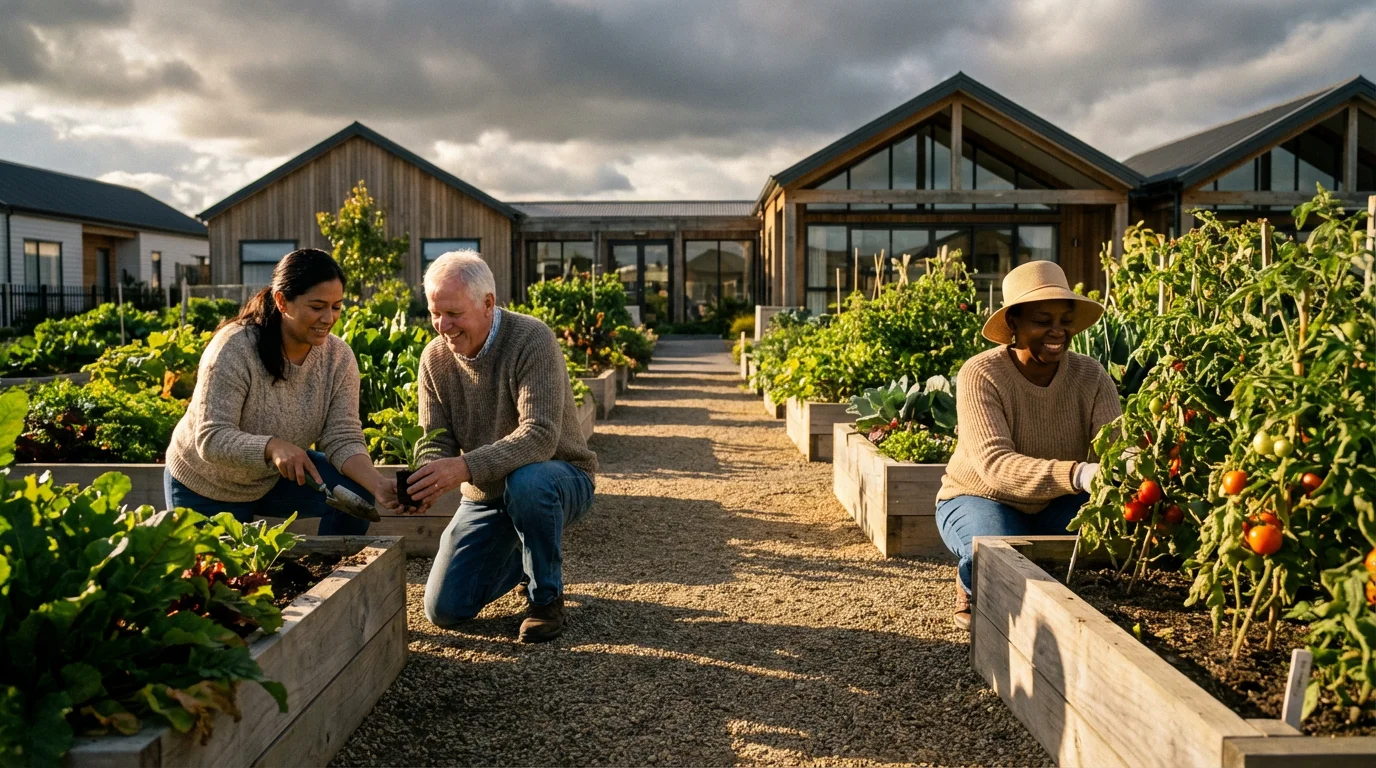
Engaging from Day One: Strategies for New Residents
Making friends in a new environment, regardless of age, definitely requires intention. I learned that quickly when we first moved to Hawthorn Ridge. In a 55+ community, you have a distinct advantage: a built-in network of peers often eager to welcome new faces.
Your proactive engagement can significantly accelerate your integration and the formation of new friendships. I remember those first three months felt like an adjustment, but by month six, I was the one telling all our friends back in Ohio they should do it too!
Before diving into social events, ensure your long-term plans are set by financing your retirement community properly to support your new lifestyle. Bill handled all that for us, which was a huge help.
Properly preparing for your transition can lower stress and leave you with more energy to focus on making new friends. I was so glad we had a good moving company.
The transition into community living is a fresh start, a chance to explore new aspects of yourself and connect with others. Don’t wait for opportunities to come to you; seek them out. Many communities offer welcome committees or resident ambassadors who specifically help new residents acclimate. Utilize these resources. I made sure to introduce myself to everyone I saw.
Here are actionable steps I found helpful to build connections from the moment you arrive:
- Attend Welcome Events: Many communities host specific gatherings for new residents. These are low-pressure environments designed for introductions and information sharing.
- Introduce Yourself to Neighbors: A friendly wave, a brief chat by the mailbox, or an offer to help with a small task can initiate contact. I even baked cookies for our new neighbors, just like I used to do on Elmwood Drive.
- Explore the Activity Calendar: Pick one or two activities that genuinely interest you. Consistency is key; attending the same group regularly helps you see familiar faces and build rapport. I signed up for a watercolor class right away, even though I’m not good at it!
- Volunteer for a Committee or Club: Contributing your time and skills is an excellent way to work alongside others, fostering shared purpose and natural conversation.
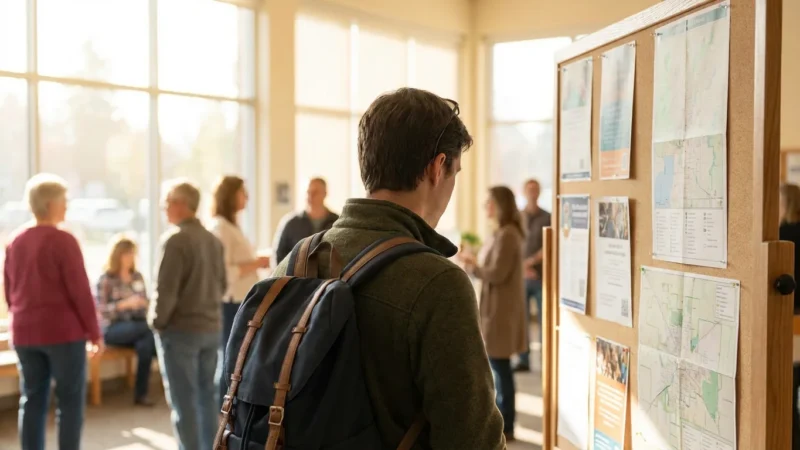
- Utilize Community Communication Channels: Read newsletters, bulletin boards, or online forums to stay informed about events and resident interests.
- Be Open and Approachable: A warm smile and open body language signal your willingness to connect. Initiate conversations, even if they are brief at first. I’m the one who talks to strangers at the pool, and that’s how I met my friend Carol!
Remember that forming deep connections takes time. Be patient with yourself and others. Some of the most enduring friendships begin with simple, consistent interactions that grow over weeks and months. Your willingness to participate and engage opens doors to countless opportunities for connection.

Diverse Paths to Connection: Activities for Every Interest
One of the greatest benefits of community living is the sheer breadth of activities available, catering to a wide spectrum of interests and energy levels. This diversity ensures that whether you’re an avid pickleball player like Bill, a quiet reader, or a passionate (though not very good!) artist like me, you find people who share your enthusiasm. Social engagement becomes effortless when it aligns with your natural inclinations.
A well-rounded community calendar promotes both active participation and passive enjoyment. You find everything from high-energy fitness classes to relaxed social hours.
This variety allows you to explore new hobbies or deepen existing ones, always with the potential for shared experiences and new friendships. I’ve certainly enjoyed my watercolor painting, even if my landscapes look more abstract than intended!
Consider the types of activities that foster connection:
- Fitness and Wellness: Yoga, water aerobics, walking clubs, pickleball (Bill plays four mornings a week!), golf leagues. These activities combine physical health with social interaction.
- Arts and Crafts: Painting classes (like my watercolor!), pottery workshops, knitting circles, photography clubs. Creative pursuits often lead to camaraderie and shared artistic expression.
- Learning and Discussion: Book clubs, current events discussions, guest speaker series, language classes. Intellectual engagement can form strong bonds.
- Games and Hobbies: Bridge groups, Mahjong, poker nights, billiards tournaments, gardening clubs. Shared leisure activities are natural friendship incubators.
- Culinary and Dining: Potluck dinners, cooking demonstrations, themed dining events, restaurant outings. Food brings people together. Bill has even become an unexpectedly good cook since retirement!
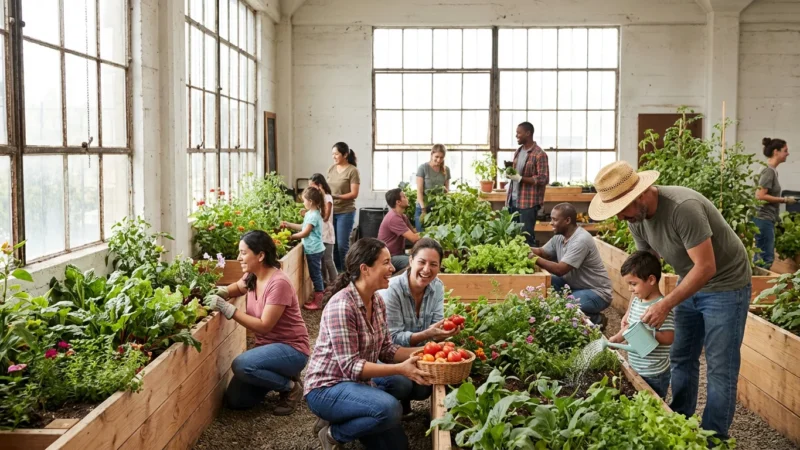
- Volunteering and Service: Community outreach programs, fundraising events, helping with community gardens. Working together for a cause creates strong collective purpose. Bill volunteers at a local food bank on Thursdays.
- Performing Arts: Community choirs, drama clubs, talent shows. Expressing yourself creatively alongside others builds unique bonds.
You don’t need to participate in everything. Choose what genuinely appeals to you. Consistency in attending even one or two groups helps you recognize faces, learn names, and gradually deepen your interactions into meaningful friendships.
Some communities even facilitate “interest groups” where residents propose and lead new activities, empowering you to create the connections you seek. That’s how my “Florida family” of friends really started to gel, through shared interests and just spending time together.
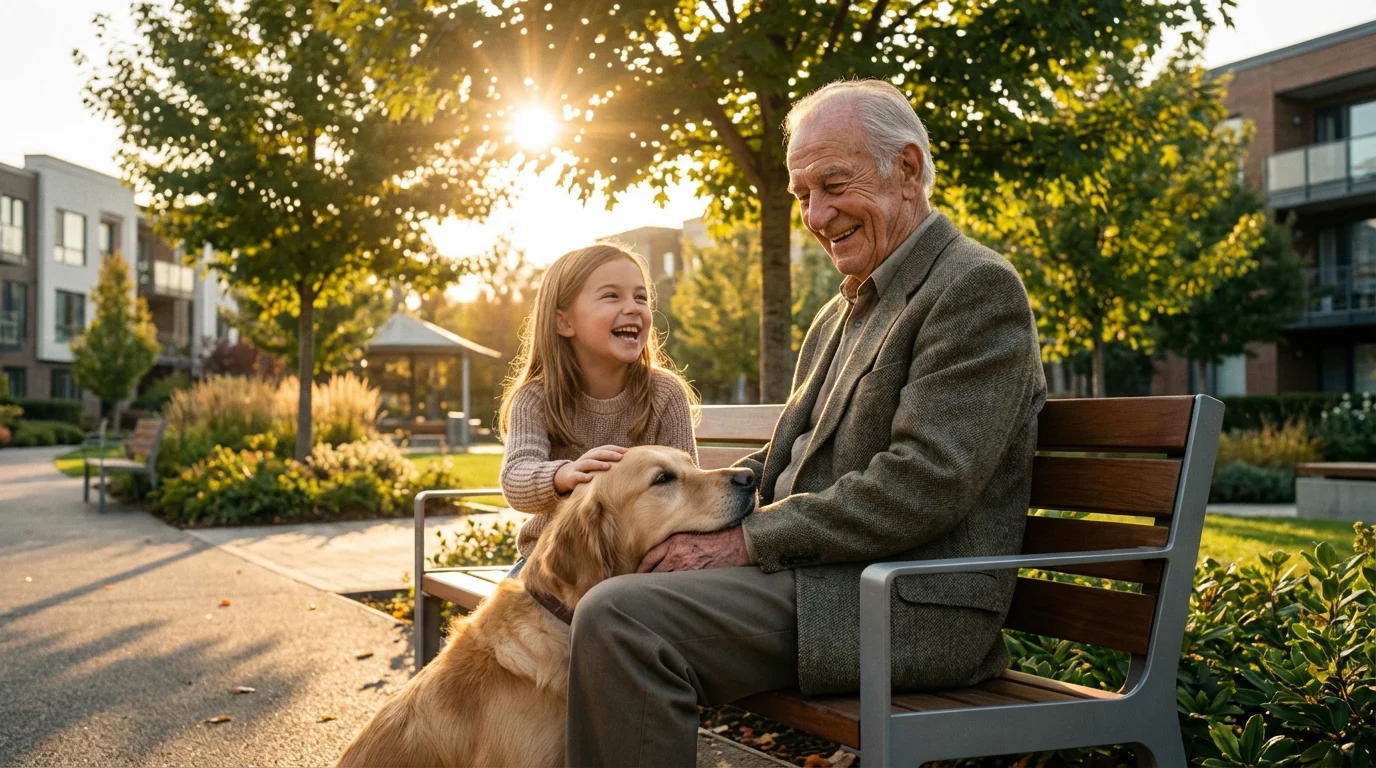
Embracing the Unexpected: Intergenerational and Pet Connections
Building meaningful connections extends beyond your immediate peer group within the 55+ community. I know how much I love my grandchildren, Lily and Noah, and how much I miss them living so far away in Cincinnati and Austin.
Many communities understand the enriching power of broader social ties, embracing intergenerational connections and the unique bond fostered by pet-friendly environments. These avenues can bring unexpected joy and diverse friendships into your life.
Intergenerational programs are increasingly common, recognizing the mutual benefits of connecting different age groups. Children and teenagers bring energy, new perspectives, and a fresh outlook, while we offer wisdom, experience, and mentorship. I love seeing opportunities to:
- Volunteer as a mentor or tutor for local schools.
- Participate in reading programs with elementary school children.
- Share your skills, like knitting or woodworking, with younger generations.
- Attend community events that welcome families, such as holiday celebrations or talent shows. (We always look forward to when Karen and the grandkids visit and we can take them to the community pool!)
These interactions provide different types of social engagement, adding richness and variety to your retirement experience. Organizations like Generations United advocate for and study these connections, highlighting their positive impact on both younger and older individuals.
Furthermore, many modern 55+ communities are proudly pet-friendly. If you have a beloved pet, they become an instant conversation starter. Walking your dog, for example, creates regular opportunities to meet other pet owners and neighbors.
Shared experiences around pets, from dog park visits to pet-focused community events, naturally lead to new friendships. For those without pets, the presence of community animals can bring comfort and a chance for gentle interaction, further enhancing the warm and welcoming atmosphere.
It’s a joy to see all the happy dogs walking around Hawthorn Ridge.

Resident-Led Initiatives: Shaping Your Community’s Social Fabric
True community thrives when residents take an active role in shaping their shared environment. Many 55+ communities empower residents through various committees, clubs, and self-governing associations.
Engaging in these resident-led initiatives offers one of the most fulfilling paths to building deep friendships and a profound sense of belonging. My friend Carol, one of my “Florida family,” is on the Welcome Committee, and she absolutely loves making new residents feel at home.
When you join a resident association or a specific committee, you collaborate with neighbors on shared goals. This shared purpose fosters camaraderie and teamwork, naturally leading to closer bonds.
You work together to plan events, address community needs, or enhance amenities. This collaborative effort helps you discover individuals who share your passion for community improvement and leadership.
Consider the diverse ways residents can lead and contribute:
- Social Committee: Plan parties, dances, holiday celebrations, and other large community gatherings.
- Welcoming Committee: Reach out to new residents, help them settle in, and introduce them to others. (That’s Carol’s specialty!)
- Gardening Club: Maintain community gardens, share plants, or organize garden tours. (I still miss my garden in Columbus, so I love visiting the community garden here.)
- Travel Club: Organize day trips, extended tours, or share travel experiences.
- Charity or Outreach Group: Organize drives for local food banks, participate in community service projects, or raise funds for causes.
- Rules and Regulations Committee: Help maintain the community’s standards and ensure harmonious living for everyone.
- Newsletter or Media Committee: Write articles, take photos, or manage the community’s internal communications.
Participation in these groups allows you to utilize your skills, learn new ones, and make a tangible difference in your community. More importantly, you spend quality time with like-minded individuals, moving beyond superficial pleasantries to develop genuine, lasting friendships.
Your voice contributes to the community’s culture, ensuring it remains vibrant and responsive to resident needs.

Balancing Engagement with Privacy: Your Social Comfort Zone
While building friendships and embracing social engagement offers immense benefits, every individual has unique social needs and preferences. Retirement living doesn’t demand constant interaction.
It provides the opportunity for connection, but respects your right to privacy and independence. You define your social comfort zone, and a healthy community supports that choice. I love talking to strangers at the pool, but even I need my quiet time, especially on Sunday mornings when I’m baking!
I find immense satisfaction in a balance of social activity and quiet time. I might enjoy participating in my watercolor class, sharing lunch with my “Florida family,” and then retreating to our home for an afternoon of reading or personal hobbies.
This flexibility is a hallmark of successful community living. It recognizes that thriving in retirement involves both connection and self-nurturing.
Don’t feel pressured to attend every event or join every club. Listen to your own needs. If you’re an introvert, you might prefer smaller, more intimate gatherings or one-on-one coffee dates over large parties.
If you need quiet time to recharge, take it. The beauty of a diverse community is that it offers options for every personality type.
Tips for maintaining your ideal social balance:
- Be Selective: Choose activities that truly interest you and bring you joy, rather than feeling obligated.
- Communicate Your Needs: If friends frequently invite you out, politely decline sometimes, explaining you need a quiet evening. True friends understand and respect your boundaries.
- Schedule Downtime: Actively plan periods of solitude into your week, just as you would schedule social events. My Sunday morning baking is sacred!
- Vary Your Engagement: Mix large group activities with smaller gatherings or individual pursuits.
- Discover Quiet Spaces: Utilize community libraries, walking paths, or quiet lounges for personal reflection and relaxation.
Ultimately, your retirement experience is personal. A great community provides the stage for social connection, but you direct your own play. Finding your tribe means finding people who respect your individuality and celebrate your presence, whether you are in the thick of an activity or enjoying a peaceful moment alone.
And I truly feel I’ve found that here.
Frequently Asked Questions
How long does it typically take to make friends in a new retirement community?
Oh, that really varies for everyone! I think some people, especially if they’re naturally outgoing like me, can form initial connections within weeks. But those deeper friendships, the ones that really feel like family, can take several months to a year to develop.
Being proactive, like attending events and joining clubs (even if you’re not good at watercolor!), definitely speeds up the process. Just be patient, consistent, and open to new interactions, and you’ll find your social rhythm. I certainly did!
What if I am shy or an introvert? Can I still thrive socially in a community?
Absolutely! Retirement communities offer so many ways to connect that cater to all personality types. If you’re more introverted, you might prefer joining a book club, attending smaller discussion groups, or engaging in quiet hobbies like art or gardening.
My advice is to focus on finding one or two consistent activities where you can build deeper connections over time, rather than feeling pressured to participate in every large social event. Many introverts find their most meaningful friendships in these quieter settings.
Can my family still visit and be involved in my community life?
Yes, of course! Most 55+ communities absolutely encourage family involvement and visits. We love it when our daughter Karen brings Lily and Noah to visit! Many communities offer guest suites, family-friendly events, and amenities that are perfect for spending time with loved ones.
Grandchildren often enjoy community pools, playgrounds, or special intergenerational programs. Just make sure to check specific community policies regarding visiting hours, amenities access for guests, and overnight stays, as these can vary from place to place.
Are there opportunities to contribute to the community or volunteer my skills?
Definitely! Retirement communities truly thrive on resident engagement and volunteerism. You’ll find so many opportunities to contribute your skills and passions, from joining resident committees that plan events or manage community aspects (my friend Carol is on the Welcome Committee!) to volunteering for local charities or mentoring programs.
This type of involvement is an excellent way to meet like-minded individuals, make a tangible difference, and build strong friendships through shared purpose.
What are the benefits of community living beyond social connections?
Beyond robust social engagement, community living offers numerous benefits that Bill and I have certainly appreciated. These often include maintenance-free living, which frees you from chores like yard work and home repairs, giving you so much more time for hobbies and leisure.
I don’t miss raking leaves on Elmwood Drive one bit! You also gain access to a wide array of amenities, such as fitness centers, pools, clubhouses, and organized transportation. Enhanced security, peace of mind, and a sense of belonging all contribute to an enriched, active, and worry-free retirement lifestyle, supporting your overall well-being.
Disclaimer: This article is for informational purposes only. Community living options, amenities, and cultures vary significantly. We encourage readers to visit communities in person, speak with current residents, and evaluate whether a community fits their unique needs and preferences.


Leave a Reply