

For Bill and me, that wasn’t just a discussion; it was a nearly two-year odyssey of spreadsheets, feelings, and more than a few quiet arguments. We didn’t agree, not for a long, long time, and our journey to a resolution was as messy and real as any other part of our retirement transition.
From Dorothy
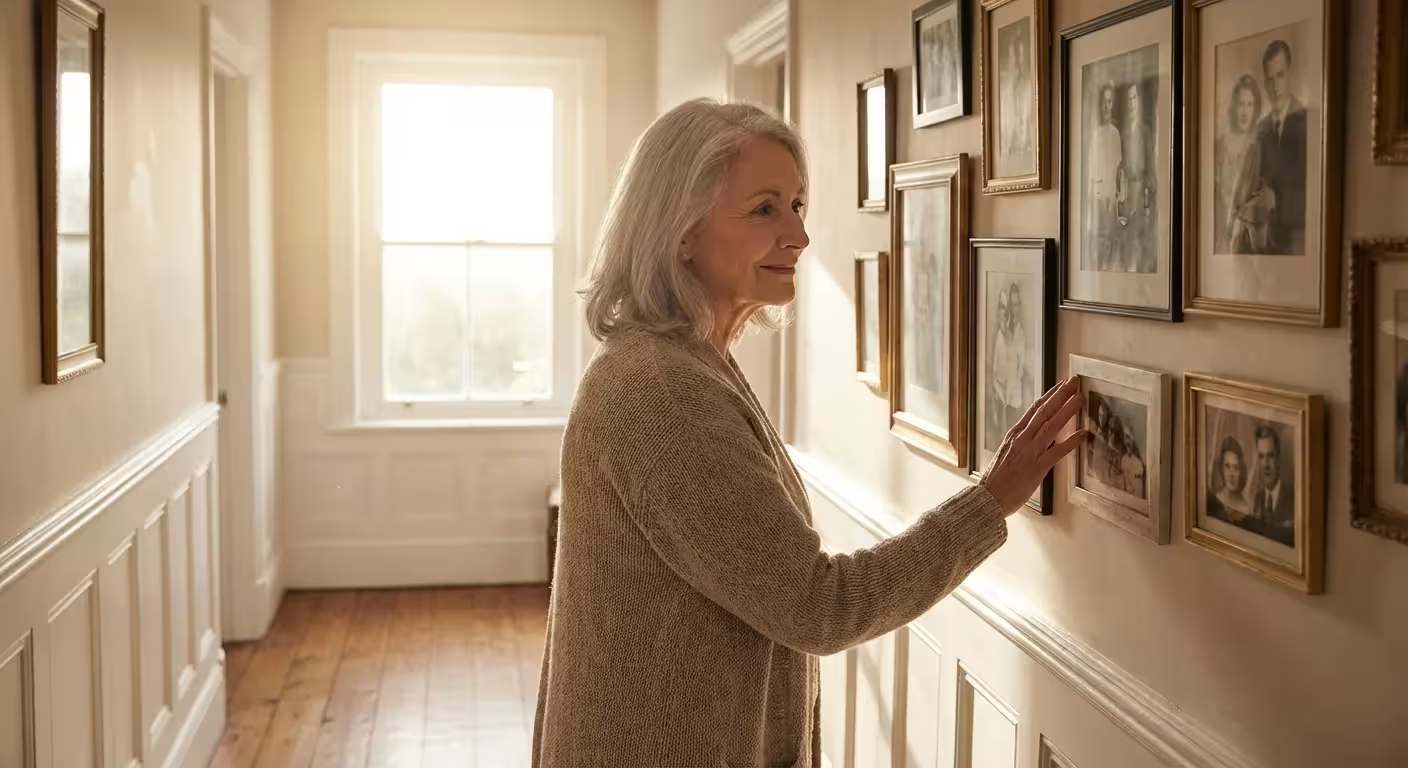
Sell the house? The house on Elmwood Drive? My first thought was a resounding, absolute “No.” Period. It wasn’t just a house to me; it was the very blueprint of our life. It was the place where Bill carried me over the threshold as a newlywed 44 years ago, where we brought Karen home from the hospital, then Michael, then Susan.
I could still picture Karen’s tiny handprint in the concrete by the garage, a little fossilized memory from her toddler days. How could I sell a place where such precious history was etched into every floorboard and every sun-drenched window sill?
I eventually realized that my internal struggle was a common part of the journey toward accepting the need for a move.
Our 2,400 sq ft colonial wasn’t just square footage; it was the backdrop to every significant moment. It was where I learned to be a mother, wiping away scraped-knee tears in the kitchen and reading bedtime stories in the glow of the hallway nightlight.
It was the constant, comforting hum of our lives. I could close my eyes and still smell the cinnamon and sage from our Thanksgivings, the aroma of a roasting turkey that filled the whole house for 30 years. I could hear the echo of laughter from birthday parties, the frantic whispers of teenagers getting ready for prom, the quiet satisfaction of a Sunday morning with Bill and the kids around the breakfast table.
Our garden, with its unruly roses and the tomato plants Bill always swore he’d get around to pruning, was my sanctuary. I missed that garden so much after we left, almost like missing an old friend.
To even consider selling it felt like erasing 44 years of our story, tearing out the most beautiful, dog-eared pages from our family album.
I remember feeling a knot of anger in my stomach when Bill would lay out his spreadsheets. How could he reduce our entire life, our children’s childhoods, our very identity, to a column of numbers?
It felt cold, impersonal, almost a betrayal of everything we had built. “Dorothy,” he’d say, tapping a finger on a line item, “the property taxes alone are $14,000 a year.
That’s a new car payment, every year, just to own the house.” But I wasn’t hearing car payments; I was hearing the echoes of Lily and Noah giggling in the backyard, chasing our old golden retriever. I was seeing the faint watermark on the ceiling from that time Michael tried to unclog the upstairs toilet himself, a memory that still made me smile, even if it cost us a new ceiling tile.
My biggest fear, the one that kept me up at night, was where would the kids come home to? Our house was the anchor, the safe harbor. Karen, Michael, and Susan, even as adults with their own families, still referred to it as “home.”
Where would Thanksgiving happen if not at our big dining room table, overflowing with cousins and laughter? I tried every compromise I could think of. “What if we just renovate the kitchen, Bill? It would feel new again!” Or, “What about a small vacation home in Florida, and we keep this house as our base?” I was grasping at straws, trying to find a way to keep the past while trying to move into the future.
It felt like I was fighting for my history, and I just couldn’t understand why Bill was so ready to let it go. It took me a full year after we moved to admit that maybe, just maybe, he wasn’t wrong. But that’s a story for another time. At that point, all I knew was that my heart was saying no, and my heart felt very, very loud.
From Bill
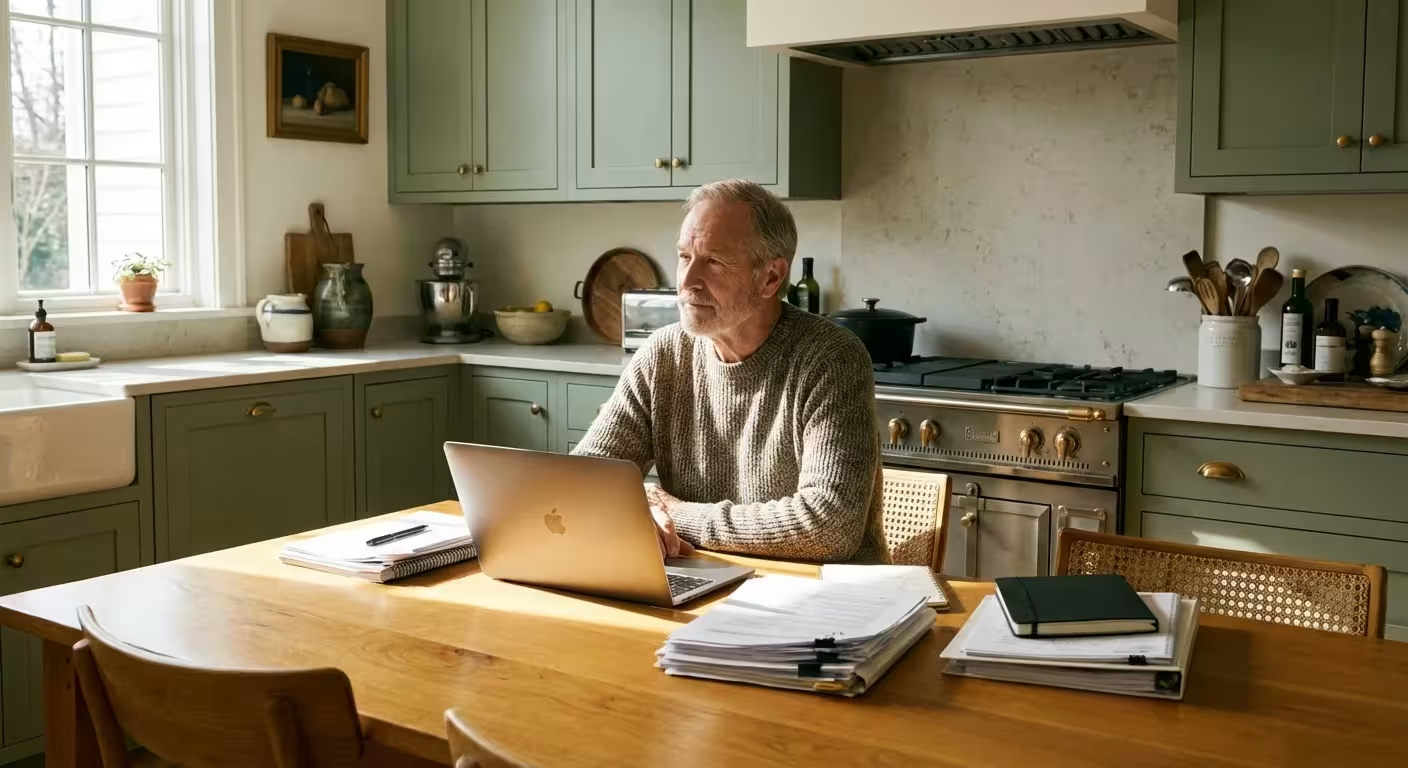
When I retired in 2021, my mind immediately went to the next phase. Thirty-eight years as a civil engineer had ingrained in me a certain way of looking at problems: identify the inefficiencies, analyze the data, and engineer a solution.
And when I looked at our 2,400 sq ft colonial on Elmwood Drive, I saw an inefficiency that was becoming a burden. For two people, 2,400 square feet was simply too much house. The math, to me, was clear as day, and I wanted to sell the day I hung up my hard hat.
I started with the numbers, as I always do. I had spreadsheets, of course – a comparison matrix with 14 variables, detailing everything from property taxes to estimated utility costs, maintenance budgets, and potential equity.
Our property taxes alone were $14,000 a year, a sum that felt like throwing money into a black hole when it could be funding our travel or simply providing more financial breathing room. Then there was the maintenance.
I’d estimated $8,000 a year for things like a new furnace, a leaky roof that always seemed to spring up after a heavy storm, and the constant upkeep of a half-acre lot. I wasn’t looking forward to another summer on a ladder cleaning gutters, or spending my “retirement” pushing a lawnmower under the hot Ohio sun.
We also had what I once estimated to be “approximately one metric ton of stuff we don’t need” filling every closet and corner, a silent weight that just added to the feeling of being anchored down.
Dorothy’s suggestions, while well-intentioned, just didn’t hold up to the data. “What if we just renovate?” she’d ask, dreaming of a new kitchen. I ran the numbers. A kitchen renovation would cost $60,000, and we’d still have the same oversized house, the same property taxes, the same aging roof.
A vacation home in Florida, while keeping the Columbus house, was financially irresponsible, plain and simple. It would double our headaches, not halve them. I’d lay out the figures, explain the long-term implications, and she’d just sigh, her eyes glazing over. It felt like I was speaking a different language, a frustrating exercise in logic versus emotion.
Now, I’ll admit, I can be insufferable about being right. Dorothy will tell you that. But deep down, I understood that for her, this wasn’t about the numbers. It was about memory, about roots, about the feeling of home.
I saw the sadness in her eyes when I talked about selling, and I knew it was more than just the house; it was the fear of losing a tangible connection to our past, to our children’s childhoods. So, my approach, after a while, became a kind of quiet persistence: present the data, calmly explain the benefits of a smaller, warmer, more active lifestyle, then wait. Repeat.
I researched 55+ communities for two full years, not just for the amenities, but for the potential of a new, vibrant life for us. I envisioned a life where I could play pickleball four mornings a week, volunteer at the food bank, and discover a new passion for cooking without the constant worry of home repairs.
I knew she needed time to process, to grieve the idea of leaving, and to eventually see the potential for a new chapter. It wasn’t easy, and there were plenty of quiet dinners where the unspoken argument hung heavy in the air, but I knew, with the certainty of a well-calculated stress load, that this was the right path for us.
Where We Landed
The stalemate, the two years of gentle prodding and quiet resistance, finally broke with a phone call from our daughter, Karen. “Mom,” she said, “the grandkids want YOU, not the house.”
It was a simple sentence, but it cut through all the noise, all the spreadsheets, and all the sentimental attachments. Dorothy still tears up when she tells that story, and it truly was the turning point for us both.
This shift in perspective is often the hardest part of navigating relationships and family dynamics when leaving a long-time home.
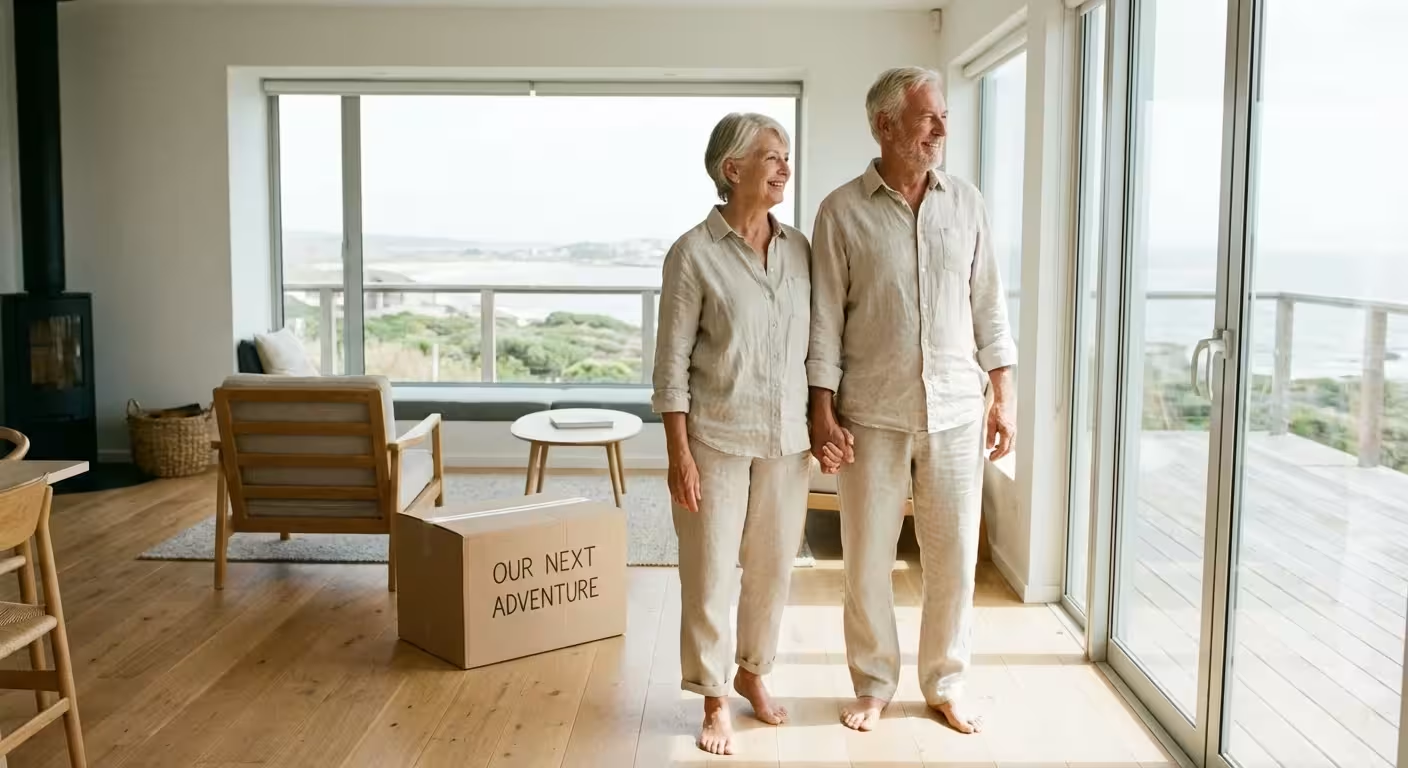
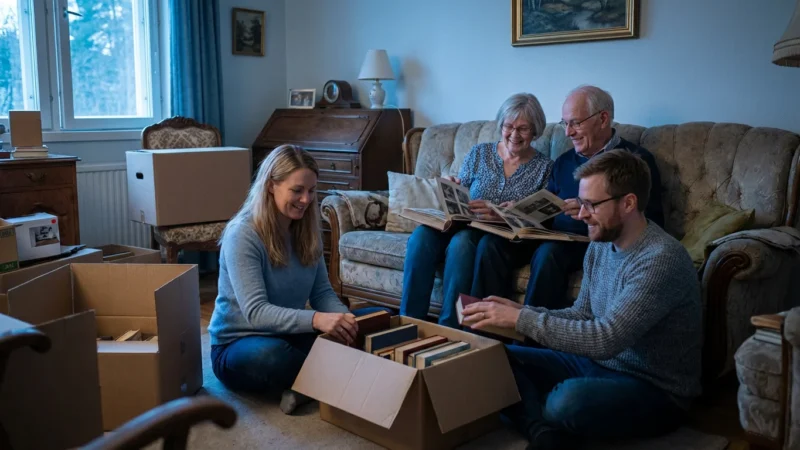
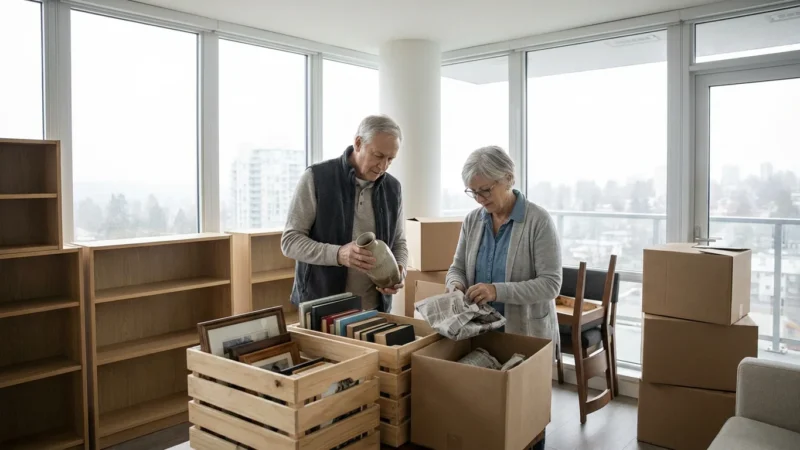
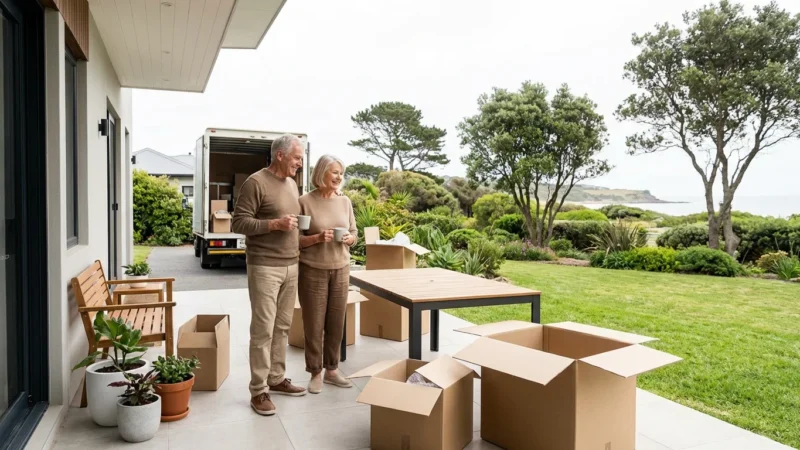
In April 2023, we sold our Columbus house for a good price. The process of decluttering was daunting, a true testament to Bill’s “metric ton of stuff” assessment, but it was also surprisingly cathartic.
We took a few truly meaningful items with us: Dorothy’s grandmother’s rocking chair, which now sits in our living room here in Sarasota, and my trusty workbench tools, which are already getting good use in the Hawthorn Ridge community wood shop.
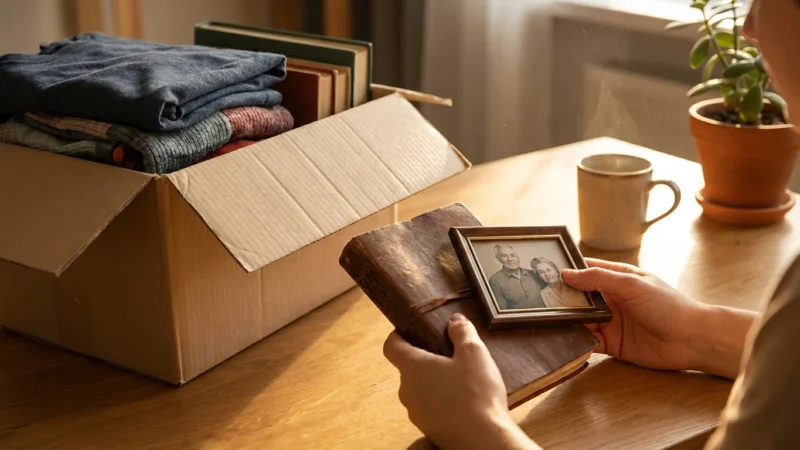
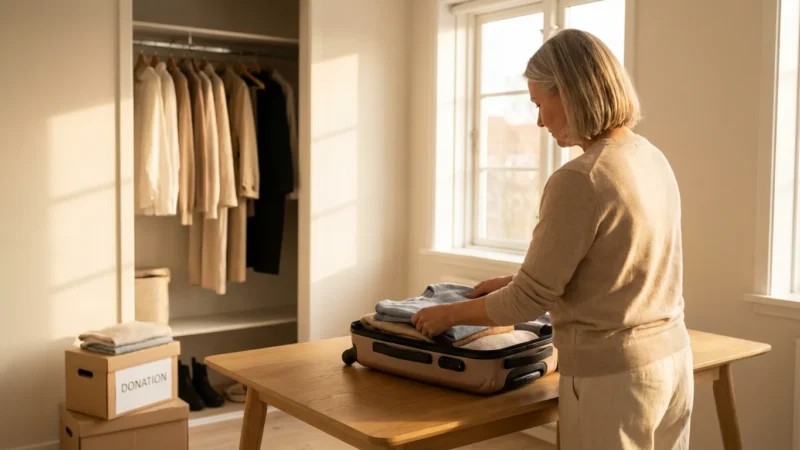
The rest we either gave to the kids – helping them furnish their own homes with pieces of our history – or donated. It felt good to let go, to lighten the load.
We made a quiet agreement as we packed up that last box: no regrets, only forward. It wasn’t easy, and those first three months in Florida were an adjustment, as any big move would be.
But by month six, Dorothy was the one telling friends back in Ohio they should do it too. And by year two, we both agreed it was the best decision of our retirement.
What we’d tell any couple wrestling with this huge question is this: both the feelings and the spreadsheet matter. Bill had spreadsheets. Dorothy had feelings. And in the end, both turned out to be absolutely necessary to navigate one of the biggest transitions of our lives.


Leave a Reply