
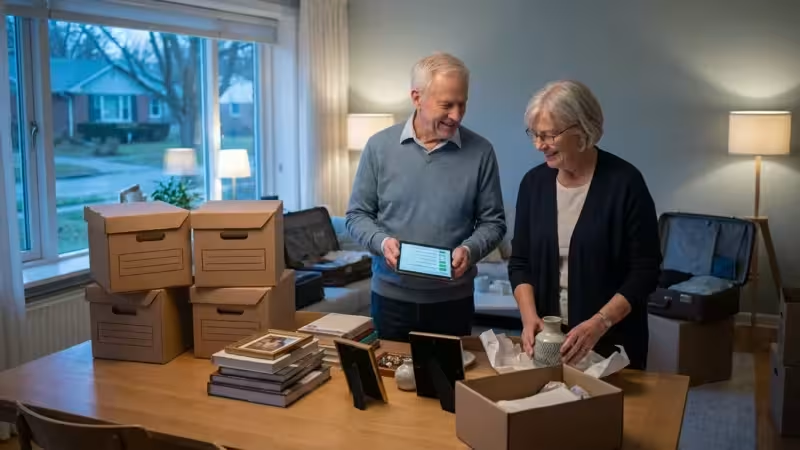
The day we closed on the Columbus house, $280,000 landed in our checking account. After mortgage payoff and closing costs, that was the net. I stared at the number on my phone screen in the parking lot of the title company. Dorothy was crying because we’d just handed over the keys to 44 years of memories, the house on Elmwood Drive where we’d raised Karen, Michael, and Susan, and hosted every Thanksgiving for three decades. I, on the other hand, was trying not to panic about the largest sum of money that had ever been in our checking account at one time. My mind immediately went to the numbers, the stability, the safety. Dorothy’s mind, bless her heart, was on the ache of leaving our home. That pretty much sums up how we approached this whole “downsizing proceeds” situation.
My immediate instinct, even before we’d packed the last box, had been to put that money somewhere safe and predictable. While Dorothy was still mourning her garden, I was already sketching out a CD ladder plan. I’d researched it for months, of course. A mix of 6-month, 1-year, 2-year, and 3-year Certificates of Deposit at the best available rates. My thought was simple: FDIC insured up to $250,000 per depositor, predictable returns, and staggered maturities so we’d have access to a portion of the funds regularly. I had the whole thing mapped out on a notepad before we even got home from the closing, complete with prospective banks and interest rate projections I’d pulled from Bankrate.com. I was feeling pretty pleased with my methodical approach.
Then Dorothy, wiping her eyes with a tissue, looked at my notepad and said, “Bill, you want to lock up all of our money so we can’t touch it? What if Karen needs help with a new roof? What about the grandkids’ college funds? Lily and Noah will be there before we know it. What about that trip to Italy we’ve been talking about for 20 years? What about emergencies?”
And just like that, my perfectly logical, spreadsheet-approved plan hit a wall of very valid, very Dorothy-like feelings and concerns. This was the same woman who had resisted moving to Hawthorn Ridge for nearly two years, convinced she couldn’t leave our Columbus life, only to admit a year later it was the best decision we ever made. But she was right. My engineer’s brain had focused purely on the mechanics of money growth and safety, not on the living, breathing needs that money was meant to serve in our retirement.
This wasn’t just some bonus from a lucky investment; this was the culmination of 44 years of homeownership, the vast majority of our housing wealth. It represented our past, but it also had to fund our future. It was a big moment, and we couldn’t just shove it all into a single strategy, no matter how sound. We needed a conversation, not just a calculation.
Three Questions That Helped Us Find Our Way
Over the next few weeks, as we settled into our new (and much smaller) home here in Sarasota – a place I’d researched for two full years, thank you very much, with a 14-variable comparison matrix – we started asking ourselves some hard questions. These weren’t about what the market was doing or projected returns. They were about us, about our life, and about what we wanted this next chapter to look like. We found that boiling it down to three core questions really helped us cut through the noise, and Dorothy’s input was absolutely critical here.
- How much do we need accessible within 30 days for true emergencies? This was Dorothy’s first and most insistent question. She remembered when our old water heater burst in Columbus and we needed to replace it on short notice. Or when Karen had an unexpected medical bill for Lily a few years back. Life happens. We needed a portion that wasn’t tied up in any way, a genuine rainy-day fund that we could tap into without penalty or delay. This became our “peace of mind” number.
- How much can we afford to lock up for 1-3 years for better returns? This was my question, naturally. While Dorothy wanted flexibility, I knew that letting a large sum sit in a regular checking account, earning next to nothing, was a missed opportunity. We needed a balance. How much could we commit to a slightly longer-term strategy to get a better return, knowing we didn’t need it immediately? This led to a discussion about our monthly expenses here at Hawthorn Ridge, our pension, and Social Security income – what our baseline needs truly were.
- What is this money FOR – just growth, or does it have a job? This was the big one, and it came from Dorothy’s heart. She challenged my engineer’s mindset. “Bill,” she said one morning over coffee at our kitchen table, “this isn’t just money to sit there and get bigger. This is our house, our history. What’s its job now? Is it to worry about, or is it to help us live?” That conversation shifted everything. It wasn’t just about maximizing returns; it was about aligning our money with our retirement goals, with the life we’d earned.
Those three questions became our compass. They forced us to look beyond just the numbers and consider our emotional needs, our family’s potential needs, and our dreams for retirement. It was a negotiation, as most things are with Dorothy and me, but a productive one.
Our Four Decisions: How We Allocated the Downsizing Proceeds
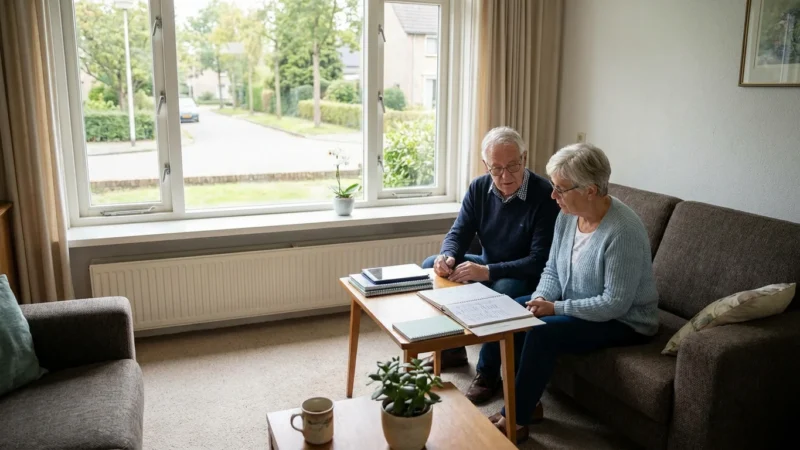
After much discussion, a few more of my spreadsheets (which Dorothy tolerates, mostly), and Dorothy’s unwavering focus on what truly mattered to us, we arrived at a four-part strategy for our $280,000. It wasn’t perfect, and we’ll talk about what we’d do differently in a moment, but it gave us a sense of security and purpose.
-
The CD Ladder: ~$120,000 for Safety and Predictability
This was my core idea, modified to fit our joint vision. We decided to put about $120,000 into a CD ladder. I split this across four different terms: 6-month, 1-year, 2-year, and 3-year CDs. I did my usual deep dive into different banks, comparing rates daily from reputable sources like Bankrate.com, and ensuring all funds remained well within FDIC insurance limits. The idea is that every six months, a portion of the ladder matures, giving us the option to reinvest at current rates or take the cash if needed. It provided the safety and predictability I craved, knowing a substantial portion of our funds was earning a guaranteed return without market risk.
Dorothy still grumbled a little about “locking it up,” but she understood the principle. “As long as we know when it comes free, and we don’t need it for emergencies, I suppose,” she conceded, which is high praise from her when it comes to my financial schemes.
-
A Small Fixed Annuity: ~$50,000 for a Guaranteed Income Floor
This was another one of my projects. I’d been reading a lot about annuities, and while they can be complex and have their detractors, a specific type appealed to my desire for a guaranteed income stream. We put about $50,000 into a deferred fixed annuity. The way it works for us is that it will start paying out a guaranteed monthly income when I turn 75. It’s not a huge amount, but it acts like a mini-pension, providing an additional, predictable income floor on top of our Social Security and my small company pension. I researched this thoroughly, using resources from FINRA to understand the different types and their implications. I know annuities aren’t for everyone, and they often come with fees and complexities, but for us, it was about creating another layer of financial certainty in our later years.
Dorothy was initially skeptical, asking, “Is this one of your fancy financial tricks, Bill?” But once I explained it in plain English – “It’s like buying a little bit of future income, guaranteed, so we don’t have to worry as much” – she saw the value. It meant less pressure on our other savings down the road.
-
High-Yield Savings Account: ~$60,000 for Dorothy’s Emergency/Flexibility Fund
This was Dorothy’s victory, and she was absolutely right to push for it. We allocated about $60,000 to a high-yield online savings account. The rates for these accounts have been surprisingly competitive lately, sometimes even matching shorter-term CDs, and the money is accessible within a day or two. This is our true emergency fund. It’s for those unexpected flights to Cincinnati if Karen or the grandkids need us, for a sudden car repair (even though we don’t drive as much now), a medical surprise, or even just the peace of mind of knowing we have readily available cash for anything. Dorothy specifically earmarked a portion for that trip to Italy we’ve dreamed about for two decades. “It’s not just for problems, Bill,” she told me, “it’s for possibilities.” And she was right, as she often is.
This fund gives Dorothy the flexibility she needs. She likes knowing that if Lily or Noah wanted to come visit us for a week during spring break, we wouldn’t have to think twice about the plane tickets. It’s about being able to say “yes” to life’s unplanned moments, both good and bad, without having to liquidate an investment or break a CD.
-
The “Memory Fund”: ~$50,000 for Experiences, Not Things
This was entirely Dorothy’s brilliant idea, and it’s become one of our favorite aspects of our financial plan. She didn’t want to call it a “vacation fund” or an “entertainment fund.” She called it the “memory fund.” We set aside about $50,000 for this. Her philosophy was simple: we spent 44 years accumulating “approximately one metric ton of stuff we don’t need,” as I once famously estimated. Now, she wanted to accumulate experiences and memories, not more things.
This fund is for things like renting a big beach house for a week so all three kids and the grandkids can come down and stay with us. It’s for flying Lily and Noah down for an extended visit. It’s for that cooking class Dorothy and I have talked about taking together here in Sarasota, or maybe even those watercolor lessons she’s just started (she’s not good at it, but she doesn’t care, and that’s what makes her so wonderful). And yes, it’s for that trip to Italy, whenever we finally get around to booking it. It’s about investing in our relationships and our joy. This fund is replenished periodically from our other income streams, but it’s specifically designated for these types of “memory-making” expenses. It’s truly about giving ourselves permission to enjoy the life we’ve worked so hard for.
What We’d Do Differently (Because Hindsight is 20/20)
No plan is perfect, and if we had to do it all over again, knowing what we know now after almost two years here in Florida, there are a couple of things Dorothy and I would adjust:
- Bill: Slightly Less in the CD Ladder, More in High-Yield Savings. When we first made these decisions, CD rates were a bit higher than high-yield savings accounts. Now, those rates are often quite comparable, and the liquidity of a high-yield savings account is invaluable. I would have put a little less into the longer-term CDs and boosted our high-yield savings balance. That immediate accessibility for unexpected opportunities or needs just gives you more peace of mind than I initially accounted for, even for a planner like me.
- Dorothy: A Firmer Annual Limit on the Memory Fund. Dorothy is so generous, especially when it comes to the kids and grandkids. She admits that she might have been a little too free-spirited with the memory fund in the first year. “I just got so excited about all the possibilities, Bill!” she said. We’ve since agreed to set a more realistic annual budget for that fund, so it lasts longer and continues to provide those special experiences for many years to come, rather than being depleted too quickly.
- Both of Us: Talk to a Fee-Only Financial Advisor BEFORE Making Decisions. This is the biggest one. I’m good with numbers, and I can research with the best of them. Dorothy has incredible emotional intelligence when it comes to money. But navigating a lump sum of this size, especially when it represents your entire housing wealth, is a different ballgame. We talked to one *after* we’d made our decisions, just to get a second opinion. While he affirmed most of our choices, he pointed out a few nuances we’d missed. A fee-only financial advisor, someone who doesn’t work on commission and truly has your best interest at heart (you can find certified professionals through resources like the CFP Board), could have helped us structure this from the very beginning. They would have provided an unbiased, comprehensive perspective on taxes, estate planning implications, and overall portfolio allocation that goes beyond what a spreadsheet can tell you.
The Bigger Lesson: It’s About Permission
Ultimately, this money wasn’t just about maximizing returns or avoiding risk. It represented our entire housing wealth, the culmination of decades of hard work, saving, and making a home. Getting it right wasn’t about being perfect; it was about giving ourselves permission to use it for the life we’d earned. It was about creating a financial foundation that supports our dreams for retirement, allows us to be generous with our children and grandchildren, and gives us peace of mind.
It was a journey from my initial panic and Dorothy’s tears over leaving Elmwood Drive, to a place of shared understanding and a plan that truly reflects who we are and what we value. It was a big transition, selling the house, moving to Florida, and managing this lump sum, but looking back, it was one of the best decisions we’ve made in retirement. And yes, Bill was right about moving to Sarasota, but Dorothy was right about how to live here.








Leave a Reply