

Not just the sticker price, mind you, but every last nickel and dime, every potential hidden cost, and what our money would actually buy us in terms of lifestyle and care.
The journey began when Dorothy and I had to decide should we sell the house, a major decision that required balancing our emotional ties with our future goals.
We looked at everything. I mean everything. From independent living communities that offered a spectrum of care, all the way to dedicated assisted living facilities, and, of course, the 55+ active adult communities like the one we chose.
What I found was a dizzying array of prices, services, and fine print that no brochure ever lays out clearly. This isn’t marketing fluff; this is what Dorothy and I actually learned and paid attention to as we navigated our options.
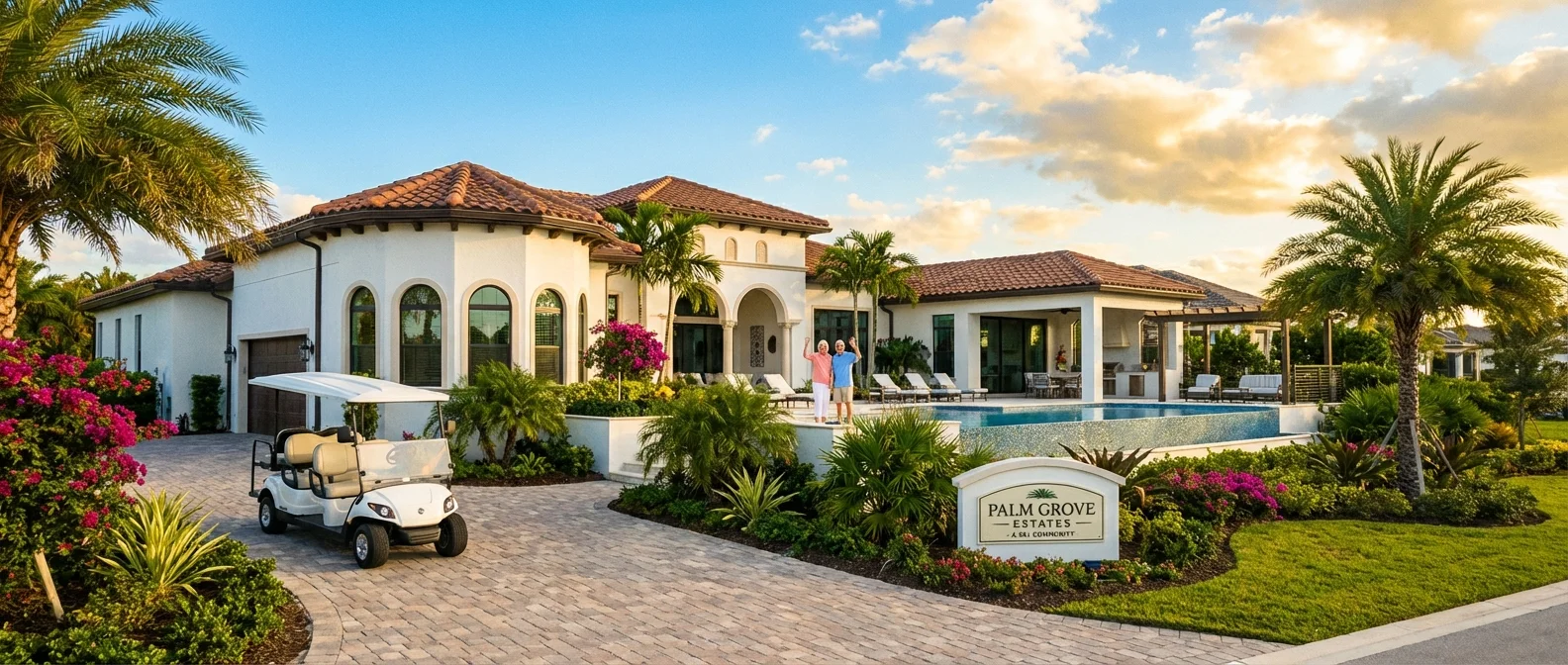
What a 55+ Active Adult Community Actually Costs
When Dorothy and I first started talking about moving, the idea of a 55+ community was very appealing, mostly because it meant less yard work for me and more amenities for Dorothy.
But the costs are a different beast than owning a standalone house like our old 2,400 sq ft colonial on Elmwood Drive. You’re trading one set of expenses for another, and it’s critical to understand the full picture.
To ensure we were looking at the right factors, I developed a checklist for evaluating a 55+ community that went far beyond the surface-level amenities.
The Purchase Price and Our HOA at Hawthorn Ridge
First, there’s the purchase price of the home itself. In the Sarasota area, when we were looking in 2022-2023, we saw a wide range for villas and single-family homes in 55+ communities.
You could find smaller attached villas starting around $350,000, and larger, more upgraded single-family homes going up to $750,000 or more. We settled on a lovely villa here at Hawthorn Ridge for $450,000. It’s smaller than our old house, certainly, but perfect for us.
Then comes the monthly HOA fee. This is the big one that replaces a lot of the individual bills you might have had. Here at Hawthorn Ridge, our current monthly HOA fee is right around $525. When I was building my comparison matrix, I knew this number would be a significant chunk of our budget, but I also knew what it covered.
What’s Included vs. What’s Extra
Our $525 HOA includes a lot of things that used to be separate line items on our old budget. It covers all the landscaping – no more mowing for me, which I don’t miss one bit!
It also takes care of common area maintenance, so the clubhouse, the pool, the fitness center (where Dorothy tries her watercolor painting sometimes, even though she says she’s not good), and the roads are all kept up beautifully. Basic cable and internet are included, as is trash pickup. It’s a nice feeling to have many of those daily chores handled.
However, it’s not an all-inclusive resort, and this is where people often get surprised. We still pay our own separate property taxes, which for our villa run us about $562.50 a month ($6,750 annually).
Homeowner’s insurance (an HO6 policy for our villa) is another separate cost, and in Florida, that’s not cheap; we pay about $208 a month ($2,500 annually). Utilities – electricity, water, sewer – are also on us, and those typically add up to about $250 a month, depending on how much we run the AC.
If Dorothy decides she needs faster internet for video calls with the grandkids, that’s an upgrade we pay for. And don’t forget the golf cart! Insurance, battery maintenance, and occasional repairs for our golf cart add another $50-75 a month.
The Hidden Costs Nobody Mentions
Beyond the regular monthly bills, there are other costs that rarely show up in the glossy brochures. Special assessments are a big one. These are one-time fees levied by the HOA for major repairs or upgrades that aren’t covered by the regular budget.
For example, last year, the community decided to put new roofs on all the villas. That led to a $2,000 special assessment for each homeowner. I’d factored in a buffer for these kinds of things in my 5-year projection, but they can still sting if you’re not prepared.
Another example: if our community had a golf course, there would likely be separate club fees or memberships on top of the HOA. Thankfully, Hawthorn Ridge doesn’t, but it was something I looked for in other communities.
Even in a newer community, things break. Our water heater went out last year, which was a $1,200 unplanned expense. While the HOA covers exterior building maintenance, anything inside our four walls, from a leaky faucet to an appliance repair, is our responsibility.
Dorothy was surprised by that water heater bill, but I just pulled out my “miscellaneous home repair” line item on my spreadsheet and reminded her it was accounted for.

What Assisted Living Actually Costs
Now, let’s talk about assisted living. This was a completely different category in my research, aimed at a different stage of life. Dorothy initially resisted even discussing these options, saying “Bill, we’re not there yet!” And she was right, of course, we weren’t.
But I believe in being prepared, and knowing the numbers for assisted living gave us a clearer picture of our long-term financial landscape. It’s a conversation every couple should have, even if it feels uncomfortable at first.
Average Costs and The “Base Rate” Trap
The average costs for assisted living facilities in the Sarasota/Florida area, according to sources like the Genworth Cost of Care Survey (which I referenced heavily), typically ranged from $4,500 to $6,000 per month when I was doing my research. That’s a significant jump from a 55+ community, and it’s just the starting point.
This is where the “base rate” trap comes in. Every facility advertises an attractive base rate – say, $4,800 for a studio apartment. That base rate usually covers the living space, basic meals (often three a day), utilities, and some scheduled activities. It sounds good, right? But what it often doesn’t cover is any personal care assistance. This was a critical distinction in my spreadsheet.
How Costs Escalate as Care Needs Increase
Assisted living facilities operate on a tiered care model. As a resident’s needs increase, so do the costs. Those add-ons can include:
- Medication Management: Needing staff to dispense and track medications. This can add $300-$700/month.
- Assistance with Activities of Daily Living (ADLs): Help with bathing, dressing, grooming, toileting. Each level of assistance adds to the bill. One facility quoted me an extra $500-$1,000/month for moderate assistance with two ADLs.
- Mobility Assistance: Help transferring from bed to chair, or assistance with walking.
- Incontinence Care: Specific programs and supplies.
- Special Diets: If specialized meal preparation is required.
- Memory Care: Dedicated units for dementia or Alzheimer’s residents, which are often significantly more expensive, adding $1,000-$3,000/month on top of the base rate.
- Escalated Monitoring: For residents who require more frequent check-ins due to a fall risk or other safety concerns.
So, that $4,800 studio could easily become $6,000 to $7,500 a month once you factor in even moderate care needs. I remember touring one facility where they laid out their pricing tiers, and I could see Dorothy’s eyes get wider and wider as they added up. It was a stark reminder of the financial implications of increasing care needs.
Real Numbers from Facilities We Toured
Let me give you a couple of examples from my notes. Facility A, a well-regarded place in Sarasota, offered a lovely studio for a base rate of $4,800/month. If Dorothy, hypothetically, needed help with medication management and bathing twice a week, that bill would jump to $5,500/month.
If her needs progressed to needing assistance with three ADLs daily, it would be closer to $6,800/month. Facility B, which offered larger units, had a base rate of $5,200/month, but their care tiers were even steeper, pushing the cost for moderate care to over $7,000/month.
The key takeaway here is that you must get a detailed breakdown of what’s included in the base rate and what the costs are for each level of care. Don’t be afraid to ask for specific examples based on potential needs. This isn’t a simple transaction; it’s planning for a continuum of care.

The Comparison Table: What We Actually Paid Attention To
This is where my spreadsheets really shone. I broke down every conceivable cost to get a real apples-to-apples comparison. These numbers are illustrative, based on our research and our current situation, but they give you a clear picture of the financial differences.
| Cost Category | 55+ Community (Monthly) | Assisted Living (Monthly – Base) | Assisted Living (Monthly – Moderate Care) |
|---|---|---|---|
| Housing Purchase Price (Initial) | $450,000 (Villa) | N/A (Rent/Service) | N/A (Rent/Service) |
| Mortgage Payment (if applicable) | Varies (Assume paid off for this comparison) | N/A | N/A |
| HOA/Base Rent | $525 | $5,000 | $5,000 |
| Property Taxes | $562.50 | N/A (Included in AL rent) | N/A |
| Homeowner’s Insurance | $208 | N/A (Included in AL rent) | N/A |
| Utilities (Electric, Water, Sewer) | $250 | N/A (Usually included in AL rent) | N/A |
| Food/Groceries | $600 (for two) | N/A (3 meals/day included) | N/A |
| Transportation (Car/Golf Cart) | $200 (gas, insurance, maint.) | N/A (Shuttle often included) | N/A |
| Personal Care/Medical Assistance | $0 (Self-managed, or external cost) | $0 (Base rate assumes minimal) | +$1,500 (Add-on for 2-3 ADLs, med mgmt.) |
| Entertainment/Activities | $100 (Club fees, outings) | N/A (Most activities included) | N/A |
| Miscellaneous Home Repairs/Supplies | $150 (Buffer for water heater, etc.) | $50 (Personal items) | $50 (Personal items) |
| Estimated Monthly Total | $2,503.50 | $5,050 | $6,550 |
| Estimated Annual Total | $30,042 | $60,600 | $78,600 |
| Estimated 5-Year Total (excl. home purchase) | $150,210 | $303,000 | $393,000 |
*Note: These numbers are illustrative and based on our research and experience in the Sarasota, Florida area as of 2023. They do not include mortgage payments for the 55+ community, assuming the home is paid off. Assisted living costs assume a base rate and then an additional tier for moderate care needs. Annual and 5-year totals do not factor in annual rate increases, which are discussed below.

What the Brochures Don’t Tell You
The numbers above are a good start, but they only tell part of the story. There are nuances and hidden factors that can significantly impact your long-term financial planning, and these are often buried in the fine print or simply not mentioned in the glossy marketing materials.
Entrance Fees and Refund Policies
Some communities, particularly Continuing Care Retirement Communities (CCRCs) that offer a full spectrum of care from independent living to skilled nursing, require substantial entrance fees. These fees can range from tens of thousands to hundreds of thousands of dollars.
The crucial part is understanding the refund policy. Some are 90% refundable upon your departure or death, others are non-refundable after a certain period, and some decline over time.
While Hawthorn Ridge, as a 55+ active adult community, didn’t have such an entrance fee, we certainly saw them when we looked at other types of communities. It’s a huge upfront cost that needs careful consideration.
Assisted living facilities typically don’t have these large entrance fees, but they might have a “community fee” or “move-in fee” that covers administrative costs or initial assessments. These are usually much smaller, perhaps a few thousand dollars, and are generally non-refundable.
Rate Increases Over Time
Here’s a big one that can throw off even the most carefully planned budget: annual rate increases. Both HOA fees in 55+ communities and monthly rates in assisted living facilities are subject to annual increases.
For HOAs, you might see increases of 3-5% per year to keep up with inflation, maintenance costs, and rising insurance premiums (especially here in Florida). Assisted living facilities often increase their rates by a similar, or even higher, percentage, sometimes 5-7% annually, to cover rising labor costs, food, and utilities.
I built these anticipated increases into my 5-year and 10-year financial models. It’s not enough to just look at today’s cost; you need to project what it will be in five or ten years, because that $6,550/month for assisted living moderate care could easily be over $8,000/month in five years with a 4% annual increase.
Dorothy was definitely concerned about how quickly those numbers could grow, and rightly so.
Insurance and Medicare Coverage Gaps
This is probably the most misunderstood aspect. Medicare generally does NOT cover the costs of assisted living, especially “custodial care” – which is the non-medical help with ADLs like bathing, dressing, and eating.
Medicare Part A might cover a short stay in a skilled nursing facility after a qualifying hospital stay, but not long-term assisted living. This is a common misconception that can lead to significant financial strain.
Long-Term Care Insurance (LTCI) is designed to cover these costs, but it’s expensive, has strict underwriting requirements, and often comes with waiting periods and daily benefit caps. If you don’t have LTCI, or if your policy doesn’t cover enough, the costs of assisted living come directly out of your pocket or assets.
We considered LTCI for years, but the premiums became prohibitive as we got older. It’s a tough decision for many.
The “Aging in Place” Cost Trajectory
Many people, including Dorothy initially, envision “aging in place” in their 55+ community. And for many, that’s possible for a long time. However, if care needs eventually arise in a 55+ community, you’re responsible for arranging and paying for that care out of pocket.
This means hiring in-home caregivers, which can cost anywhere from $25-$35 per hour, and quickly add up to thousands of dollars per month if significant hours are needed.
At some point, the cost of in-home care in a 55+ community can exceed the cost of moving to an assisted living facility, where care is bundled. This “aging in place” cost trajectory was one of the complex scenarios I modeled in my spreadsheets, trying to predict when the crossover point might occur.

When Each Option Makes Sense: My Honest Assessment
After all the research, the tours, the spreadsheets, and yes, a few animated discussions with Dorothy, I can tell you this: there’s no single “right” answer. It’s about finding the right fit for your current needs, your anticipated future, and your financial reality.
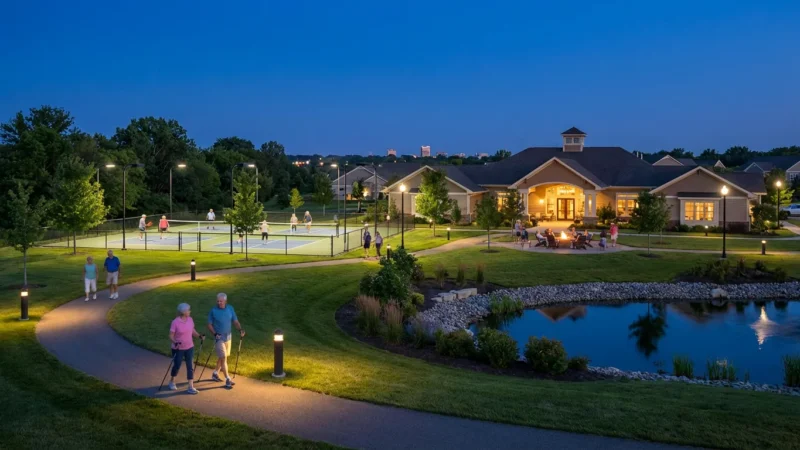
- A 55+ Active Adult Community (Like Hawthorn Ridge): This option makes sense for active, independent individuals or couples who are looking to downsize, reduce home maintenance, and embrace a vibrant social life. You’re still fully capable of managing your own daily care, appointments, and finances. It’s a lifestyle choice focused on amenities, community, and freedom from many traditional homeownership burdens. It’s what Dorothy and I chose because we’re still very independent, and we wanted the social opportunities and the warm weather. I play pickleball four mornings a week, and Dorothy has found her “Florida family” at the pool.
- Assisted Living: This option becomes necessary when daily tasks become genuinely challenging, when safety is a primary concern, or when consistent medical or personal care is needed. If you or your loved one struggles with bathing, dressing, medication management, or preparing meals, and doing so independently poses a risk, assisted living provides the necessary support and supervision in a structured environment. It’s about providing dignity, safety, and a good quality of life when independence is no longer fully sustainable.
The real question isn’t just cost, it’s what kind of life you want to live, and what level of support you need to live it well. Dorothy and I chose Hawthorn Ridge for the life we could live here now, knowing that we’ve at least got a clearer picture of what the future might hold financially.
It’s about balancing the numbers with what feels right for your heart and your daily well-being. And that, I’ve learned, is a negotiation that involves a lot more than just a spreadsheet.
Dorothy & Bill







Leave a Reply