Oh, if someone had told me even five years ago that I’d be writing about yoga, I probably would have just smiled politely and changed the subject. I was a librarian, after all, used to quiet stacks and comfortable chairs, not twisting into knots!
But here I am, Dorothy Henderson, 72, and yoga has truly become a wonderful path for me here in Sarasota. It’s so much more than just physical exercise; it’s a practice that truly nurtures your body, calms your mind, and invigorates your spirit.
This ancient discipline adapts so beautifully to individual needs, providing a gentle yet profound way to boost your vitality in retirement.
I know what you might be thinking, because I thought it too: “Yoga requires extreme flexibility or specific physical prowess.” That, my dears, is a misconception!
My yoga journey started with me being about as flexible as a plank of wood, and I still can’t touch my toes without bending my knees.
Senior yoga focuses on accessible movements, using props and modifications to ensure safety and effectiveness for every ability level. You embark on a personal journey, celebrating progress and, most importantly, listening to your body’s wisdom.
It’s been a real gift for me, especially after the big move from our 2,400 sq ft colonial on Elmwood Drive.
In this guide8 sections
- Embracing the Journey: Why Yoga is Ideal for Seniors
- Unlock Core Benefits: Enhancing Senior Health with Yoga
- Cultivating Flexibility: Key Yoga Poses for Supple Joints
- Mastering Balance: Yoga Techniques for Stability and Fall Prevention
- Finding Inner Peace: Yoga for Mental Well-being and Stress Relief
- Starting Your Yoga Practice: Practical Steps for Beginners
- Finding the Right Yoga Class and Instructor
- Frequently Asked Questions
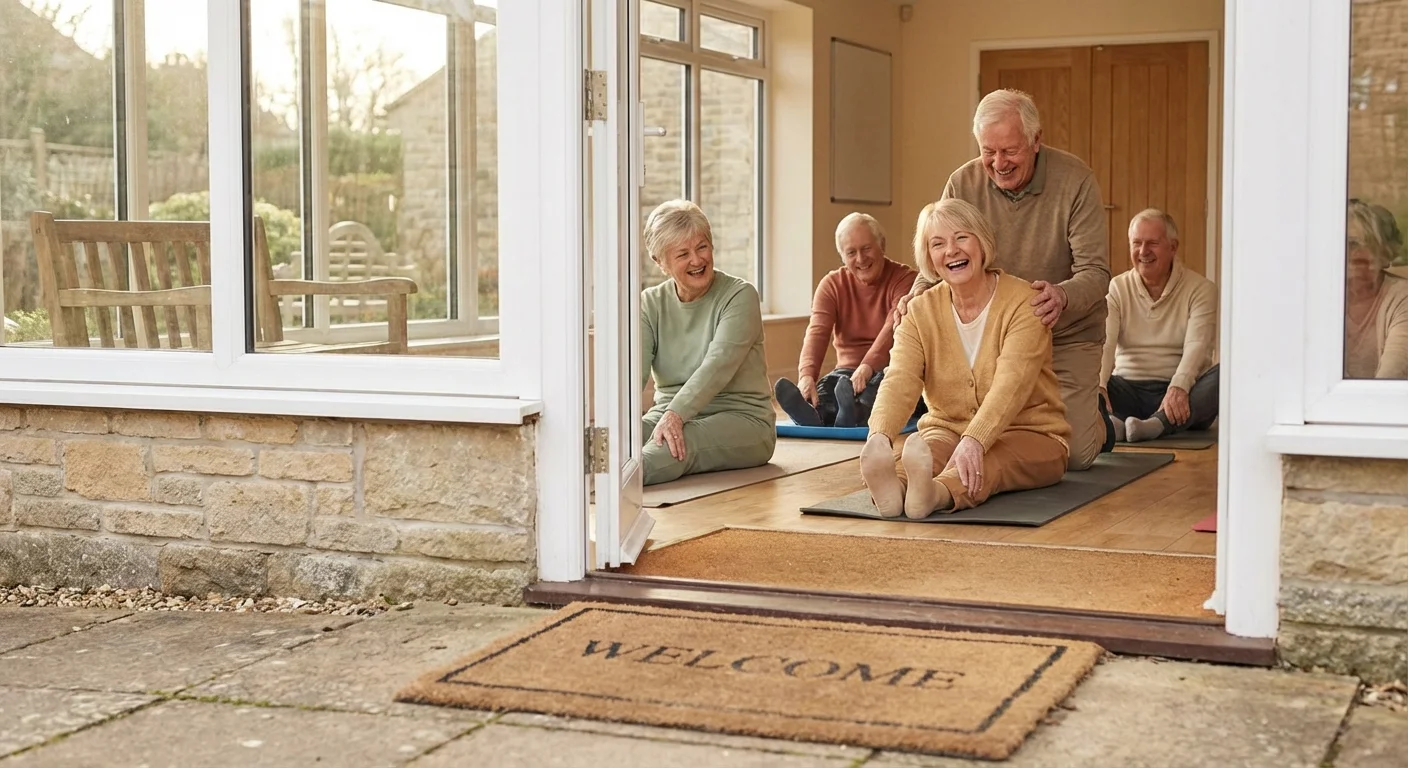
Embracing the Journey: Why Yoga is Ideal for Seniors
Yoga, translated from Sanskrit, means “to yoke” or “to unite,” reflecting its holistic approach to connecting mind, body, and spirit. For us seniors, this connection proves especially beneficial, offering a gentle exercise system that respects and works with our bodies’ natural changes.
It’s something I wish I’d discovered years ago, back when I was still shelving books for 36 years at the elementary school library. Now, I’m learning to move with intention and breathe with awareness, and it feels wonderful.
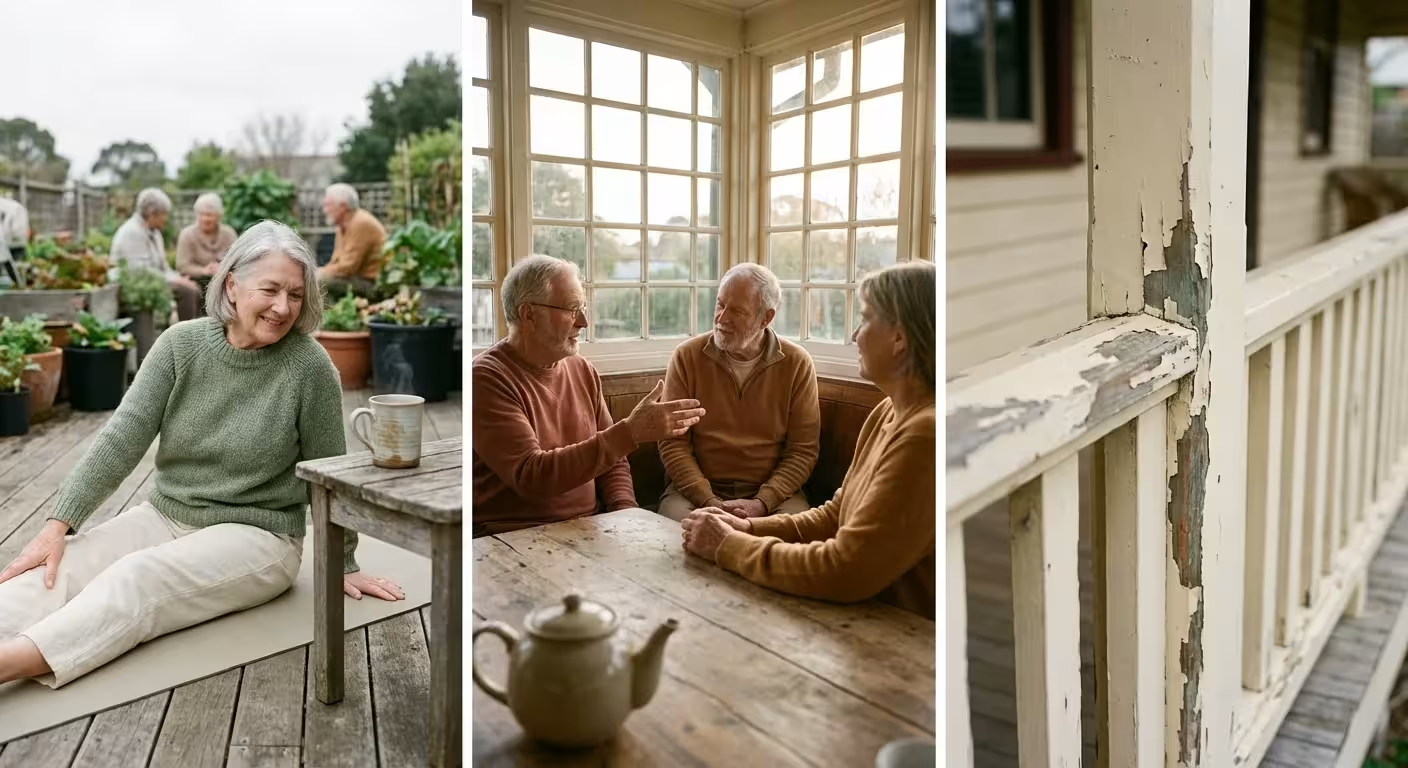
Sharing these wellness experiences with peers is also a perfect avenue for staying social and cultivating lasting friendships during your golden years.
Engaging in these group classes really highlights the benefits of community living, showing how shared spaces can foster wonderful friendships and healthy habits.
As a former librarian, I also find that joining senior book clubs is a wonderful way to keep the mind sharp and stay connected with others who love reading.
Senior yoga prioritizes safe, accessible movements, often performed seated in a chair or using a chair for support. My instructor at Hawthorn Ridge, a lovely woman named Maria, always encourages modifications for every pose, ensuring we receive the maximum benefit without strain.
This adaptive nature makes yoga an excellent choice for individuals with varying mobility levels or existing health conditions.
I’ve certainly gained strength and confidence as I’ve progressed at my own pace, and it’s made me feel so much better about trying new things here in Florida.
This practice encourages self-compassion, something I’ve had to learn a lot about since retiring and moving. It helps you develop a deeper understanding of your body, and I’ve found inner resilience that allows me to approach daily life with greater ease and presence.
It really is a wonderful way to maintain an active lifestyle throughout your retirement years, and a far cry from my old routine of mostly sitting and reading!
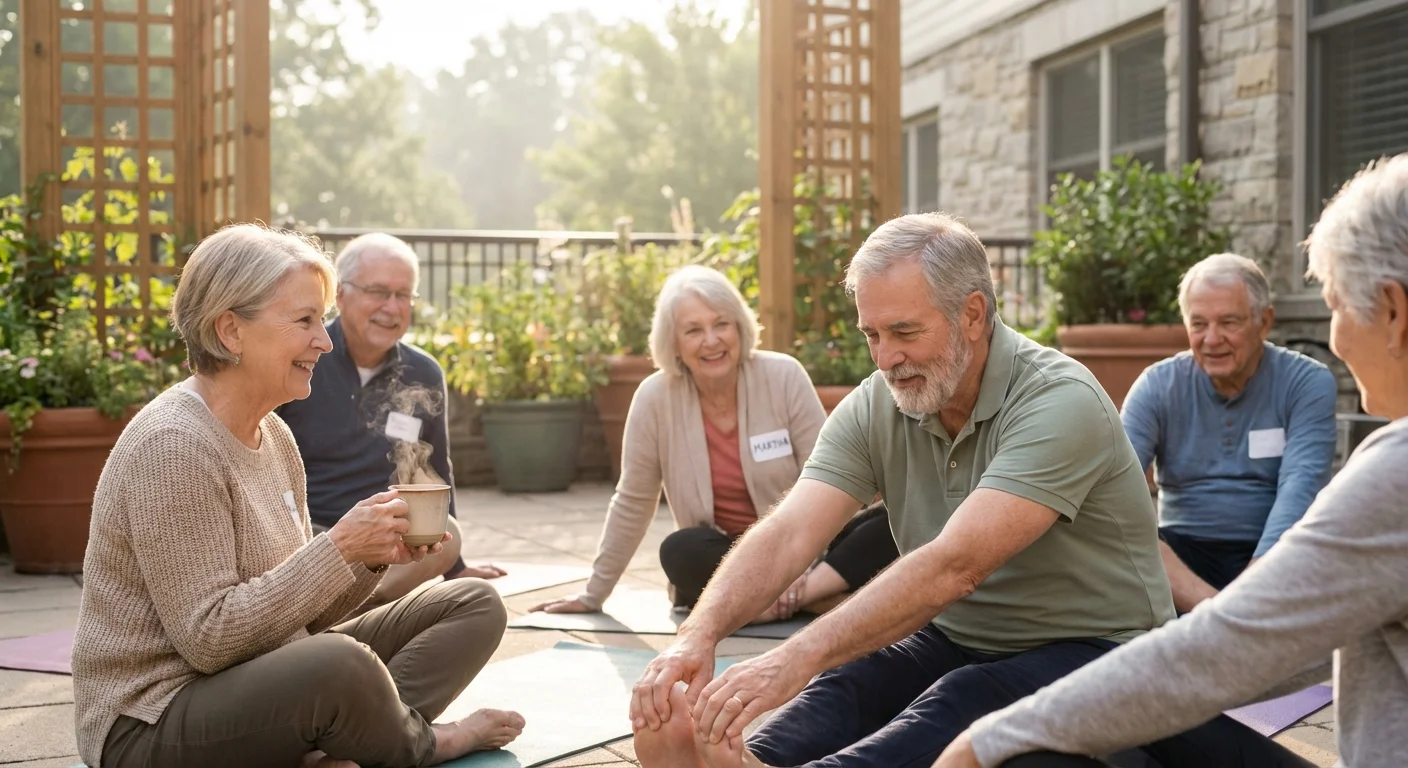
Unlock Core Benefits: Enhancing Senior Health with Yoga
Engaging in regular yoga practice delivers a wealth of benefits that directly support senior health, impacting both our physical and mental well-being. I’ve personally experienced improvements that enhance my daily life and foster a greater sense of independence.
The National Institute on Aging emphasizes the broad importance of physical activity for older adults, and I’ve found that yoga perfectly aligns with these recommendations.
If you want to try other gentle workouts, swimming is another superb low-impact exercise that builds strength without putting stress on your joints.
If you want to explore other low-impact options, embracing Tai Chi is another fantastic way to improve your balance and joint mobility.
Consider the tangible positive changes I’ve seen and felt:
- Increases Flexibility: Yoga gently stretches muscles and connective tissues, improving range of motion in joints like my hips, shoulders, and spine. This has made everyday tasks, such as reaching for the baking spices in the top cupboard or tying my shoes, so much easier.
- Boosts Balance: Many yoga poses challenge and improve your proprioception, your body’s awareness of its position in space. Stronger core muscles and greater stability in my legs have significantly reduced my worry about falls, which is a comfort to Bill, too!
- Builds Strength: Holding various poses engages and strengthens muscle groups throughout your body, particularly your core, legs, and back. This functional strength supports my posture and helps me maintain an active lifestyle, especially when I’m chasing after Lily and Noah.
- Improves Joint Health: Gentle movement and stretching lubricate my joints, potentially reducing stiffness and discomfort. I move more freely and with less of the aches I used to feel.
- Reduces Stress and Anxiety: Yoga combines physical postures with focused breathing and mindfulness, activating your parasympathetic nervous system. This promotes relaxation, lowers cortisol levels, and calms my mind. This was especially helpful during those first three months adjusting to Florida after selling our house in Columbus.
- Enhances Cognitive Function: The concentration required for yoga poses and breathwork sharpens my focus and improves memory. It’s a lovely way to engage my brain in a new, beneficial way.
- Elevates Mood: Regular physical activity, including yoga, releases endorphins, natural mood elevators. The sense of accomplishment and the community I’ve found in my class also contribute to a positive outlook.
- Improves Sleep Quality: By reducing stress and calming the nervous system, yoga helps me fall asleep faster and experience more restful sleep. I wake feeling refreshed and energized, ready to tackle another day of watercolor painting (even if I’m not good at it!).
These benefits collectively contribute to a higher quality of life, allowing me to enjoy my retirement years with vigor and peace.
“The best time to start exercising was 20 years ago. The second best time is now.”
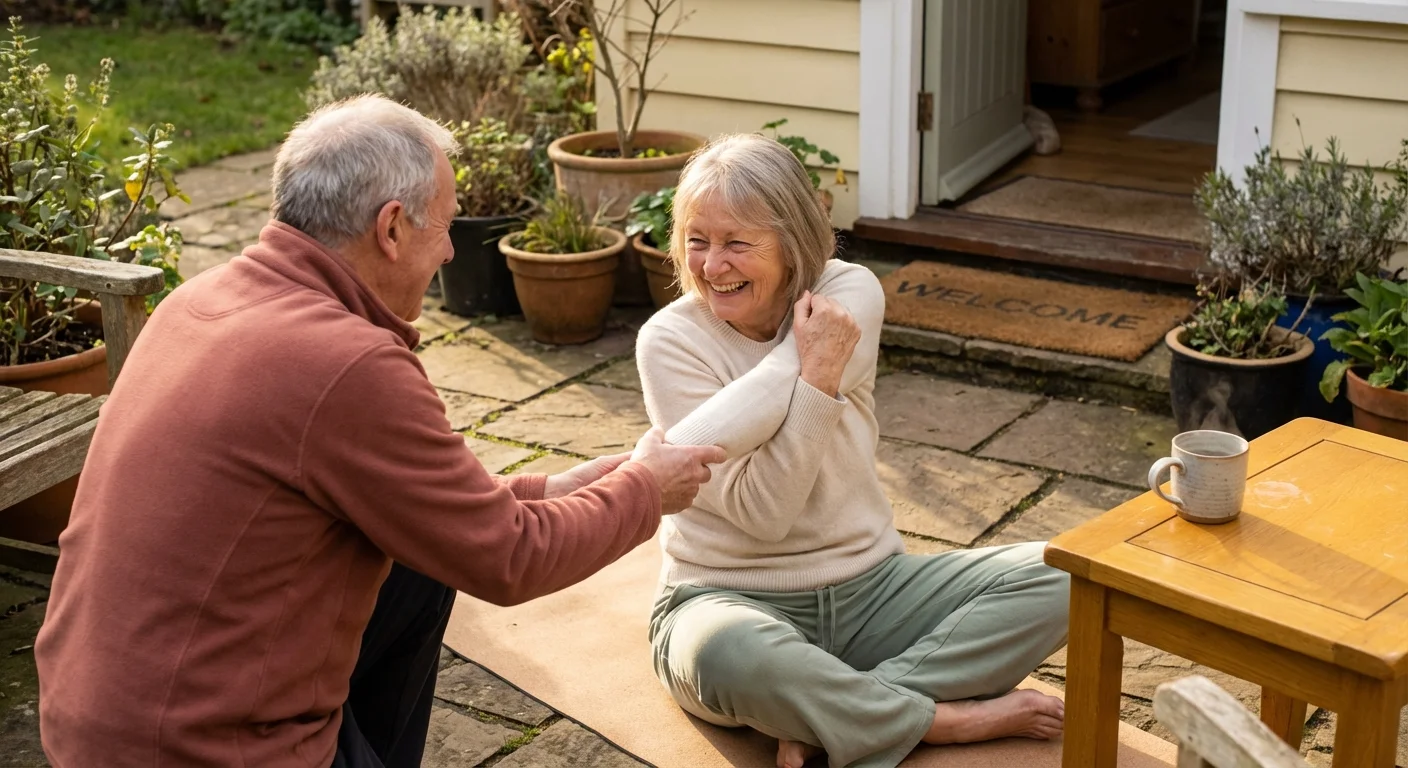
Cultivating Flexibility: Key Yoga Poses for Supple Joints
Improving my flexibility has proven crucial for maintaining mobility and preventing injuries as I’ve aged. I remember feeling so stiff after all those years of bending over library book carts and sitting for long periods.
Stiff muscles restricted my movement, making everyday activities feel challenging. Yoga offers gentle yet effective ways to lengthen your muscles and increase your range of motion.
I’ve certainly gained greater freedom in my body, which helps immensely when I’m getting down on the floor to play with Lily and Noah.
If you enjoy outdoor movement, cycling is a fantastic way to improve joint mobility while getting some fresh air.
Here are some excellent yoga poses for seniors focused on enhancing flexibility, along with modifications for support:
1. Seated Cat-Cow Flow
This gentle spine warm-up improves spinal flexibility and coordination. I find it really helps release the tension in my back and neck.
- Sit comfortably in a chair with your feet flat on the floor, hip-width apart. Place your hands gently on your thighs.
- As you inhale, arch your back, pull your shoulders back, and lift your chest towards the ceiling, gazing slightly upward (Cow pose).
- As you exhale, round your spine, tuck your chin towards your chest, and let your shoulder blades spread apart (Cat pose).
- Flow smoothly between these two movements for 5-10 breaths, coordinating with your breath.
2. Seated Spinal Twist
This twist gently mobilizes your spine and can aid digestion. I always feel a nice release of stiffness in my upper back when I do this one.
This kind of upper body flexibility is also incredibly helpful for everyday hobbies like gardening, where stretching and twisting are common.
- Remain seated tall in your chair, feet flat on the floor.
- Gently twist your torso to the right, placing your right hand on the back of the chair and your left hand on your right thigh.
- Keep your spine long and avoid forcing the twist. Breathe deeply into the stretch.
- Hold for 5 breaths, then slowly unwind to center.
- Repeat on the left side.
3. Wall Assisted Hamstring Stretch
Stretching your hamstrings improves lower back health and helps with walking and bending. The wall provides excellent support, which is great for me!
- Lie on your back with your buttocks close to a wall. Extend one leg straight up the wall, keeping it as straight as comfortable.
- Keep your other foot flat on the floor with your knee bent, or extend the leg straight along the floor if comfortable.
- Flex the foot of the leg on the wall, gently pressing your heel towards the ceiling.
- You should feel a stretch in the back of your thigh. Do not push into pain.
- Hold for 30 seconds to 1 minute, breathing deeply.
- Slowly lower the leg and repeat with the other leg.
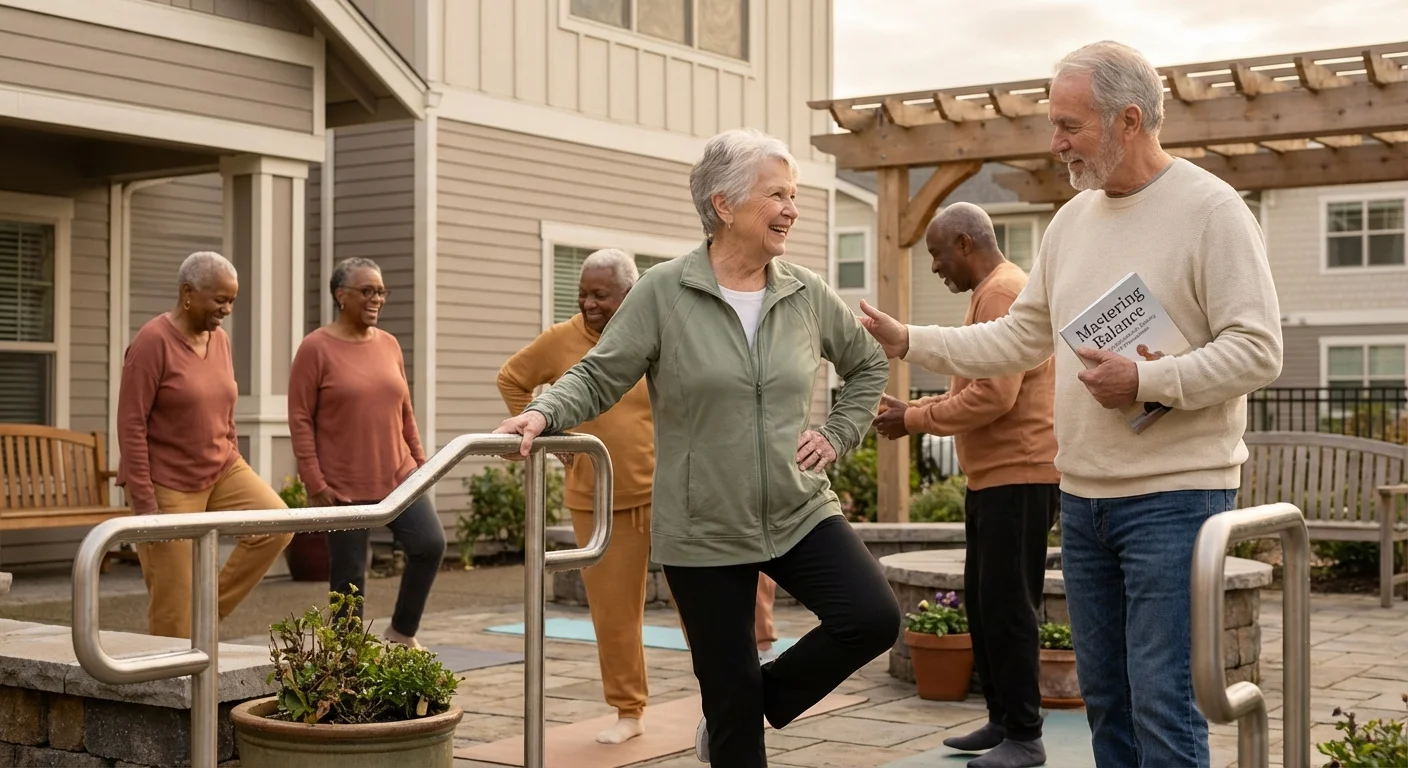
Mastering Balance: Yoga Techniques for Stability and Fall Prevention
Maintaining good balance is fundamental for independence and safety as we age. I’ve had a few close calls over the years, especially when I was rushing around the house in Columbus.
Weak core muscles and reduced proprioception contribute to instability, increasing the risk of falls. Yoga significantly improves your balance by strengthening supporting muscles and enhancing your body’s spatial awareness.
I’ve certainly gained confidence in my movements, which makes me feel much more secure.
In addition to yoga, joining senior dance classes is an incredibly fun way to challenge your coordination and stability.
Better balance on the mat will also support you during outdoor activities, such as discovering the power of walking as a daily routine.
Here are effective yoga poses to help you improve your balance, offering modifications for security:
1. Chair Pose (Utkatasana)
Chair Pose strengthens your thighs, ankles, and core, all vital for balance. Using a chair provides stability, which is how I started!
Developing this leg and ankle strength is essential if you want to try more active, fast-paced sports such as pickleball.
- Stand with your feet hip-width apart, about six inches in front of a sturdy chair.
- As you inhale, reach your arms forward or up, keeping your shoulders relaxed.
- As you exhale, bend your knees and shift your hips back as if you are about to sit in the chair. You can lightly touch the chair with your buttocks for support.
- Keep your chest lifted and your gaze forward. Engage your abdominal muscles.
- Hold for 3-5 breaths, then slowly stand back up.
- Repeat 3-5 times.
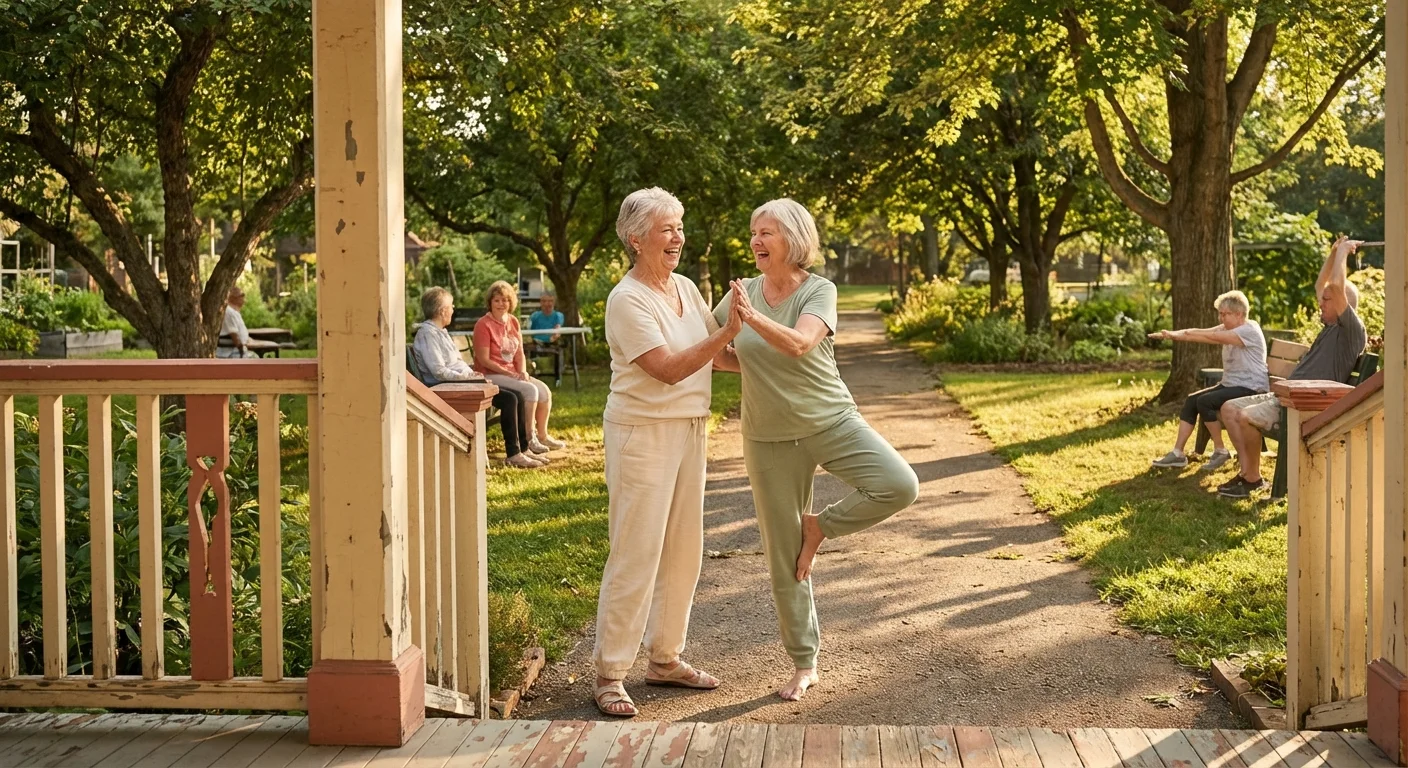
2. Modified Tree Pose (Vrksasana)
Tree Pose builds strength in your standing leg and improves focus, crucial for balance. Using a wall or chair offers support, and it’s how I practice it to feel safe.
My Florida friend, Carol, and I always laugh when we wobble a bit!
- Stand tall with a chair beside you or facing a wall for support. Shift your weight onto your left foot, grounding it firmly.
- Bring the sole of your right foot to your left ankle, calf (avoiding the knee), or inner thigh.
- Keep your hips level and your standing leg strong. Place your hands on the chair, wall, or bring them to your chest in prayer position.
- Focus your gaze on a non-moving point in front of you (drishti).
- Hold for 5-10 breaths, then release and repeat on the other side.
3. Warrior II (Virabhadrasana II)
Warrior II strengthens your legs, ankles, and core while improving hip flexibility and focus. You can modify by keeping the stance narrower, which I often do.
- Stand with your feet wide apart, about 3-4 feet. Turn your right foot out 90 degrees and your left foot slightly in.
- Extend your arms out to the sides, parallel to the floor, palms facing down.
- Bend your right knee directly over your right ankle, ensuring your knee does not go past your ankle. Keep your left leg strong and straight.
- Gaze over your right fingertips. Maintain a strong, grounded posture.
- Hold for 5-8 breaths, then straighten your right leg and switch sides.
These poses, when practiced consistently, enhance your stability and confidence, helping you navigate your environment safely. Reducing your risk of falls significantly improves your independence and quality of life, as highlighted by resources like the National Council on Aging’s falls prevention initiatives.
And honestly, it just makes me feel more capable when I’m out and about at Hawthorn Ridge!
Finding Inner Peace: Yoga for Mental Well-being and Stress Relief
Yoga extends far beyond physical postures; it offers powerful tools for mental clarity and emotional resilience. I’ve certainly gained techniques to manage stress, quiet my mind, and cultivate a sense of inner calm.
This mental practice has proven invaluable for navigating the changes and challenges of retirement, especially those first few months after we moved from Columbus to Sarasota.
Oh, I cried when we sold the house, and it took me a full year to truly admit that Bill was right about the move. Yoga helped me find peace in that transition.
Integrating yoga with daily meditation and mindfulness practices can dramatically lower stress levels and bring greater clarity to your day.
Mindful Breathing (Pranayama)
Conscious breathing practices are central to yoga’s calming effects. Focusing on your breath shifts your attention away from worries, grounding you in the present moment.
I find I can practice mindful breathing anytime, anywhere, even when I’m waiting for my bread to rise on Sunday mornings.
- Find a comfortable seated position.
- Close your eyes gently or soften your gaze.
- Place one hand on your chest and the other on your abdomen.
- Inhale slowly and deeply through your nose, feeling your abdomen rise.
- Exhale slowly through your nose or mouth, feeling your abdomen fall.
- Continue for 5-10 minutes, focusing solely on the sensation of your breath.
Regular practice of this simple technique can lower your heart rate, reduce feelings of anxiety, and improve your overall sense of well-being.
It’s a wonderful way to find a moment of quiet, much like I used to find in the library before the children arrived.
Meditation and Relaxation
Even short periods of meditation can significantly reduce stress and improve mental focus. Many yoga classes conclude with a guided relaxation, often called Savasana or Corpse Pose, which allows your body and mind to fully absorb the benefits of the practice.
This deep relaxation helps improve sleep quality and reduces muscle tension. I always emerge feeling refreshed and mentally clear, ready to tackle my watercolor painting (still not good, but I don’t care!).
Starting Your Yoga Practice: Practical Steps for Beginners
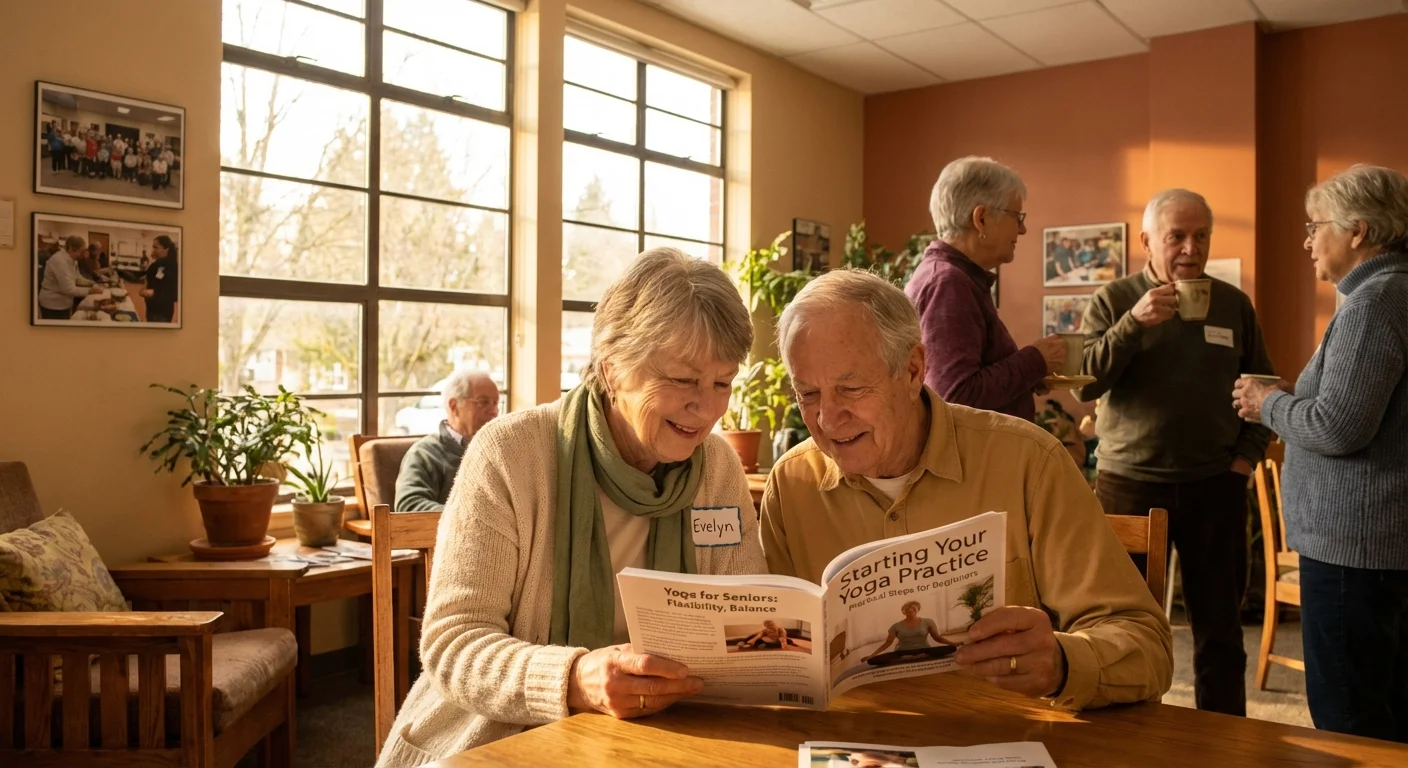
Beginning your yoga journey is an exciting step towards greater health and vitality. I certainly felt that excitement mixed with a little nervousness!
You do not need to be flexible or strong to start; yoga meets you exactly where you are. Following a few practical steps ensures a safe and enjoyable introduction to the practice, which even Bill, with all his spreadsheets, would approve of.
Essential Preparations Before You Begin
- Consult Your Doctor: Always discuss any new exercise program, including yoga, with your healthcare provider. This is especially important if you have chronic health conditions, recent injuries, or concerns about physical limitations. My doctor gave me the green light, and it was a good reassurance.
- Choose Comfortable Attire: Wear loose-fitting or stretchy clothing that allows for a full range of movement. You want to feel unconstrained. I remember digging out some old sweatpants for my first class!
- Gather Basic Equipment: A non-slip yoga mat is essential for cushioning and stability. Consider investing in a yoga strap and a yoga block, which serve as invaluable props for modification and support. Many studios provide these for use, which mine did at Hawthorn Ridge.
- Find a Quiet Space: Designate a calm, uncluttered area in your home where you can practice without distractions. You create an environment conducive to focus and relaxation. My little painting nook works perfectly for this.
Tips for Your First Yoga Experience
Starting yoga is about listening to your body and being patient with yourself. I had to learn this, as I tend to be a bit of a perfectionist!
- Go at Your Own Pace: Never force a stretch or push into pain. Yoga is not a competition. You listen to your body’s signals and adjust accordingly.
- Communicate with Your Instructor: If attending a class, inform your instructor about any physical limitations or health concerns before class begins. My instructor, Maria, is wonderful about offering specific modifications.
- Focus on Your Breath: Your breath is your anchor in yoga. Maintain a steady, even breath throughout your practice. If a pose makes your breath strained, ease out of it.
- Stay Hydrated: Drink water before and after your practice to remain well-hydrated.
- Consistency is Key: Even short, regular practices yield significant benefits over time. I aim for 2-3 sessions per week to build routine and see progress, and it really does make a difference.
You will discover that your yoga practice evolves with you, offering new insights and challenges as you grow. It’s been a lovely surprise in my retirement!
Finding the Right Yoga Class and Instructor
Finding a suitable yoga class and a knowledgeable instructor significantly enhances your experience and ensures your safety. Many options exist, from dedicated yoga studios to community centers, catering to various preferences and abilities.
I really wanted to find a setting where I felt comfortable and supported, especially after being in a new town where I didn’t know a soul.
Types of Classes to Look For
When searching for classes, consider those specifically designed for seniors or beginners. This is what I did!
- Chair Yoga: These classes use a chair for support throughout the entire practice, making them ideal for individuals with limited mobility or balance concerns.
- Gentle Yoga: Slower-paced classes focusing on foundational poses, breathwork, and extended holds. They emphasize stretching and relaxation.
- Restorative Yoga: Uses props like bolsters, blankets, and blocks to support the body in passive stretches, promoting deep relaxation and stress reduction.
- Beginner’s Yoga: Designed to introduce fundamental poses and principles at a slow, clear pace, building a strong foundation.
Where to Find Classes
You have several avenues to explore for finding classes in your area:
- Local Yoga Studios: Many studios offer a variety of classes, including senior-specific or gentle options. Call ahead or check their websites for schedules and descriptions.
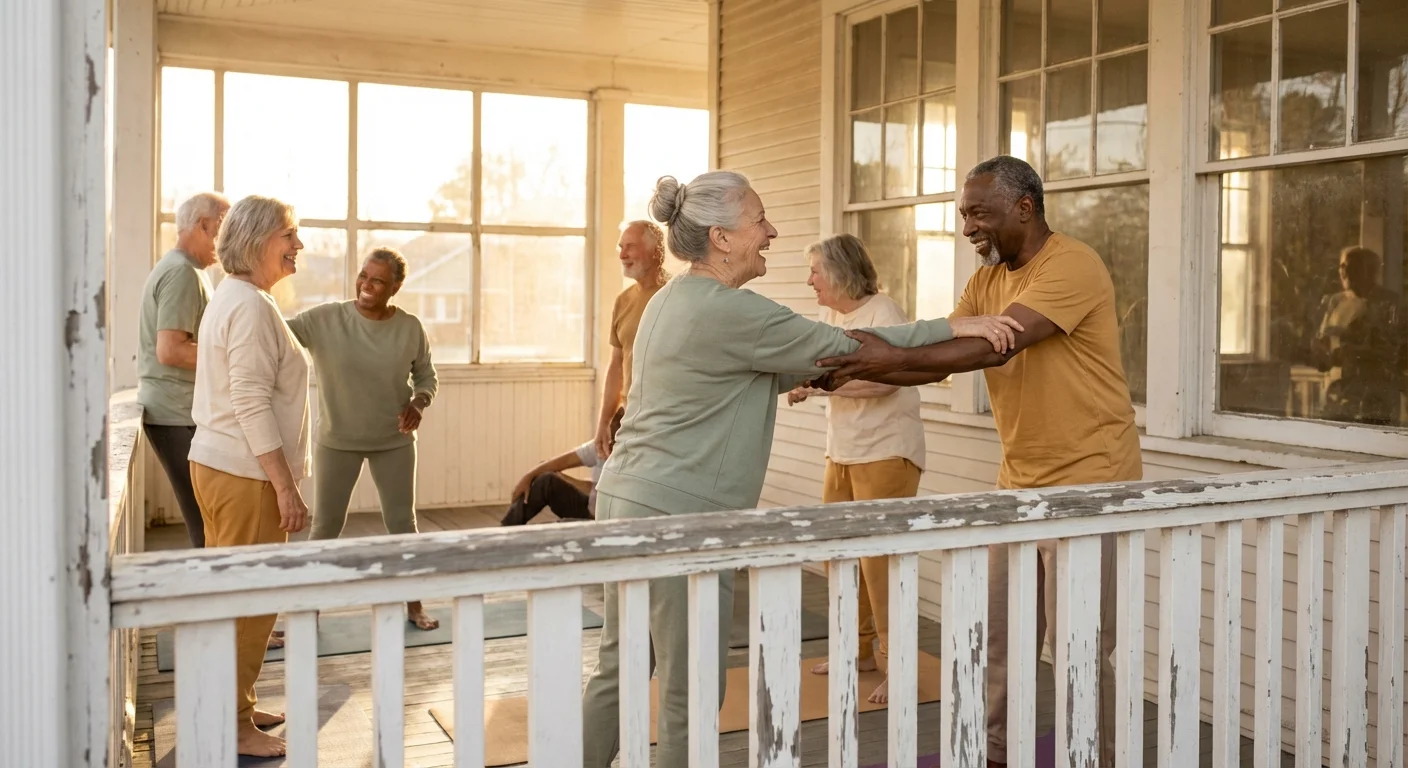
- Community Centers and Senior Centers: Often provide affordable yoga classes tailored to older adults. This is where I found my class at Hawthorn Ridge, and it’s been a great place to meet new people and build my “Florida family.”
- Fitness Centers: Gyms like those participating in programs such as SilverSneakers frequently include yoga classes in their membership, often with instructors experienced in working with seniors.
- Online Platforms: Numerous online resources and apps offer guided yoga practices you can do from home. Look for instructors specifically teaching senior or adaptive yoga.
When choosing an instructor, look for someone certified, experienced in teaching seniors, and who prioritizes safe alignment and modifications. I didn’t hesitate to observe a class and speak with Maria before committing.
You deserve an instructor who makes you feel safe, heard, and encouraged. That’s how I found my wonderful class, and now I’m the one telling friends in Ohio they should do it too!
Frequently Asked Questions
What are the best yoga poses for seniors?
From my experience, the best yoga poses for seniors prioritize safety, accessibility, and effectiveness in improving flexibility, balance, and strength.
I’ve found poses like Seated Cat-Cow to be wonderful for spinal mobility, Chair Pose for building leg strength and balance, Modified Tree Pose for stability (with a wall or chair, of course!), and Wall Assisted Hamstring Stretch for flexibility.
Your instructor can also recommend personalized poses based on your specific needs and abilities, which is what Maria does for me.
How does yoga improve balance in seniors?
I’ve definitely noticed that yoga improves balance through several mechanisms. It strengthens my core muscles and the muscles in my legs and ankles, which directly support stability.
Poses that challenge my equilibrium, like that modified tree pose, also enhance proprioception – that’s your body’s awareness of its position in space.
Consistent practice has really built up my coordination, which helps me react to shifts in balance and reduces my worry about falls. It’s a real confidence booster!
Is yoga safe for seniors with arthritis?
Yes, I’ve learned that yoga is generally safe and beneficial for seniors with arthritis, provided you practice with appropriate modifications and always listen to your body. Gentle yoga, chair yoga, or restorative yoga styles are often recommended.
These styles emphasize slow, controlled movements, gentle stretches, and support from props, which can reduce joint stiffness, improve range of motion, and alleviate pain without exacerbating inflammation.
Just be sure to consult your doctor before starting any new exercise if you have arthritis, as I did.
How often should seniors practice yoga?
For us seniors, consistent yoga practice truly delivers the best results. I aim for 2-3 sessions per week to experience significant improvements in flexibility, balance, and overall well-being.
Even shorter, daily practices of 10-15 minutes focusing on gentle stretches or breathing exercises can provide benefits. I’ve found that you really build strength and mobility over time through regular engagement, not through intense, infrequent sessions.
It’s like baking – consistent effort yields the best bread!
Do I need to be flexible to start yoga as a senior?
Absolutely not! I was certainly not flexible when I started, and I’m still working on it.
Yoga is a practice designed to help you become more flexible over time, not a prerequisite. My instructors have always offered modifications and used props like blocks and straps to make poses accessible for all flexibility levels.
Your journey starts from exactly where you are today, and you will gradually discover increased flexibility as you continue practicing. Don’t let that stop you!
Disclaimer: This article is for informational purposes only and does not constitute medical advice.
Before starting any new exercise program or making significant changes to your activity level, please consult with your healthcare provider, especially if you have chronic health conditions or concerns about physical limitations.