
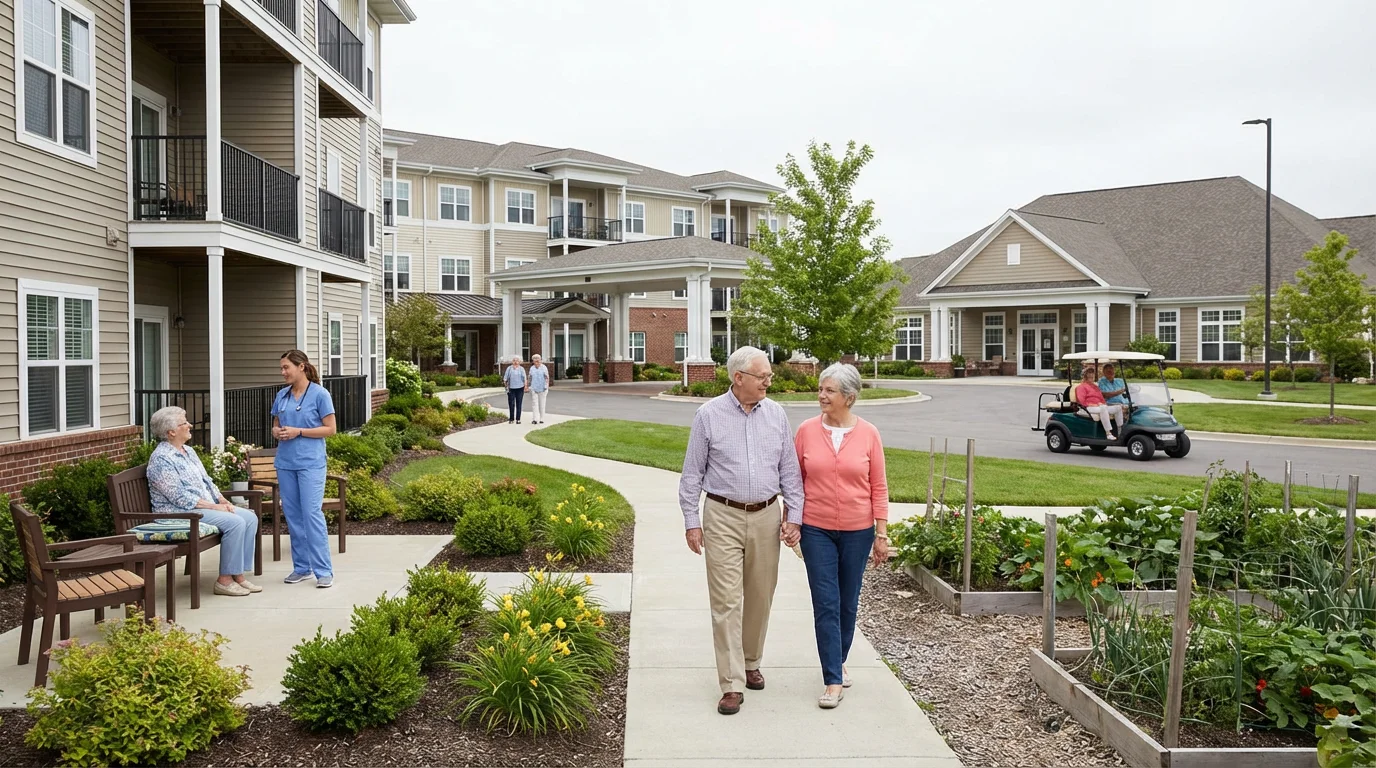
When Dorothy and I started seriously looking into retirement housing, I dove into the research with the same intensity I used for designing bridge supports.
Believe me, the options can feel like a labyrinth, especially when you start thinking about what happens if your needs change down the road. One term that kept popping up in my spreadsheets was “Continuing Care Retirement Communities,” or CCRCs.
This article is my attempt to lay out what I learned about them – a practical guide to help you navigate these complex decisions, much like I did for our own move to Hawthorn Ridge.
CCRCs offer a particular approach to senior living by trying to provide a full spectrum of care and services all in one place.
The idea is that you can “age in place,” moving through different levels of care as your needs evolve, without the headache of packing up and finding a new spot.
Trust me, after moving out of our 2,400 sq ft colonial on Elmwood Drive – and what I estimated to be “approximately one metric ton of stuff we don’t need” – the thought of avoiding future moves certainly appealed to my practical side.
Understanding how CCRCs work can definitely simplify what feels like an overwhelming decision.
In this guide9 sections
- What Are Continuing Care Retirement Communities (CCRCs)?
- The Continuum of Care: What a CCRC Offers
- Navigating CCRC Financial Models and Contract Types
- The Advantages of Choosing a CCRC
- Key Considerations and Potential Drawbacks of CCRCs
- What to Look for When Touring a CCRC
- Essential Questions to Ask Before Signing a CCRC Contract
- Funding Your CCRC Lifestyle: Financial Planning
- Frequently Asked Questions

What Are Continuing Care Retirement Communities (CCRCs)?
Continuing Care Retirement Communities, or CCRCs, are a distinct type of senior living option that I spent a good bit of time analyzing. They’re designed to provide a comprehensive range of housing, services, and healthcare levels, typically all on one campus.
This integrated approach ensures that residents can receive the appropriate care as their needs change over time, which, from an engineering perspective, is a pretty efficient design.
Because these popular communities often have limited immediate availability, it’s wise to begin navigating the waitlist well in advance of your planned move.
These modern communities are also evolving rapidly, reflecting broader trends in senior housing that prioritize resident wellness and autonomy.
The main selling point of CCRCs is that “continuum of care.” What that means is you can start in independent living and then, if needed, transition to assisted living, memory care, or skilled nursing care, all within the same community.
This eliminates the need for a separate move when your health changes, which I can tell you from experience, is a significant stress reducer.
Dorothy and I debated the merits of this model versus a 55+ community like Hawthorn Ridge for quite a while, and for many, the peace of mind a CCRC offers is invaluable.
CCRCs generally require an upfront entry fee and then ongoing monthly fees. These fees cover your housing, services, and, depending on the contract you choose, a portion of future healthcare costs.
The whole model is built to provide a secure and stable environment for your entire retirement journey, something I always factored into my long-term financial projections.

The Continuum of Care: What a CCRC Offers
The core value of a CCRC, as I see it, is its ability to offer a seamless transition between various care levels. This built-in flexibility ensures you get the right support at every stage, without having to start over somewhere new.
When I was building my comparison matrix for senior housing, I made sure to map out all these potential transitions. Let’s look at the typical care levels you’d find.
For many seniors, making this transition also lets them experience the benefits of downsizing to simpler living before higher levels of care are ever needed.
Independent Living
Independent living is where most CCRC residents begin. It’s for active, healthy folks like Dorothy and me who want a vibrant, maintenance-free lifestyle.
You live in your own private apartment, condo, or cottage and manage your daily routines without needing any assistance. It’s pretty similar to our setup here at Hawthorn Ridge, though our community doesn’t have the integrated higher levels of care.
Taking full advantage of the community’s social calendar is a great way to meet neighbors and feel at home quickly.
If you don’t require built-on-site medical care, you might find that choosing a 55+ community fits your active lifestyle better.
These communities typically offer a wide range of amenities and social activities. Think fitness classes, cultural outings, educational programs, and various clubs.
Common services include dining options, housekeeping, transportation, and access to campus facilities. Your independence is still the priority, but you get to enjoy a supportive community environment without worrying about yard work – a definite plus after 44 years of tending to our yard on Elmwood Drive.
Assisted Living
If you eventually need some daily support, you can transition to assisted living within the same CCRC. This level of care is designed for individuals who need a bit of help with what the professionals call Activities of Daily Living (ADLs).
That includes things like bathing, dressing, grooming, using the restroom, and managing medications.
Even as your physical support needs change, maintaining strong social connections in retirement remains absolutely vital for your emotional well-being.
Assisted living residents usually have private or semi-private apartments, but with caregivers available 24/7. Services expand to include personal care assistance, scheduled activities, and three meals a day.
The goal is to help you maintain as much independence as possible while making sure you’re comfortable and safe.
Memory Care
Memory care is a specialized environment for individuals living with Alzheimer’s or other forms of dementia. These units or wings are designed to be secure, preventing wandering and reducing confusion.
The staff here receives specific training in dementia care, focusing on techniques that support cognitive function and emotional well-being. It’s a critical component for comprehensive planning, ensuring that even the most challenging health needs are addressed.
The programs and activities in memory care are specifically tailored for individuals with cognitive impairments, often focusing on sensory stimulation, reminiscence, and meaningful engagement. This secure and structured setting provides safety and comfort, offering families significant peace of mind.
It’s about ensuring dignity and quality of life for those facing these challenges.
Skilled Nursing Care
Skilled nursing care, sometimes called a Skilled Nursing Facility (SNF) or nursing home, provides the highest level of medical care within a CCRC. This is for residents who need 24-hour medical supervision, rehabilitation services, or complex nursing care due to illness, injury, or chronic conditions.
It’s the kind of care you hope you don’t need, but if you do, it’s good to know it’s already part of the plan.
A team of licensed nurses and therapists provides comprehensive care, including wound care, physical therapy, occupational therapy, speech therapy, and medication administration. Stays in skilled nursing can be short-term for rehabilitation after surgery or illness, or long-term for ongoing medical needs.
Many CCRCs also offer palliative care within their skilled nursing units, providing comfort and support.

Navigating CCRC Financial Models and Contract Types
Understanding the financial structure of CCRCs is absolutely critical. This is where my “NASA mission” level of detail comes in handy.
They all involve an entry fee and ongoing monthly fees, but the specifics vary wildly based on the contract type. Each contract offers a different approach to managing future healthcare costs, which directly impacts your long-term financial predictability – something I always prioritize.
Type A: Extensive (LifeCare) Contracts
Type A, or LifeCare, contracts generally have the highest entry fee and monthly fees. In return, they offer predictable, often discounted, long-term care at little to no additional cost as your needs increase.
This means if you move from independent living to assisted living or skilled nursing, your monthly fee stays relatively stable, or only goes up slightly for direct care costs. From a pure risk management perspective, this offers the most security.
LifeCare contracts provide the most comprehensive coverage and the greatest peace of mind regarding future care expenses. They’re ideal for those who prioritize cost predictability and want to hedge against rising healthcare costs.
AARP provides resources that explain how these contracts offer significant financial protection as you age. If Dorothy and I had gone this route, this is the one I would have pushed for, given its upfront clarity on future costs.
Type B: Modified Contracts
Modified contracts typically have lower entry fees and monthly fees than Type A. They usually include a certain number of days of assisted living or skilled nursing care at a discounted rate.
Once those days are used up, you then pay a discounted per diem rate for any additional care you might need. It’s a more complex calculation, requiring careful projection of potential future needs.
This option offers some cost predictability but requires you to cover a portion of the long-term care costs if your needs go beyond the covered period. Type B contracts balance initial savings with a degree of future financial responsibility.
They suit individuals looking for a middle ground between extensive coverage and lower upfront costs, but you need to be realistic about your potential out-of-pocket expenses later on.
Type C: Fee-for-Service Contracts
Fee-for-service contracts generally come with the lowest entry fees and monthly fees among CCRC options. However, if you need assisted living, memory care, or skilled nursing, you pay for those services at their prevailing market rates.
This means the costs for higher levels of care are not included or discounted in your initial agreement. This is the least predictable option from a future cost perspective.
While Type C contracts offer the lowest initial investment, they carry the highest risk for future healthcare cost increases. They might appeal to individuals who have robust long-term care insurance or significant financial resources to cover future care needs.
You trade lower upfront costs for less predictability in long-term care expenses, which, for my money, introduces an unacceptable level of financial uncertainty.
Refundable Entry Fees
Many CCRCs offer options for refundable entry fees, which can certainly impact your initial cost calculation. A fully refundable contract means 100% of your entry fee is returned to your estate or to you upon leaving the community.
Partially refundable options might return a percentage (say, 50% or 90%) after a certain period or once your unit is re-occupied. I’d be scrutinizing these clauses very carefully.
Understanding these refund clauses is just one of the critical legal considerations of moving into senior housing that you should review carefully with a professional.
Non-refundable entry fees mean the community keeps the entire fee. Refundable options usually come with a higher entry fee, but they provide a level of asset protection.
It is absolutely essential to understand the specific terms of any refund policy, including the exact conditions for repayment. Don’t just assume; get it in writing and understand the fine print.
| Contract Type | Entry Fee | Monthly Fee | Long-Term Care Costs | Key Benefit |
|---|---|---|---|---|
| Type A (LifeCare) | Highest | Highest | Minimal or no increase | Maximum predictability, comprehensive coverage |
| Type B (Modified) | Mid-range | Mid-range | Discounted rate for a set period, then discounted market rate | Balanced costs, some future care protection |
| Type C (Fee-for-Service) | Lowest | Lowest | Full market rate | Lower initial costs, greater flexibility for future care |

The Advantages of Choosing a CCRC
From a planning perspective, CCRCs offer several distinct advantages that can contribute to a secure and fulfilling retirement. When I was building my 14-variable comparison matrix, these benefits certainly weighed heavily, even though Dorothy and I ultimately chose a 55+ community.
Peace of Mind and Predictable Future Care
One of the biggest advantages of CCRCs is the peace of mind they offer. You get the security of knowing that a full spectrum of care is available on site, should your health needs change.
This eliminates the stress of having to search for new care facilities during a health crisis and ensures you remain in a familiar environment with known staff and friends.
This continuum of care guarantees you’ll receive consistent support, which is a major draw for many.
Vibrant Community and Social Engagement
CCRCs are designed to foster a strong sense of community and provide plenty of opportunities for social engagement. Residents benefit from a wide range of organized activities, clubs, and events.
These can include fitness classes, educational lectures, art workshops, social gatherings, and excursions. This active social calendar helps combat isolation and promotes a higher quality of life, something Dorothy has found invaluable here in Hawthorn Ridge with her “Florida family.”
Maintenance-Free Living and Amenities
Living in a CCRC means you can shed the burdens of homeownership. No more worrying about property maintenance, yard work, or household chores.
Many communities provide housekeeping, laundry services, and transportation, freeing up your time for personal interests. Residents also enjoy access to a variety of amenities, such as fitness centers, swimming pools, libraries, dining venues, and sometimes even golf courses or salons.
After 44 years of home maintenance on Elmwood Drive, this was a feature I was *very* keen on, and it’s certainly a perk of our current 55+ community as well.
Potential Tax Advantages
Depending on the contract type, a portion of your CCRC entry fee and monthly fees may be tax-deductible as a prepaid medical expense. This can be a significant financial benefit, particularly with Type A LifeCare contracts.
I always advise consulting with a qualified financial advisor or tax professional to understand the specific tax implications for your situation. Don’t leave money on the table if you don’t have to.
Familiarity and Stability
Staying in one community as your care needs evolve provides a profound sense of stability. You maintain your social connections, remain close to your chosen amenities, and continue interacting with familiar staff.
This continuity is especially valuable during health transitions, minimizing disruption and anxiety for residents, and for their families.
“The best senior living community is one where you can see yourself thriving, knowing your future needs are anticipated and addressed.”

Key Considerations and Potential Drawbacks of CCRCs
While CCRCs offer many advantages, it’s just as important to understand their potential drawbacks. I always look at both sides of the ledger.
A thorough evaluation ensures the CCRC model truly aligns with your lifestyle, financial situation, and long-term expectations. This is where those spreadsheets really come in handy.
High Upfront Costs
The entry fee for a CCRC can be substantial, often ranging from $100,000 to over $1,000,000, depending on the location, unit size, and contract type. This fee typically requires you to sell your current home or utilize significant savings.
While some contracts offer refundable portions, the initial capital outlay is a major financial consideration. Dorothy and I used the proceeds from our Columbus house to fund our move to Hawthorn Ridge, and that initial cash outlay is a big decision for anyone.
Long-Term Commitment and Less Flexibility
Entering a CCRC usually involves a long-term commitment. Moving out can be financially complicated, especially if your entry fee is non-refundable or only partially refundable after an extended period.
This long-term nature may offer less flexibility if your circumstances or preferences change dramatically. You need to be genuinely comfortable with the community for the long haul, as it’s not a decision to take lightly.
Monthly Fees and Potential Increases
In addition to the entry fee, you’ll pay ongoing monthly fees, which can range from $3,000 to over $7,000. These fees are subject to annual increases, typically between 3% and 5%, to cover rising operational costs and inflation.
While Type A contracts offer predictability for care costs, the base monthly fee will still increase over time, impacting your long-term budget. I would model these increases out for at least 15-20 years to truly understand the financial commitment.
Waitlists
Desirable CCRCs, especially those with strong reputations and ideal locations, often have extensive waitlists. You might need to apply and pay a deposit years in advance to secure a spot.
This requires proactive planning and a willingness to wait for the right opportunity to arise. It’s not a decision you can make overnight, which is why I started my research into 55+ communities two years before I even retired.
Community Rules and Regulations
Like any planned community, CCRCs have rules and regulations that residents must follow. These might pertain to guest policies, pet restrictions, common area usage, or alterations to your living unit.
While these rules contribute to a harmonious environment, they might feel restrictive to some individuals accustomed to complete autonomy. Review the resident handbook carefully before committing; don’t assume it’s all common sense.

What to Look for When Touring a CCRC
Touring potential CCRCs is a crucial step in your decision-making process. This is where you move beyond the brochures and my spreadsheets and see things firsthand.
You need to observe specific aspects of the community, interact with staff and residents, and gather as much information as possible.
A thorough tour helps you assess if a CCRC truly aligns with your needs and preferences, and I’d recommend going more than once, at different times of day.
Community Atmosphere and Resident Engagement
Observe the overall atmosphere. Do residents appear happy, engaged, and active?
If possible, engage with residents, asking about their experiences, favorite activities, and satisfaction with the community. A positive, welcoming atmosphere often indicates a well-managed and thriving environment.
Look for bulletin boards with current activity schedules to gauge the vibrancy – Dorothy would be looking for the watercolor class schedule, while I’d be checking the pickleball court availability.
Staff Responsiveness and Professionalism
Pay close attention to the staff during your visit. Are they friendly, approachable, and knowledgeable?
Do they interact respectfully with residents? A caring and professional staff is fundamental to a positive living experience.
Observe staff-to-resident ratios in the assisted living and skilled nursing sections, as this directly impacts the quality of care. This is a quantifiable metric that should be part of your evaluation.
Cleanliness, Maintenance, and Safety
Assess the cleanliness and overall maintenance of the facilities, both inside and out. Are common areas well-kept?
Do the residential units appear modern and inviting? Check for visible safety features such as handrails, emergency call systems, and clear pathways.
As a civil engineer, I can tell you a well-maintained community reflects a commitment to resident comfort and safety – it’s a non-negotiable.
Dining Experience and Options
Dining is a significant part of daily life. Ask about meal plans, dining hours, and menu variety.
If possible, sample a meal to assess food quality. Inquire about dietary restrictions, special requests, and guest dining policies.
Access to healthy, appealing food options contributes significantly to resident satisfaction, and since I’ve become an unexpectedly good cook in retirement, I’d be particularly discerning here.
Amenities and Activities
Evaluate the range of amenities and activities offered. Do they align with your interests and hobbies?
Look for a diverse calendar of events covering physical, intellectual, social, and spiritual well-being. Consider the accessibility of facilities like fitness centers, pools, libraries, and common spaces.
A rich activity schedule prevents boredom and fosters engagement, and it’s one of the reasons Dorothy loves our community here in Sarasota.
Healthcare Facilities and Accreditation
Tour all levels of care, even if you currently only need independent living. Inspect the assisted living, memory care, and skilled nursing units.
Ask about staffing qualifications, medical director oversight, and emergency procedures. Check if the community is accredited by organizations like CARF (Commission on Accreditation of Rehabilitation Facilities) or LeadingAge, which indicates adherence to high standards of quality and financial stability.
Accreditation is a good indicator of a rigorously managed operation.

Essential Questions to Ask Before Signing a CCRC Contract
Before committing to a CCRC, you must ask thorough questions. This due diligence isn’t just a suggestion; it’s a requirement to protect your financial well-being and ensure you understand every single aspect of your agreement.
Obtain answers in writing whenever possible – that’s a rule I live by.
Financial and Contractual Questions
- What is the exact entry fee, and what portion, if any, is refundable? Under what conditions is it refundable?
- What are the current monthly fees, and what services do they include?
- How frequently do monthly fees increase, and what has been the average percentage increase over the past five years?
- What are the specific terms of the contract (Type A, B, or C)? How does this impact future care costs?
- What is the process for transitioning between care levels, and are there additional costs associated with these transitions?
- Are there any additional fees or charges not covered by the monthly fee (e.g., specific therapies, utilities, personal care items)?
- Can you provide audited financial statements for the past several years?
- What happens if my financial resources are depleted? Is there a benevolent fund or assistance program?
- What are the terms for terminating the contract, and what are the financial implications?
Care and Health Services Questions
- What are the staffing ratios for each level of care (independent, assisted, memory, skilled nursing)?
- What medical services are available on site, and how are emergencies handled?
- What are the qualifications and training of the care staff, especially in assisted living and memory care?
- How does the CCRC assess changes in a resident’s care needs?
- Can residents retain their personal physicians, or must they use community-affiliated doctors?
- What rehabilitation services (physical, occupational, speech therapy) are available, and are they covered by the monthly fee or additional?
- What is the process for medication management and administration?
- How are residents’ spiritual and religious needs accommodated?
Community Life and Operations Questions
- What is the average age of residents in independent living?
- What social, recreational, and educational programs are offered regularly? Provide a sample activity calendar.
- Are pets allowed, and what are the specific rules and fees associated with them?
- What transportation services are available, and what are their costs?
- How are resident concerns addressed? Is there a resident council?
- What is the community’s policy on visitors and overnight guests?
- Is the CCRC licensed and accredited? Which organizations provide this oversight?
- What is the process for submitting maintenance requests for your living unit?

Funding Your CCRC Lifestyle: Financial Planning
Entering a CCRC represents a significant financial commitment, making careful planning absolutely essential. This is where my background in managing finances with a “NASA mission” level of detail really comes into play.
You need to assess your current assets and future income streams to ensure you can comfortably afford the entry fee and ongoing monthly expenses.
A proactive approach to financial planning provides confidence in your decision, and it’s something I spent years on before Dorothy and I made our move.
Sources of Funds for Entry Fees
Many individuals finance their CCRC entry fee by selling their current home. The proceeds from a home sale can cover the upfront cost and often contribute to a reserve for future monthly fees.
This is exactly what Dorothy and I did when we sold our four-bedroom colonial on Elmwood Drive. Other common sources include long-term savings, investments, and retirement accounts.
It’s wise to consider the tax implications of withdrawing from various accounts – don’t get caught by surprise.
Some individuals may also use bridge loans or other short-term financing options if their home has not yet sold. However, you should carefully evaluate these options with a financial advisor to understand their impact on your overall financial health.
Always run the numbers thoroughly.
Planning for Monthly Fees and Increases
Your ongoing monthly fees will be covered by various income sources, such as Social Security benefits, pension payments, investment income, and withdrawals from retirement accounts. Remember that monthly fees typically increase annually, so your financial plan must account for these escalations.
This is where you need to project forward, not just look at today’s costs.
I would create a detailed budget that projects your income and expenses, including potential fee increases, over an extended period – say, 20 or 25 years. This helps identify any gaps and allows you to make adjustments proactively.
For example, if fees increase by 4% annually, calculate exactly how that impacts your budget five or ten years down the line. Don’t just hope for the best.
Long-Term Care Insurance
Long-term care insurance can play a vital role in funding potential future care needs within a CCRC, particularly with Type B and Type C contracts.
These policies help cover the costs of assisted living, memory care, or skilled nursing care, reducing the financial burden on your personal savings. Your specific policy’s benefits, waiting periods, and daily limits will determine its effectiveness, so understand your coverage.
If you have long-term care insurance, review your policy to understand its coverage for CCRC services. If you do not have a policy, assess whether acquiring one aligns with your financial strategy and health status.
Remember, waiting until you need care makes obtaining coverage difficult or impossible, so plan ahead.
Consulting Financial and Legal Professionals
Before signing any CCRC contract, you should absolutely consult with a financial advisor specializing in retirement planning. They can help you evaluate your assets, project future income and expenses, and determine the long-term affordability of a CCRC.
They will also assist you in understanding the tax implications of CCRC fees. Additionally, have an elder law attorney review the contract.
An attorney ensures you understand all legal terms, conditions, and implications, protecting your rights and interests. This isn’t a DIY project; get the experts involved.
Frequently Asked Questions
Can I move into a CCRC if I only need assisted living or skilled nursing care right now?
Most CCRCs are primarily designed for residents who start in independent living. Their model really emphasizes that continuum of care, beginning from a high level of independence.
While some CCRCs might have limited openings for direct admission into assisted living or skilled nursing, these are generally less common and subject to availability. You should directly inquire with specific communities about their direct admission policies for higher levels of care.
Don’t assume anything.
What happens if I run out of money while living in a CCRC?
Many CCRCs operate on what they call a “benevolent care” or “endowment fund” principle. This means that if you deplete your financial resources through no fault of your own, the CCRC *may* allow you to continue living in the community and receive care.
However, this is not a guarantee and depends entirely on the specific CCRC’s policies and financial health. Always ask about their benevolent care policy and make sure it’s clearly spelled out in your contract.
Financial experts at NCOA (National Council on Aging) emphasize the importance of understanding these provisions, and so do I.
Are CCRCs regulated?
Yes, CCRCs are regulated, but the specific regulations vary by state. Most states have licensing requirements that cover the different levels of care offered, such as assisted living and skilled nursing.
Some states also have specific regulations governing CCRC contracts and financial solvency. You should check with your state’s Department of Health or similar regulatory body for specific oversight information.
Accreditation from organizations like CARF or LeadingAge also indicates adherence to voluntary quality standards, which is a good sign of a well-run operation.
Is a CCRC a good investment?
A CCRC is primarily a lifestyle and care choice, not a financial investment in the traditional sense of building equity. The “return” is peace of mind, access to a vibrant community, and guaranteed care as your needs change.
While a portion of your entry fee might be refundable, you typically do not build equity like you would in a traditional home.
You should view the entry fee and monthly fees as payment for services, housing, and access to a future continuum of care, rather than an asset that will appreciate in value. It’s a purchase of services, not property.
Can my family visit freely in a CCRC?
Yes, CCRCs generally encourage family involvement and visits. Most communities have flexible visitation policies for independent living residents.
For assisted living, memory care, and skilled nursing, there may be specific hours or protocols to ensure resident safety and well-being, but families are usually welcome.
Always confirm the specific visitation policies for all levels of care when you tour, especially if you have grandchildren like Lily and Noah who love to visit.
What is the difference between a CCRC and an Active Adult Community?
An Active Adult Community, often a 55+ community like Hawthorn Ridge where Dorothy and I live, provides housing and amenities for active seniors but does not typically offer a continuum of care beyond independent living.
Residents purchase their homes (or rent, in some cases) and are responsible for arranging any future care needs independently.
A CCRC, by contrast, integrates independent living with assisted living, memory care, and skilled nursing all on one campus, ensuring long-term care needs are met within the same community. The key distinction lies in the built-in provision of future care services.
Disclaimer: This article is for informational purposes only and does not constitute medical, legal, or financial advice. Senior housing costs, services, and availability vary significantly by location and provider.
We strongly encourage readers to tour multiple communities, review contracts carefully with legal counsel, and consult with eldercare specialists, financial advisors, and healthcare providers before making housing decisions.